The state ranks as the seventh most dangerous for pedestrians, with more than 100 pedestrian and cyclist deaths every year.


Despite being a popular destination for outdoor biking events, hosting more than 30 USA cycling events every year, writes Ty Vinson, "Arizona's cyclist and pedestrian safety measures have come into question as studies show more than 100 pedestrians and cyclists die every year in vehicle-involved crashes in metro Phoenix." To assess the extent of the issue, "[t]he Maricopa Association of Governments has been keeping track of this data through its new safety program called See Me AZ."
According to Margaret Herrera, transportation safety program manager, "fatalities have increased by 57% in the last 10 years, and the See Me AZ program is an attempt to help educate people on how to bring that number down." The Association is working with local agencies to "look for places where infrastructure could be improved to make traveling safer for all modes of transportation," and "there’s also a roadway safety program that funds short-term, immediate-need infrastructure projects."
But some cycling advocates, like Sarah Muench, editor of Clipped In, "have never heard of the See Me AZ program until now, and they were unaware of any initiatives to make the state more cyclist and pedestrian friendly." Muench "said she’d like to see more signs, ads and public service announcements about not being a distracted driver." Joey Iuliano, president of Arizona Cycling, said that "often there’s too much emphasis on the issue being everyone’s responsibility. He believes the responsibility should be on those with the most power: the drivers." Iuliano called for more sidewalks, narrower streets, protected bike lanes, and other improved infrastructure. "[I]f the state wants people to ride bikes and walk more, then it has to make them feel safe enough to do it."
Read the full story: With Arizona cycling and pedestrian deaths rising, cyclists want more awareness from drivers

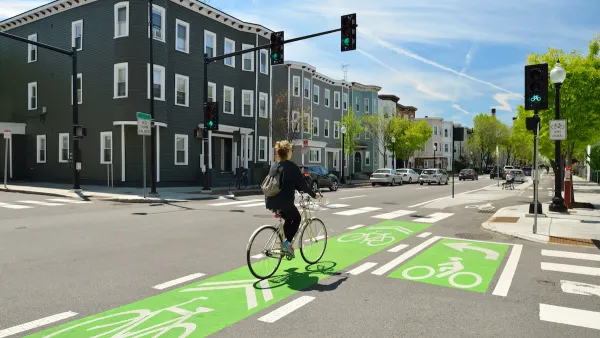
NACTO Releases Updated Urban Bikeway Guide
The third edition of the nationally recognized road design guide includes detailed design advice for roads that prioritize safety and accessibility for all users.
Bike Lanes Pitted Against Sidewalks in Kansas City
A proposed ordinance that would allow neighborhood associations to request removal of bike lanes has sparked a debate over how to prioritize bike and pedestrian infrastructure.
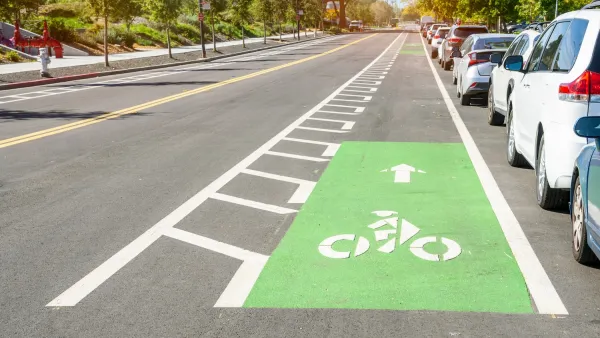
Why Bike Lanes Are Good: An Explainer for the US Transportation Secretary
Sean Duffy says there’s no evidence that bike lanes have benefits. Streetsblog — and federal agencies’ own data — beg to differ.

Planetizen Federal Action Tracker
A weekly monitor of how Trump’s orders and actions are impacting planners and planning in America.

California plans to bury El Niño’s downpour
If the state plays its cards right, it may be able to store a billion acre-feet of El Niño’s water in aquifers.

Desperate measures: Advocates weigh draining Lake Powell to fill Colorado River
Draining the reservoir could reduce evaporation losses by a couple hundred thousand acre-feet.

California city breaks ground on transit connector
The project includes three mobility hubs and a pedestrian bridge.

After public outcry, Massachusetts city releases housing development tracker
Cambridge’s tracker currently shows 250 housing projects in various stages of development.

40 years after approval, Chicago breaks ground on new park
The park honors Jean Baptiste Point du Sable, the city’s first permanent non-native settler.

FREE Course: Walkable City 1: Why Walkability?
After describing his path towards focusing on walkability as the essence of good planning, Jeff Speck marches through his five principal reasons for making more walkable places.
Reinventing Malls: Planning Alchemy—Turning Gray Fields Into Gold
The course focuses on the opportunities and imperatives that shape reinvention of mall sites.


City of Rosemead
Rutgers University, Edward J. Bloustein School of Planning and Public Policy
One Hundred Miles
Hunter College, City University of New York (CUNY)
The Architects Foundation
University of Cincinnati Online
City of Cambridge
Montrose County
The Pocatello Development Authority