The lull in commuter traffic during the pandemic gave Houston's transit agencies time to implement new projects and redesign downtown roads to better accommodate transit users.


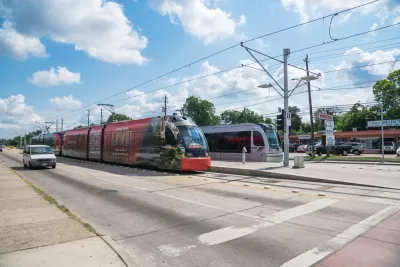
Dug Begley reports on Houston's newest bus-only lanes, slated to cover over two miles of downtown streets "as part of a three-phase project to freshen the bus-only lanes managed by Metropolitan Transit Authority. Paint could be spread across four blocks of Travis by fall, though the total project will take up to a year, and up to $1.5 million."
According to Kimberly Williams, Metro’s chief innovation officer, "[t]he goal is to take advantage of the slowdown in traffic downtown while it lasts to freshen the existing bus lanes." Williams said the agency sees this "very much as a safety project, as well, because it creates structure among all the users downtown." The project "is one of many changes under construction, planned or being considered downtown as Metro, Houston Public Works and the Houston Downtown Management District accelerate work while many offices are unoccupied."
"City, downtown and Metro officials, meanwhile, are working on plans to stop allowing vehicles to share light rail lanes along Capitol and Rusk. If redesigned, only trains and, perhaps some buses, would occupy the lanes, turning them into transit byways of the street grid in the central business district." A 2019 report assessed the dangers inherent in sharing lanes and "suggested eliminating the shared lanes and allowing only trains to use them. Removing cars and trucks, however, will require further study of the safety benefits and the effects on traffic, including the need for turns across the tracks."
FULL STORY: What's red and white and spread across downtown? Pretty soon, transit-only lanes

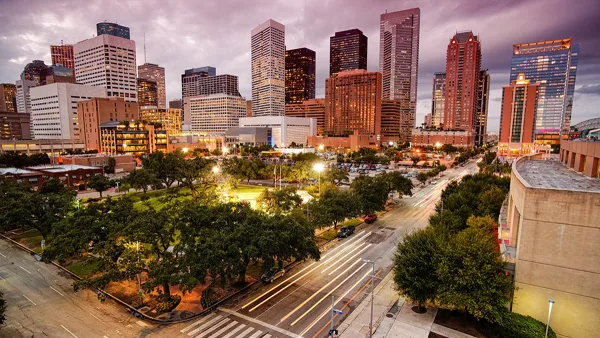
Houston Transit Agency Moves Forward With Long-Range Plan Even as Revenue Falls
Despite reduced ridership during the COVID-19 pandemic, Houston Metro is pushing ahead with its $7.5 billion long-range transit plan.
Houston Council Member Questions Microtransit Investment
METRO’s support of an on-demand microtransit service comes as the agency is scaling back its bigger bus projects.
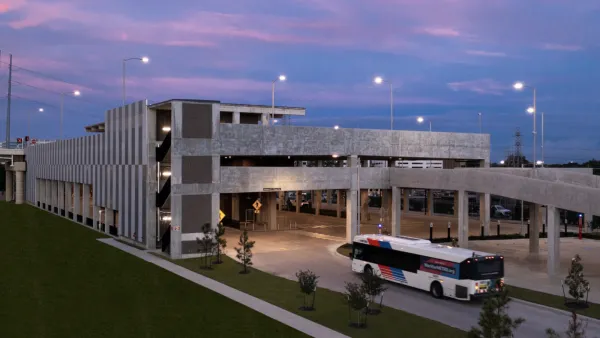
Making Space for Buses
In Houston, transit officials are working to balance plans for a new bus rapid transit line with existing street trees and traffic lanes.

Planetizen Federal Action Tracker
A weekly monitor of how Trump’s orders and actions are impacting planners and planning in America.

The state-sanctioned urbicide of Austin
People don’t kill cities. Freeways do.

US to reduce Colorado River water deliveries to Mexico
A new Colorado Treaty amendment reduces Mexico’s Colorado River water allocation by 250,000 acre feet.

Mamdani overhauls NYC's Vision Zero plan with 100 new policy goals
The overhaul aims to reduce traffic deaths and make streets safer for pedestrians, cyclists and drivers through lower speed limits, new safety infrastructure and more.

Amtrak not solely to blame for New Jersey commuter rail's unreliability, report finds
A new study from the Garden State Initiative found that NJ Transit’s budget grew 20% across a 4 year period, but reliability declined significantly over the same period.

EPA erases limits on planet-warming pollution from power plants
Under Monday’s plan, power plants would still have some limits on how much mercury, arsenic and other contaminants they can emit.

FREE Course: Walkable City 1: Why Walkability?
After describing his path towards focusing on walkability as the essence of good planning, Jeff Speck marches through his five principal reasons for making more walkable places.
Reinventing Malls: Planning Alchemy—Turning Gray Fields Into Gold
The course focuses on the opportunities and imperatives that shape reinvention of mall sites.

Eagle County Government
Harvard University Graduate School of Design
Nashville Planning Department
The Architects Foundation
University of Cincinnati Online
The Pocatello Development Authority
The Urban Renewal Agency of the City of Pocatello
Journal of the American Planning Association