Despite reduced ridership during the COVID-19 pandemic, Houston Metro is pushing ahead with its $7.5 billion long-range transit plan.


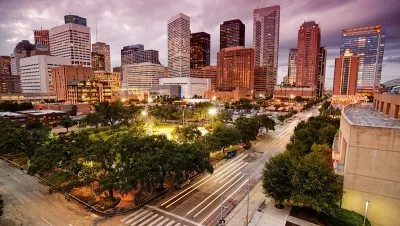
Houston's transit agency "is full steam ahead on a host of projects aimed at adding buses to scores of routes and neighborhoods" despite falling revenue, reports Dug Begley.
"Efforts to advance the first waves of capital projects come as transit officials are retreating from more optimistic financial plans." Metro's $7.5 billion long-range plan includes dozens of projects and "relies heavily on federal grants, which could come quickly if Washington lawmakers approve budget and infrastructure bills in the coming weeks or months." The plan, dubbed MetroNext, includes a 25-mile bus rapid transit line that one Metro board member called "the crown jewel of MetroNext." While some critics dismiss BRT "as inferior to rail, officials have defended the decision to focus on BRT in Houston because it is cheaper and more nimble to route along the established freeway system."
"Combined with other upcoming transit projects, such as improvements to routes that include new stations and shelters and street changes so buses can pull out of traffic, Metro’s annual budget will swell from $889.9 million including scheduled debt repayments to $1.12 billion. The agency’s capital budget will jump by more than $121 million, while operations spending will increase nearly $115 million."
Metro officials say the spending will likely induce changes "as operations are adjusted to meet demand."
FULL STORY: Metro moving forward with projects, even if revenues take a step back

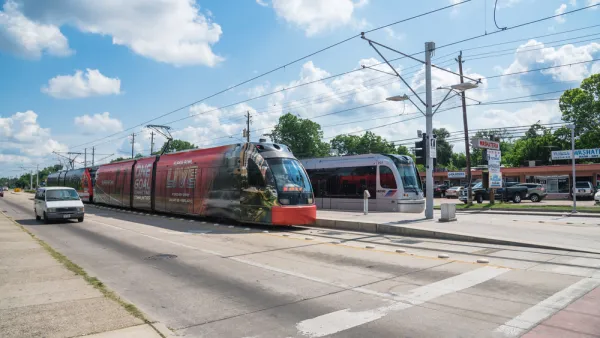
Houston Plans New Downtown Bus-Only Lanes
The lull in commuter traffic during the pandemic gave Houston's transit agencies time to implement new projects and redesign downtown roads to better accommodate transit users.
Houston Council Member Questions Microtransit Investment
METRO’s support of an on-demand microtransit service comes as the agency is scaling back its bigger bus projects.
Houston Plans for More Bus Rapid Transit
The city's transit agency hopes a more comprehensive and connected rapid transit network will encourage more Houstonians to use buses.

The state-sanctioned urbicide of Austin
People don’t kill cities. Freeways do.

US to reduce Colorado River water deliveries to Mexico
A new Colorado Treaty amendment reduces Mexico’s Colorado River water allocation by 250,000 acre feet.

New Jersey’s second-largest city bans standalone data centers
Jersey City will continue to allow co-location facilities, such as those meant for research institutions that store their own data.

Amtrak not solely to blame for New Jersey commuter rail's unreliability, report finds
A new study from the Garden State Initiative found that NJ Transit’s budget grew 20% across a 4 year period, but reliability declined significantly over the same period.

EPA erases limits on planet-warming pollution from power plants
Under Monday’s plan, power plants would still have some limits on how much mercury, arsenic and other contaminants they can emit.

Phoenix announces new on-demand transit service, more frequent RAPID buses
Both new services will launch in October, and are part of Phoenix's Project Effective Access Solutions for Easing Congestion.

FREE Course: Walkable City 1: Why Walkability?
After describing his path towards focusing on walkability as the essence of good planning, Jeff Speck marches through his five principal reasons for making more walkable places.
Reinventing Malls: Planning Alchemy—Turning Gray Fields Into Gold
The course focuses on the opportunities and imperatives that shape reinvention of mall sites.

Eagle County Government
Harvard University Graduate School of Design
Nashville Planning Department
The Architects Foundation
University of Cincinnati Online
The Pocatello Development Authority
The Urban Renewal Agency of the City of Pocatello
Journal of the American Planning Association