Anti-growth forces have made it close to impossible for many young people and newcomers to gain the upward mobility that has defined the state's success.


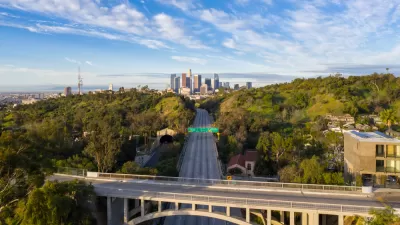
Writing in The Atlantic, Conor Friedersdorf assesses the forces that are making the 'California dream' more and more difficult to achieve. "The generations that reaped the benefits of the postwar era in what was the most dynamic place in the world are poised to take the California Dream to their graves by betraying a promise the state has offered from the start."
As Friedersdorf writes, "even as California began to truly embrace its diversity, laying part of the foundation for a better future, the state’s leaders and residents shut the door on economic opportunity, betraying the other half of the state’s foundational promise." Despite recent outmigration, "California is still forecast to add millions of additional residents in coming years, but though they may be treated more equally than in the past, the state is unprepared to offer them upward mobility." Yet, "[i]f California fails to offer young people and newcomers the opportunity to improve their lot, the consequences will be catastrophic—and not only for California. The end of the California Dream would deal a devastating blow to the proposition that such a widely diverse polity can thrive."
According to Friedersdorf, "[m]ost anti-growth homeowners in well-to-do neighborhoods would be shocked by the damage they have done to their communities, their city, and their region." While "[g]rowth in those poorer neighborhoods served many of their residents well," but "the Westside’s approach to land-use policy hurt renters and people of color while exacerbating racial segregation" and "fueling environmentally disastrous sprawl to the north and east."
"California must now turn away from the wishful thinking of preservationists and toward the future it could enjoy. Success will not mean perfection, nor an end to hardship or challenges."
FULL STORY: The California Dream is Dying

Stuck, Part II: Why Do People Move (Or Not Move)?
Yes, Americans are moving a lot less, but why? In this part of my post, I drill down to try to unearth some of the reasons. It turns out they're complicated.

How the Housing Market is Driving Millennials to Exurbs
As they age and form families, millennials find it increasingly difficult to afford housing in urban areas.
Where Are Millennials Moving to?
As the housing crisis rages on, four U.S. states are seeing high levels of new migration from young and middle-aged workers.

Planetizen Federal Action Tracker
A weekly monitor of how Trump’s orders and actions are impacting planners and planning in America.

The state-sanctioned urbicide of Austin
People don’t kill cities. Freeways do.

US to reduce Colorado River water deliveries to Mexico
A new Colorado Treaty amendment reduces Mexico’s Colorado River water allocation by 250,000 acre feet.

5 New England states march closer to 800 megawatt wind energy project
Securing federal approval for the project may be complicated under the Trump administration, which has historically been hostile towards domestic wind power.

Baltimore to break ground on $50 million Transit Priority Project
The project will bring faster bus trips, safer streets and better bike connections to Baltimore.

Airbnb launches $250 million 'last-dollar financing' housing accelerator, makes first investment in Austin
The company will put $6.4 million towards affordable housing development in Texas’ capital.

FREE Course: Walkable City 1: Why Walkability?
After describing his path towards focusing on walkability as the essence of good planning, Jeff Speck marches through his five principal reasons for making more walkable places.
Reinventing Malls: Planning Alchemy—Turning Gray Fields Into Gold
The course focuses on the opportunities and imperatives that shape reinvention of mall sites.

Eagle County Government
Harvard University Graduate School of Design
Nashville Planning Department
The Architects Foundation
University of Cincinnati Online
The Pocatello Development Authority
The Urban Renewal Agency of the City of Pocatello
Journal of the American Planning Association