As climate change intensifies the urban heat island effect, poorer neighborhoods bear the brunt of tree canopy inequity.


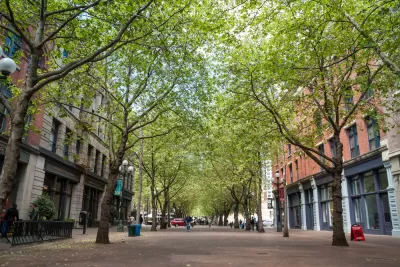
"There are certain visual clues that identify the socioeconomic status of an urban neighborhood," writes Natalie Bicknell, "and in the United States one of these is the presence — or absence — of trees." In order to achieve equity in tree canopy coverage, U.S. cities should plant 522 million trees in urban areas, according to a new tool called the Tree Equity Score (TES). "Combining GIS (Geographic Information System) mapping data with information provided by the United States census on population density, demographics of residents, health trends, and urban heat indexes, the TES uses quantitative analysis to determine whether locations have enough trees to provide optimal health, economic and climate benefits to residents."
An assessment of TES data shows that "[o]n average, American neighborhoods home to a majority of people of color have 33% less tree canopy than majority White neighborhoods," while "neighborhoods with 90% or more of their residents living in poverty have 41% less tree canopy than communities with only 10% or less of the population in poverty." The recent heat wave experienced by the Pacific Northwest brought out the reality of these numbers as close to 100 people in Washington and Oregon died from heat-related causes. "In the Canadian province of British Columbia, the heatwave is thought to have contributed to over 700 sudden deaths in a single week." Meanwhile, the U.S. is losing trees: "approximately one tree is lost for every two trees planted or naturally regenerated in urban areas," which will lead to a decline in tree canopy of 8.3% by 2060.
"The path to planting 522 million trees in urban areas will be a long one, but reframing how trees are viewed in cities might accelerate the process," writes Bicknell. Along with tools like the TES and the National Tree Benefit Calculator (NTBC), "considering trees to be core urban infrastructure and treating them as such could lead to a revaluation of trees in urban settings, provoking cities to invest more in planting and caring for them."
Read the full story: In Order to Achieve Tree Equity, the U.S. Must Plant 522 Million Trees in Urban Areas

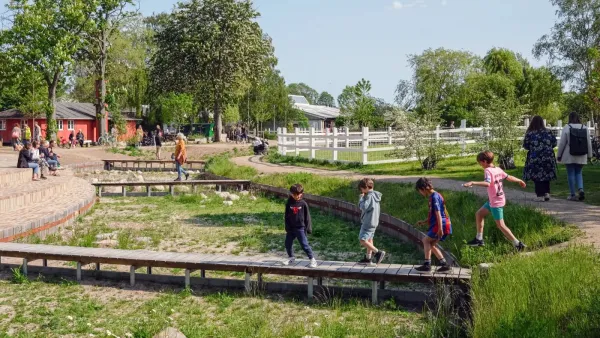
Copenhagen is losing its cool
In a city long designed to maximize light during dark Scandinavian winters, climate change is forcing the Danish capital to rethink its relationship with the sun.
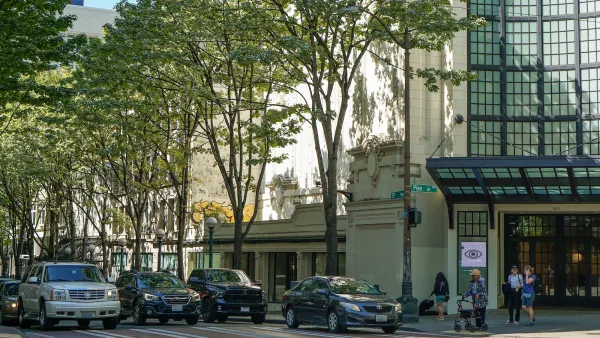
Washington Urban Forestry Program Faces 'Existential' Budget Cut
A proposed budget eliminates funding for a key urban forestry program that funds greening efforts across the state.
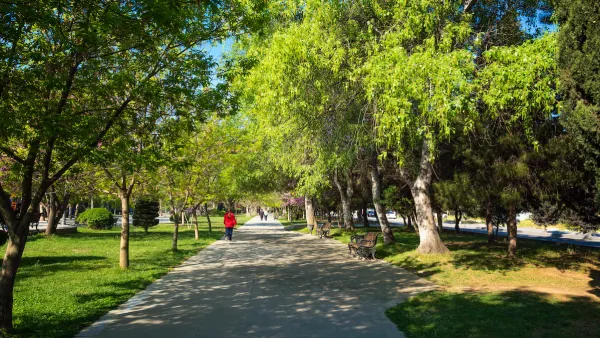
Quantifying How Urban Trees Cool Cities
A new tool can help cities understand the benefits of tree planting efforts at the municipal scale.

Planetizen Federal Action Tracker
A weekly monitor of how Trump’s orders and actions are impacting planners and planning in America.

Colorado’s Largest Data Center Could Rise Next to Homes — Without a Public Hearing
The proposed campus would consume 11 times the power of Denver International Airport; as it has across the country, opposition mounts.

US to reduce Colorado River water deliveries to Mexico
A new Colorado Treaty amendment reduces Mexico’s Colorado River water allocation by 250,000 acre feet.

'This is going to be painful:’ Virginia stares down $1.7 billion funding gap for highway maintenance
The state may address the deficit by shifting $290 million from its construction budget to maintenance projects.

Judges permit Denver to divert 77,000 acre feet from the Colorado River for reservoir expansion
Overuse and climate change have caused the Colorado River’s water levels to plummet.
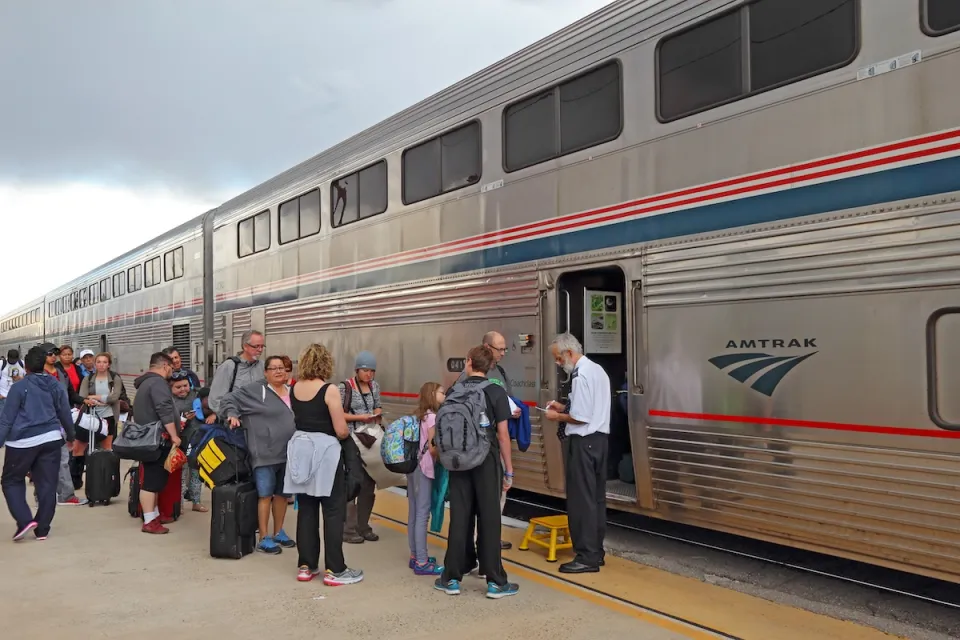
Amtrak, CN end decades-long dispute with eight-year agreement
The new operating agreement establishes an updated framework for the companies to work together, including processes to resolve disputes.

FREE Course: Walkable City 1: Why Walkability?
After describing his path towards focusing on walkability as the essence of good planning, Jeff Speck marches through his five principal reasons for making more walkable places.
Reinventing Malls: Planning Alchemy—Turning Gray Fields Into Gold
The course focuses on the opportunities and imperatives that shape reinvention of mall sites.

KFH Group Inc.
Greater Baltimore Committee
Eagle County Government
The Architects Foundation
University of Cincinnati Online
The Pocatello Development Authority
The Urban Renewal Agency of the City of Pocatello