Washington, D.C. is looking to build on some past success, and recover from some setbacks, with the adoption of a new plan to address homelessness called Homeward 2.0.


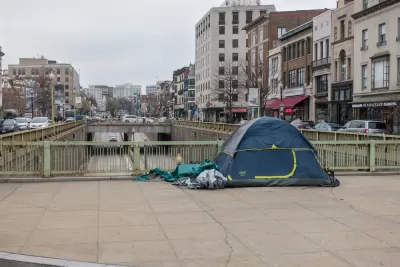
"Mayor Muriel Bowser last week released the next five-year phase of her plan to end homelessness entirely in the District by 2025," reports Chelsea Cirruzzo.
The new plan, called Homeward 2.0, will have to work extra hard to overcome the setbacks dealt during the pandemic to an earlier version of the plan.
"Authored by the Interagency Council on Homelessness, the plan recommends further investment in permanent supportive housing, a program that provides chronically homeless people who meet certain eligibility requirements with a long-term housing subsidy," explains Cirruzzo. "It also introduces a focus on racial equity, a guiding principle born out of lessons learned from the original plan. And while D.C. has been relatively successful in its approach to housing families, advances in tackling single individual homelessness have lagged, prompting a sharper focus in the new plan."
More background and insight on Homeward 2.0 are included in the source article.
Read the full story: D.C. Just Released The Next Phase Of Its Plan To End Homelessness. Here’s What’s In It

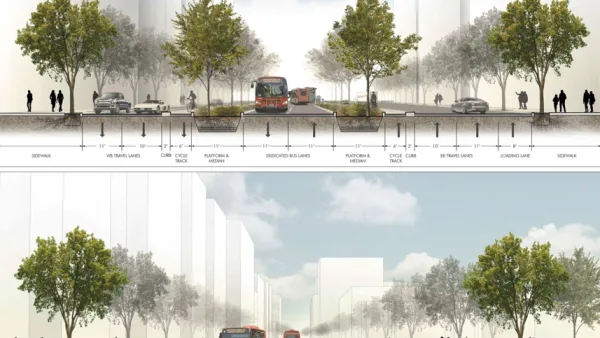
D.C. Fare-Free Transit Program Could Come at the Expense of the K Street Transitway
When presented with a choice between investing in improved service or funding a fare-free program, the D.C. Council is choosing fare-free transit, and potentially overriding the wishes of the mayor.
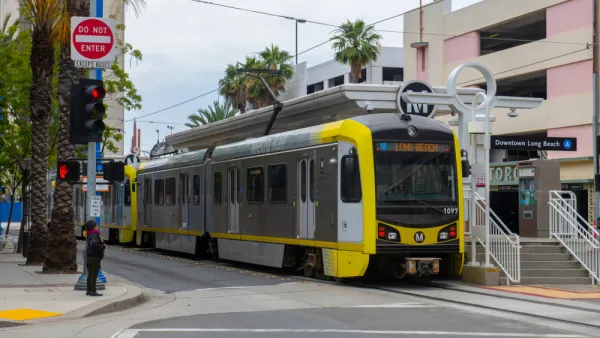
Long Beach Residents Oppose Proposed Homeless Services Hub Near Rail Terminus
L.A. Metro’s “end-of-the-line” policy forces people experiencing homeless off transit every night at the same time and location. A proposed hub would provide services a few stops before the end of the line in Long Beach.

New All-Affordable Zone Proposed for L.A.’s Skid Row
A Los Angeles Times editorial argues that Skid Row’s future should learn from the mistakes of the past.

Planetizen Federal Action Tracker
A weekly monitor of how Trump’s orders and actions are impacting planners and planning in America.

California plans to bury El Niño’s downpour
If the state plays its cards right, it may be able to store a billion acre-feet of El Niño’s water in aquifers.

Desperate measures: Advocates weigh draining Lake Powell to fill Colorado River
Draining the reservoir could reduce evaporation losses by a couple hundred thousand acre-feet.

How a Chicago-sized wind farm beat the odds and powered on
The project spanned five presidential administrations and a standoff with a U.S. military base.

MTA gives itself 30 days to transform pit into basketball court
The site has been under construction since 2022; the city originally estimated it would finish the court in 2024.

Non-stop party: Chicago voters weigh permanent festival grounds
A stable place for bleachers, stages and drainage may streamline the setup and teardown of large events.

FREE Course: Walkable City 1: Why Walkability?
After describing his path towards focusing on walkability as the essence of good planning, Jeff Speck marches through his five principal reasons for making more walkable places.
Reinventing Malls: Planning Alchemy—Turning Gray Fields Into Gold
The course focuses on the opportunities and imperatives that shape reinvention of mall sites.

City of Rosemead
Rutgers University, Edward J. Bloustein School of Planning and Public Policy
One Hundred Miles
Hunter College, City University of New York (CUNY)
The Architects Foundation
University of Cincinnati Online
City of Cambridge
Montrose County
The Pocatello Development Authority