The pandemic bike book would seem like the perfect time for the federal government to invest in an interstate system for cyclists and walkers.


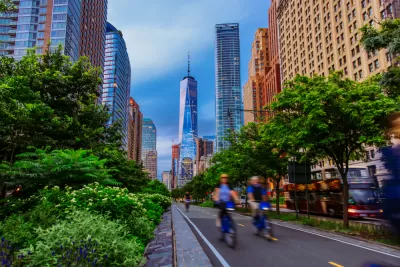
The pandemic-era bike boom means greenways in New York are busier than ever, according to an article by John Surico: "Bike traffic on the Hudson River Greenway often appears to match the paralleling West Side Highway. Last summer, around 150,000 cyclists a month — or about 5,000 a day — passed through Kent Avenue, in Williamsburg. This year is on track to surpass that. (Now there are calls to widen it, as a recent video captured more two-wheelers than four.)"
That's where a pair of advocacy efforts come in. In New York City, the "Greenways 4 NYC" coalition is calling on the federal government to commit $1 billion to fund "a 400-mile protected five-borough greenway, an idea the city proposed nearly 30 years ago," according to Surico.
"Nationwide, greenway boosters are thinking even bigger," adds Surico. "A chorus of advocates believe that the time has come for a 'Greenway Stimulus.' About 200 environmental and active-transportation organizations [...] are stepping up pressure to carve $10 billion out of the Biden administration’s prospective American Jobs Plan, or corresponding infrastructure-related bills, to help complete hundreds of proposed walking and bike trail projects around the country.
Read the full story: ‘Greenway Stimulus’ Could Bring Boom in Bike and Walking Trails
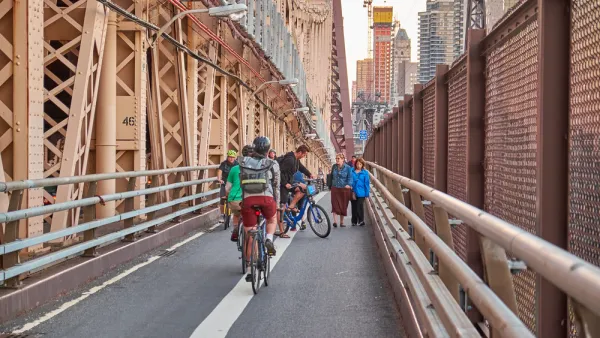
New Bike Lanes Planned for Two New York City Bridges
The de Blasio administration is offering a parting gift to the city's cyclists.
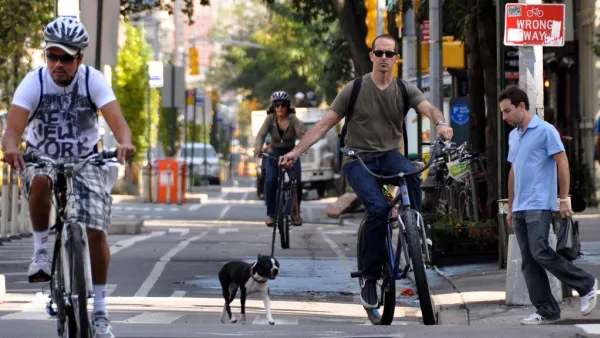
Five Borough Bikeway Plan Released
The Regional Plan Association is calling on New York City to implement an ambitious plan to transform the city into a world class city for biking—for the benefit of the public health and economic realities of the pandemic and beyond.
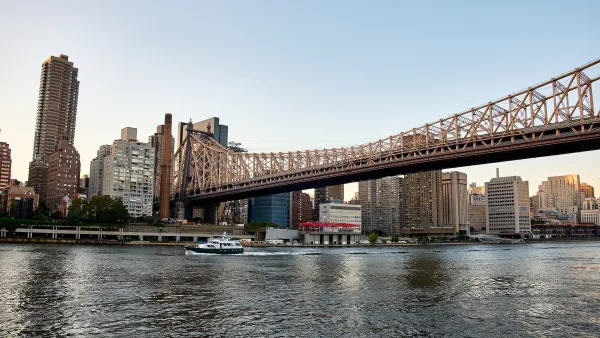
Queensboro Bridge Bike Lane Delayed Again
A project that would give pedestrians their own dedicated path on the crowded bridge has been pushed back to at least the summer of 2024.

Planetizen Federal Action Tracker
A weekly monitor of how Trump’s orders and actions are impacting planners and planning in America.

Eastern Nebraska is running out of electricity
Data centers and electrification are straining eastern Nebraska’s grid, throttling economic development.

Study reveals best places in the U.S. for cycling, walking
New research from Streetlight Data examines bicycle and pedestrian miles per capita in the 100 largest U.S. cities by population.

Officials look to alter BART extension as price goes through the roof
Tariffs and the war with Iran are behind the rising cost.

To power data centers, Utah company may build hundreds of nuclear reactors on state land
In its permit application, Valar asked for the county to confirm that changes within its outlined plan would still be covered by the permit.

San Antonio is using environmental review to stall ICE detention center
San Antonio sued last month to pause work on the new detention center until the federal government studied its effect on the surrounding area.

FREE Course: Walkable City 1: Why Walkability?
After describing his path towards focusing on walkability as the essence of good planning, Jeff Speck marches through his five principal reasons for making more walkable places.
Reinventing Malls: Planning Alchemy—Turning Gray Fields Into Gold
The course focuses on the opportunities and imperatives that shape reinvention of mall sites.

City of Charlotte
City of Rosemead
Rutgers University, Edward J. Bloustein School of Planning and Public Policy
University of Michigan School for Environment and Sustainability (SEAS)
Hunter College, City University of New York (CUNY)
The Architects Foundation
City of Cambridge
The Pocatello Development Authority
The Urban Renewal Agency of the City of Pocatello