Experts at the Urbanism Next conference advise city leaders not to overlook basic, "mundane" infrastructure that underpins the success of cities and transportation systems.


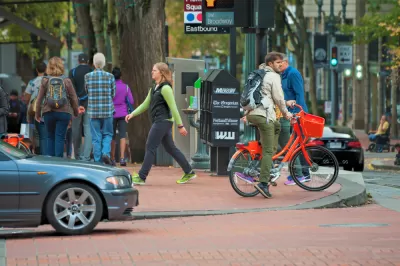
Rather than looking to flashy, high-tech transportation projects, writes Skip Descant in GovTech, urbanists have another recommendation for cities: "fix the sidewalks."
At the recent Urbanism Next conference, experts in the field cautioned against focusing on new technologies to the exclusion of basic infrastructure fixes and much-needed maintenance. "Getting the basics right is a necessary precondition for actually having the technologies work, in the sense of having people use them consistently," argued David Zipper, a visiting fellow at the Harvard Kennedy School's Taubman Center for State and Local Government. "Well-maintained sidewalks that connect to other transportation systems, he argued, could rise to high priority for any number of reasons — like improving safety for pedestrians or reducing car trips." A better sidewalk can encourage more people to use any number of high-tech mobility devices. "The moonshot mobility tech solutions that we think about — especially the shared ones — they really rely on cities first getting the basics right."
Zipper is not advocating a "retreat from technology." Rather, he asserts that "cities should more enthusiastically embrace the use of pilot projects as a way to test ideas against their ability to truly achieve some of those high-level goals, and rethink the project when it doesn’t."
FULL STORY: In the COVID Recovery, Don’t Overlook ‘Mundane Mobility’

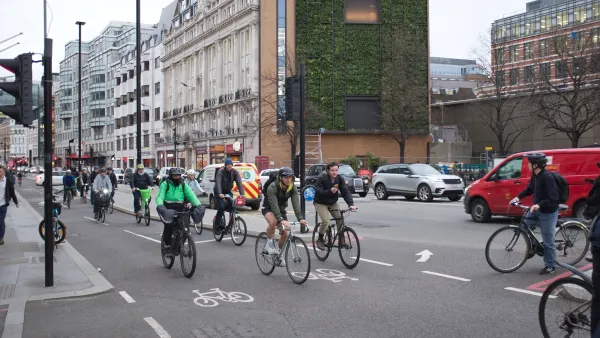
Study: Induced Demand Works for Bikes and Transit, too
If you build it — bike infrastructure, bus lanes, and sidewalks, that is — they will come.
Texas Bill Would Ban Road Diets, Congestion Pricing
A Texas state senator wants to prevent any discussion of congestion pricing and could suspend existing bike lane and sidewalk projects.
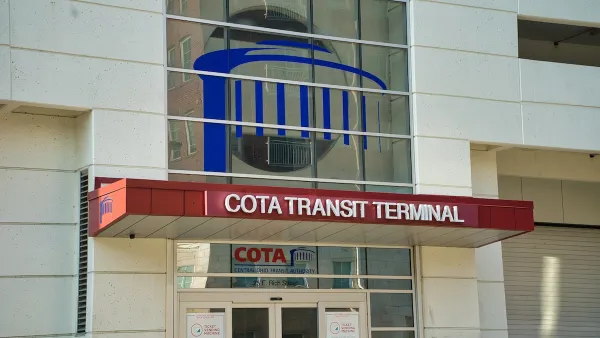
Central Ohio Voters Pass Transit Levy
The new sales tax will fund improved bus service, rapid transit projects, and ‘transit -supportive’ infrastructure.

Planetizen Federal Action Tracker
A weekly monitor of how Trump’s orders and actions are impacting planners and planning in America.

The state-sanctioned urbicide of Austin
People don’t kill cities. Freeways do.

US to reduce Colorado River water deliveries to Mexico
A new Colorado Treaty amendment reduces Mexico’s Colorado River water allocation by 250,000 acre feet.

5 New England states march closer to 800 megawatt wind energy project
Securing federal approval for the project may be complicated under the Trump administration, which has historically been hostile towards domestic wind power.

Baltimore to break ground on $50 million Transit Priority Project
The project will bring faster bus trips, safer streets and better bike connections to Baltimore.

Airbnb launches $250 million 'last-dollar financing' housing accelerator, makes first investment in Austin
The company will put $6.4 million towards affordable housing development in Texas’ capital.

FREE Course: Walkable City 1: Why Walkability?
After describing his path towards focusing on walkability as the essence of good planning, Jeff Speck marches through his five principal reasons for making more walkable places.
Reinventing Malls: Planning Alchemy—Turning Gray Fields Into Gold
The course focuses on the opportunities and imperatives that shape reinvention of mall sites.

Eagle County Government
Harvard University Graduate School of Design
Nashville Planning Department
The Architects Foundation
University of Cincinnati Online
The Pocatello Development Authority
The Urban Renewal Agency of the City of Pocatello
Journal of the American Planning Association