A historic ruling in Canada allows the federal government to supersede the efforts of provinces in fighting the causes of climate change.


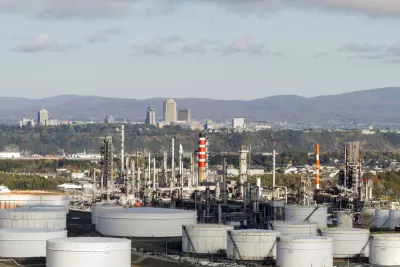
"The Supreme Court of Canada ruled Thursday that the federal government has the power to impose a minimum carbon price across the country in the name of reducing greenhouse gas emissions 'as a matter of national concern,'" reports Alex Ballingall.
The ruling upholds the Greenhouse Gas Pollution Pricing Act after legal challenges from the provincial governments of Ontario, Alberta, and Saskatchewan.
"The court found that provinces are also limited in their ability to combat the threat of climate change alone, and that Canada’s overall effort to reduce emissions would be jeopardized if any one province refused to take part in carbon pricing schemes with a minimum level of stringency," explains Ballinghall.
According to Ballingall, "The decision is a victory for Prime Minister Justin Trudeau and his Liberal government, who have staked the success of their climate plan on Ottawa’s authority to ensure there is a minimum carbon price in all provinces and territories."
The article includes more detail about the individual members of the court, which decided the matter with six members ruling in favor of the law and three ruling against.

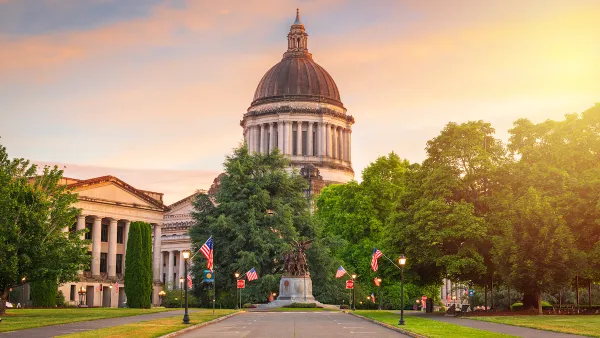
Washington Voters Keep Carbon Tax
An initiative that would have ended the state’s “cap and invest” program failed, leaving the program in place.
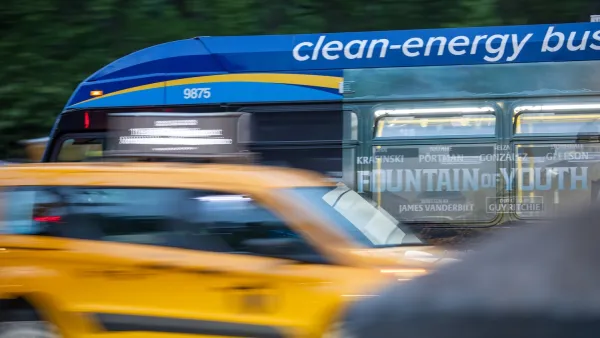
FTA Kills ‘Social Cost of Carbon’ in Transit Grant Criteria
The Capital Investments Grant program will no longer factor in the future impacts of carbon emissions.

Driving Equity and Clean Air: California Invests in Greener School Transportation
California has awarded $500 million to fund 1,000 zero-emission school buses and chargers for educational agencies as part of its effort to reduce pollution, improve student health, and accelerate the transition to clean transportation.

The state-sanctioned urbicide of Austin
People don’t kill cities. Freeways do.

US to reduce Colorado River water deliveries to Mexico
A new Colorado Treaty amendment reduces Mexico’s Colorado River water allocation by 250,000 acre feet.

New Jersey’s second-largest city bans standalone data centers
Jersey City will continue to allow co-location facilities, such as those meant for research institutions that store their own data.

Amtrak not solely to blame for New Jersey commuter rail's unreliability, report finds
A new study from the Garden State Initiative found that NJ Transit’s budget grew 20% across a 4 year period, but reliability declined significantly over the same period.

EPA erases limits on planet-warming pollution from power plants
Under Monday’s plan, power plants would still have some limits on how much mercury, arsenic and other contaminants they can emit.

Phoenix announces new on-demand transit service, more frequent RAPID buses
Both new services will launch in October, and are part of Phoenix's Project Effective Access Solutions for Easing Congestion.

FREE Course: Walkable City 1: Why Walkability?
After describing his path towards focusing on walkability as the essence of good planning, Jeff Speck marches through his five principal reasons for making more walkable places.
Reinventing Malls: Planning Alchemy—Turning Gray Fields Into Gold
The course focuses on the opportunities and imperatives that shape reinvention of mall sites.

Eagle County Government
Harvard University Graduate School of Design
Nashville Planning Department
The Architects Foundation
University of Cincinnati Online
The Pocatello Development Authority
The Urban Renewal Agency of the City of Pocatello
Journal of the American Planning Association