Council members complain that the Oak Cliff Streetcar is a "vanity project" that drains money from other potential transit improvements.


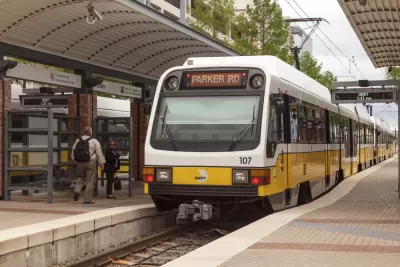
The Dallas City Council's Transportation Committee came close to killing the Oak Cliff Streetcar, "a pilot trolley line that the city has long hoped will someday evolve into a modern streetcar network covering downtown and the surrounding inner-city neighborhoods." Writing for D Magazine, Peter Simek reports on the contentious process that leaves the downtown trolley's future uncertain.
The city is also attempting to approach transportation planning with a more long-range vision, as proposed by the region's top transportation official and the assistant city manager for transportation. "The idea was to design each transportation project not as a single, standalone investment, but as a component of a broader network of iterative improvements." Yet while the streetcar is a prime example of a project that can be expanded, the council has expressed "understandable" frustration at the project's loss of revenue. Some council members called the streetcar a "vanity project" and balked at "spending $1 million on a line that, during the COVID-19 lockdown, only carried around 375 passengers a day." However, the city is stuck with the project: "because the project was funded through a federal TIGER grant, the city is obligated to operate the streetcar for 30 years."
"After reviewing several options – ranging from a 'transportation utility fee' paid by residents living along the streetcar line, to selling off city property – the consultant determined the only realistic short-term option was selling advertising and naming rights in and around the streetcar and stops. That might produce around $50,000 for the 2022 budget and another $100,000 to $200,000 the following year. Even with that new revenue, however, the city projected the streetcar would require more than $1 million in general fund support in 2022 and 2023."
Simek argues that to get beyond its status as a vanity project, what the streetcar project really needs is the funding to expand its service area and become a truly useful link for downtown residents and commuters. "Accelerating plans to connect the current line to downtown and the adjacent neighborhoods would simultaneously create opportunities to institute the kinds of value capture tools that can generate additional funding for future operations."
FULL STORY: The Council Nearly Killed the Oak Cliff Streetcar, Then They Realized They Can’t

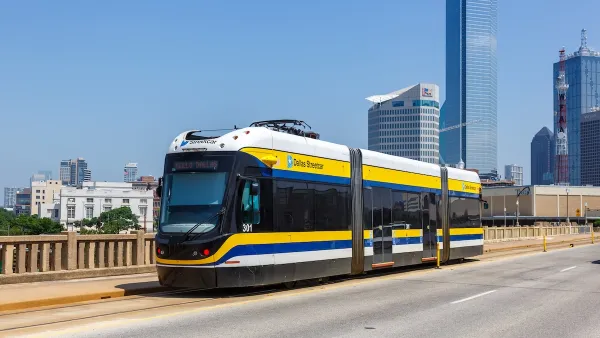
Dallas, Suburbs Clash Over DART Funding
The city voted to ‘fully fund’ its rapid transit system, but northern suburbs are moving to reduce funding.
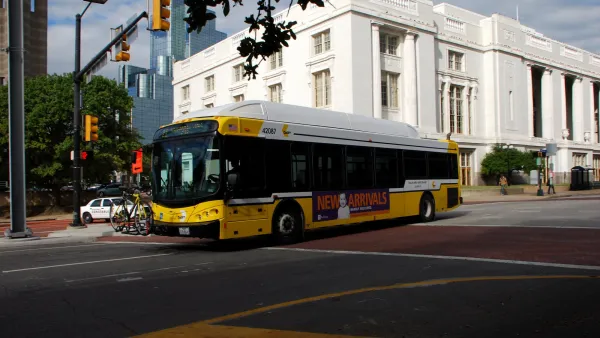
Dallas Bus System Overhaul Rolling Out in January. Will it Succeed?
The Dallas City Council recently approved a long-awaited and much-delayed bus system redesign for DART. Riders should require fewer transfers and shorter wait times starting in January 2022.
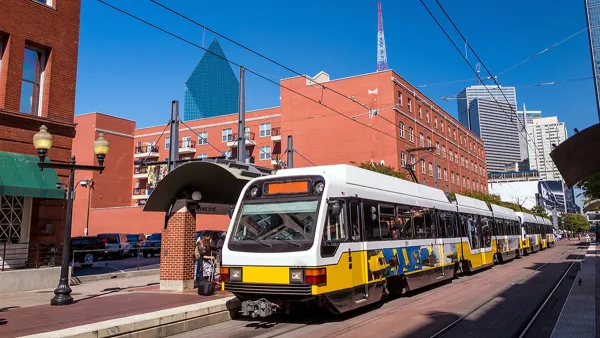
The Right Planning Consultant Could Make All of the Difference
Between DART service optimization and deciding the fate of I-345, Dallas has big of decisions to make. The right consultant, who understands accurate framing of planning issues, could help choose a route that best serves Dallasites.

Planetizen Federal Action Tracker
A weekly monitor of how Trump’s orders and actions are impacting planners and planning in America.

The state-sanctioned urbicide of Austin
People don’t kill cities. Freeways do.

US to reduce Colorado River water deliveries to Mexico
A new Colorado Treaty amendment reduces Mexico’s Colorado River water allocation by 250,000 acre feet.

5 New England states march closer to 800 megawatt wind energy project
Securing federal approval for the project may be complicated under the Trump administration, which has historically been hostile towards domestic wind power.

Baltimore to break ground on $50 million Transit Priority Project
The project will bring faster bus trips, safer streets and better bike connections to Baltimore.

Airbnb launches $250 million 'last-dollar financing' housing accelerator, makes first investment in Austin
The company will put $6.4 million towards affordable housing development in Texas’ capital.

FREE Course: Walkable City 1: Why Walkability?
After describing his path towards focusing on walkability as the essence of good planning, Jeff Speck marches through his five principal reasons for making more walkable places.
Reinventing Malls: Planning Alchemy—Turning Gray Fields Into Gold
The course focuses on the opportunities and imperatives that shape reinvention of mall sites.

Eagle County Government
Harvard University Graduate School of Design
Nashville Planning Department
The Architects Foundation
University of Cincinnati Online
The Pocatello Development Authority
The Urban Renewal Agency of the City of Pocatello
Journal of the American Planning Association