As it rebuilds the Gardiner Expressway, Toronto could use the opportunity to create more real estate for affordable housing.


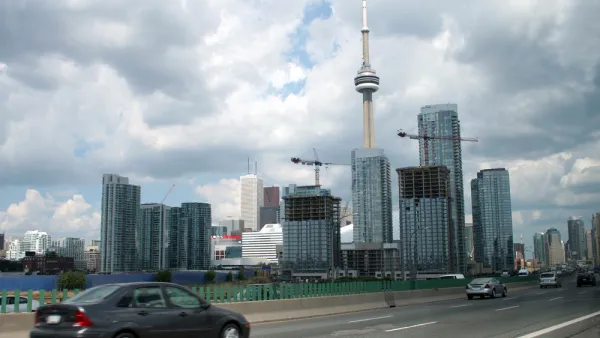
As it finalizes its 2021 budget, the city of Toronto will award the contracts to finish the Gardiner Expressway reconstruction project, with options to rebuild an elevated expressway or get more creative with the use of land in Toronto's dense downtown. In a piece for the Globe and Mail, Alex Bozikovic argues that combining the eastern end of the expressway with Lake Shore Boulevard "would open up more than five acres of land for a new neighbourhood, which could generate $500-million in land sales and development charges," generating "enough to build hundreds of units of affordable housing."
Despite the benefits promised by the "boulevard" plan, which would merge the expressway with Lake Shore Boulevard for a short segment and cost significantly less, the city council opted for a "hybrid" option that opens up far less land for new development. "That extra acreage is now worth roughly $450-million, according to Jeremiah Shamess, a vice-president at Colliers Canada who specializes in development land." The speculative proposal used for this analysis "imagines 6.5 million square feet of buildings in this area, with 8,000 homes housing 15,000 people and a mix of other uses."
With 200,000 more people expected to move into downtown Toronto in the next two decades, Bozikovic argues that Gardiner East, with its density and proximity to transit, is "a fine place to plan a postpandemic urban neighbourhood."
FULL STORY: The East Gardiner: a stretch of highway, or a new neighbourhood?


Proposed Toronto Highways Raise Environmental Concerns
Opponents of two new planned highways in greater Toronto argue the construction of new roads is 'short-sighted at best' and would threaten the region's greenbelt areas.
Toronto Could Take a Radical Step by Tolling Local Roads
In some of the biggest transportation planning news of 2016, the City of Toronto is considering a proposal to toll the Gardiner Expressway and Don Valley Parkway in an effort to raise funds for infrastructure improvements.
Toronto City Council Decides to Rebuild Gardiner East Expressway
Coulda, woulda, shoulda. The Toronto City Council sided with Mayor John Tory this week to rebuild an elevated freeway in downtown rather than tearing it down.

Planetizen Federal Action Tracker
A weekly monitor of how Trump’s orders and actions are impacting planners and planning in America.

The state-sanctioned urbicide of Austin
People don’t kill cities. Freeways do.

US to reduce Colorado River water deliveries to Mexico
A new Colorado Treaty amendment reduces Mexico’s Colorado River water allocation by 250,000 acre feet.

5 New England states march closer to 800 megawatt wind energy project
Securing federal approval for the project may be complicated under the Trump administration, which has historically been hostile towards domestic wind power.

Baltimore to break ground on $50 million Transit Priority Project
The project will bring faster bus trips, safer streets and better bike connections to Baltimore.

Airbnb launches $250 million 'last-dollar financing' housing accelerator, makes first investment in Austin
The company will put $6.4 million towards affordable housing development in Texas’ capital.

FREE Course: Walkable City 1: Why Walkability?
After describing his path towards focusing on walkability as the essence of good planning, Jeff Speck marches through his five principal reasons for making more walkable places.
Reinventing Malls: Planning Alchemy—Turning Gray Fields Into Gold
The course focuses on the opportunities and imperatives that shape reinvention of mall sites.


Eagle County Government
Harvard University Graduate School of Design
Nashville Planning Department
The Architects Foundation
University of Cincinnati Online
The Pocatello Development Authority
The Urban Renewal Agency of the City of Pocatello
Journal of the American Planning Association