Santa Clara County cities rebel against the agency's proposed plan to spend most of the Measure B funds on a Silicon Valley BART extension.


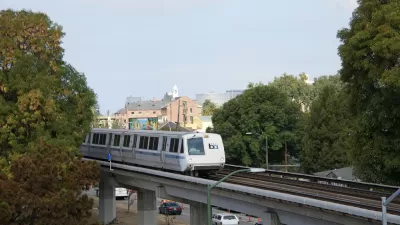
The Santa Clara Valley Transportation Authority (VTA) is retooling its plan for how to spend Measure B tax dollars after several cities protested the VTA's plan to spend most of the money on the Bay Area Rapid Transit (BART) extension to downtown San Jose. Now, the agency's revised plan will reallocate the funding to support more projects promised in the measure, reports Aldo Toledo for the Mercury News.
When the VTA proposed Measure B in 2016, "the VTA and supporters of the measure such as Silicon Valley Organization assured voters that that no more than 25% of the about $5.5 billion would go toward the BART extension," assuaging concerns from area cities that the focus on BART took away funds from badly needed local projects like pothole repairs and other road improvements. Santa Clara's Board of Supervisors agreed, rejecting the plan unanimously last month. "The public has been great about taking a regional perspective and supporting BART, but at some point we have to ask how we move people around our county in a way that is environmentally and economically sensible," says Supervisor Joe Simitian in the article.
The new plan, which increases the VTA's cost for the BART extension by over $2.5 billion, includes "$887 million for Caltrain grade separation projects, $156 million for increasing Caltrain’s corridor capacity, $230 million for Highway 85 improvements, $236 million for county expressways, $842 million for highway interchanges and a remaining $1.4 billion to be spent at the board’s discretion," writes Toledo.
FULL STORY: VTA comes up with new plan for spending Measure B funds after cities rebel

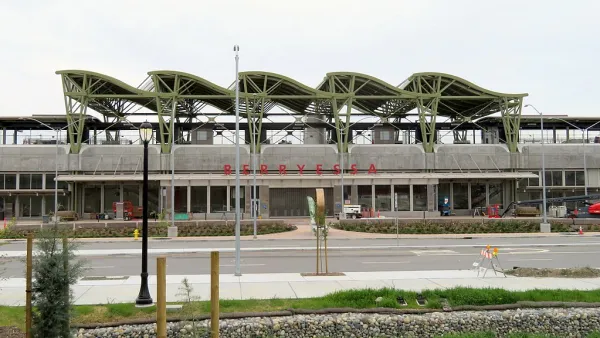
History in the Making: BART Extension into San Jose Ready for June Opening
Twenty years after voters first approved funding to build a BART extension into the heart of the South Bay Area, the project is finally ready to offer rides to the public.
BART Extension Into San Jose Delayed
Both phases of the extension of BART beyond the Warm Spring Station Fremont, into Santa Clara County and San Jose, have been delayed. The first extension, to the Milpitas and Berryessa stations, was expected to be complete by the end of 2019.
San Jose's Measure B Transportation Funding Caught in Legal Dispute
A one-woman crusade in San Jose, California has derailed transportation spending enabled by the voter approved funding package of Measure B.

Planetizen Federal Action Tracker
A weekly monitor of how Trump’s orders and actions are impacting planners and planning in America.

The state-sanctioned urbicide of Austin
People don’t kill cities. Freeways do.

US to reduce Colorado River water deliveries to Mexico
A new Colorado Treaty amendment reduces Mexico’s Colorado River water allocation by 250,000 acre feet.

Mamdani overhauls NYC's Vision Zero plan with 100 new policy goals
The overhaul aims to reduce traffic deaths and make streets safer for pedestrians, cyclists and drivers through lower speed limits, new safety infrastructure and more.

Amtrak not solely to blame for New Jersey commuter rail's unreliability, report finds
A new study from the Garden State Initiative found that NJ Transit’s budget grew 20% across a 4 year period, but reliability declined significantly over the same period.

EPA erases limits on planet-warming pollution from power plants
Under Monday’s plan, power plants would still have some limits on how much mercury, arsenic and other contaminants they can emit.

FREE Course: Walkable City 1: Why Walkability?
After describing his path towards focusing on walkability as the essence of good planning, Jeff Speck marches through his five principal reasons for making more walkable places.
Reinventing Malls: Planning Alchemy—Turning Gray Fields Into Gold
The course focuses on the opportunities and imperatives that shape reinvention of mall sites.

Eagle County Government
Harvard University Graduate School of Design
Nashville Planning Department
The Architects Foundation
University of Cincinnati Online
The Pocatello Development Authority
The Urban Renewal Agency of the City of Pocatello
Journal of the American Planning Association