One Virginia town's complete streets transformation shows promise for active transportation interventions in small communities.


The term "urbanism" brings to mind big cities and major infrastructure projects, but across the United States, small towns are quietly implementing complete streets projects that improve livability, mobility, and safety for their residents. In Hopewell, Virginia, the success of the city's recent push to improve outdoor recreation shows that small towns can practice urbanism too—sometimes more effectively than larger cities where projects get bogged down in bureaucracy and held back by competing interests.
Taking cues from the National Complete Streets Coalition, Wyatt Gordon writes that Hopewell's leaders are developing a complete streets plan for their city that aims to connect residential and commercial districts, increase available pedestrian infrastructure, and foster more active lifestyles. The initiative, stemming from the city council's 2015 passage of the Healthy Eating, Active Living (HEAL) resolution, has dual goals to facilitate healthier lifestyles for Hopewell residents and to stimulate economic development. City Councilmember Johnny Partin sees benefits in putting health and safety at the core of city projects, saying that investment in pedestrian and bike infrastructure is "essential to making sure everyone can enjoy our streets in safety."
With funding on the way from the Virginia Department of Transportation's (VDOT) Transportation Alternatives Program, Hopewell will be able to complete several other projects, including bikeways that will form part of the Appomattox River Trail and a multimodal path that will "reunite Hopewell's downtown core."
Read the full story: Hopewell, VA’s complete streets overhaul shows small towns can be urbanist too
Senate Committee Will 'DRIVE' Transportation Reauthorization
The Senate's DRIVE Act is shaping up to be the first six-year transportation reauthorization bill since 2009. Notwithstanding the acronym, it's not all that bad, writes Tanya Snyder of Streetsblog USA. Finding funding for it is another story.
6 Ways Urban Renewal Misses the Livability Mark
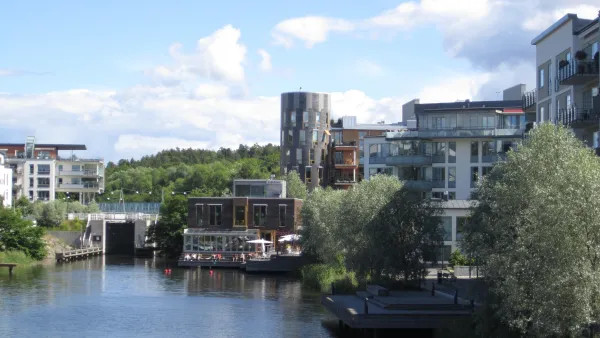
Despite spending millions on urban renewal projects, municipalities often miss a common group of opportunities to make their communities more livable and walkable, according to William Adams, a San Diego-based land use attorney.
How are California’s Bullet Train and Affordable Housing Connected?
California Gov. Brown’s support of high speed rail contrasts sharply with his gutting of affordable housing. Michael Russell, real estate developer and advisor, reviews pending bills and potential fixes for affordable housing.

Planetizen Federal Action Tracker
A weekly monitor of how Trump’s orders and actions are impacting planners and planning in America.

California plans to bury El Niño’s downpour
If the state plays its cards right, it may be able to store a billion acre-feet of El Niño’s water in aquifers.

Desperate measures: Advocates weigh draining Lake Powell to fill Colorado River
Draining the reservoir could reduce evaporation losses by a couple hundred thousand acre-feet.

In Texas, data centers are swallowing promised parkland
Residents who moved to Taylor, Texas for a rural community now have to contend with three data centers in their backyard.

How a Chicago-sized wind farm beat the odds and powered on
The project spanned five presidential administrations and a standoff with a U.S. military base.

MTA gives itself 30 days to transform pit into basketball court
The site has been under construction since 2022; the city originally estimated it would finish the court in 2024.

FREE Course: Walkable City 1: Why Walkability?
After describing his path towards focusing on walkability as the essence of good planning, Jeff Speck marches through his five principal reasons for making more walkable places.
Reinventing Malls: Planning Alchemy—Turning Gray Fields Into Gold
The course focuses on the opportunities and imperatives that shape reinvention of mall sites.


City of Rosemead
Rutgers University, Edward J. Bloustein School of Planning and Public Policy
One Hundred Miles
Hunter College, City University of New York (CUNY)
The Architects Foundation
University of Cincinnati Online
City of Cambridge
Montrose County
The Pocatello Development Authority