The civil rights debates of the 1960s and 1970s influence city planning in Alexandria, Virginia to this day.


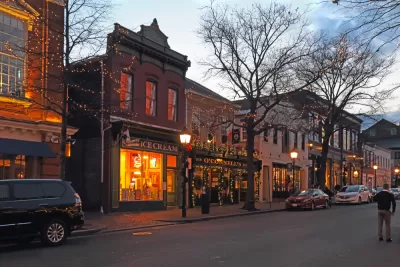
Vernon Miles shares news of a new book that tells the history of civil rights and historic preservation Alexandria, Virginia, and how these two goals came into conflict in the development of the county's old town historic district since the 1970.
Local historic preservation consultant John Sprinkle presented excerpts from a forthcoming book to the Alexandria Board of Architectural Review, highlighting the central role of historic preservation in debates about development and displacement over the years. The narrative shared by Sprinkle is one of a dual process of desegregation and displacement: As Alexandria expanded Old Town in the 1970s, Black residents displaced by higher property taxes moved into "formerly all-white working class communities in Del Ray and Arlandria."
Violent conflicts that took place in the area had a "profound impact" on planning in Arlington, according to Sprinkle. "The historic preservation at the time started to shift toward neighborhood conservation. The city pursued grants from National Endowment for the Humanities that focused on conservation as part of an experiment designed to address forecasted displacement of African Americans in the north-western quadrant,” writes Miles.
Read the full story: New Report Highlights History of Clashes Between Civil Rights and Historic Preservation in Alexandria

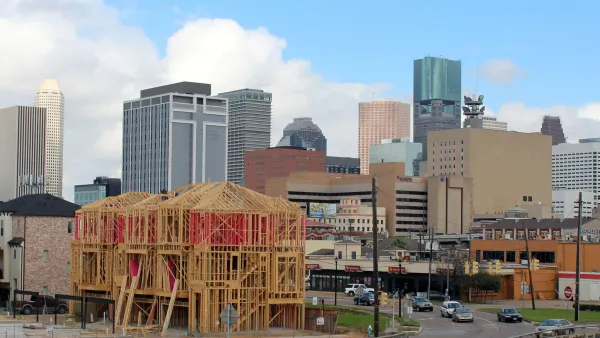
Houston's East River Redevelopment Threatens Historic Black Neighborhoods
Longtime residents are being left behind by new development that has raised housing costs and property taxes for some of Houston's most vulnerable communities, according to an article in the Houston Chronicle.
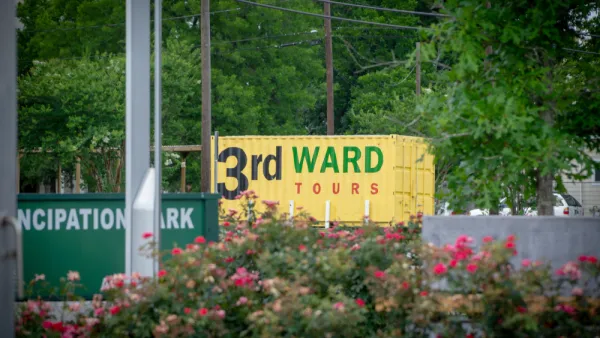
A Tour of Houston's Rapidly Gentrifying Neighborhoods
These Houston communities have experienced the most dramatic demographic changes in the last decade, according to new Census data.
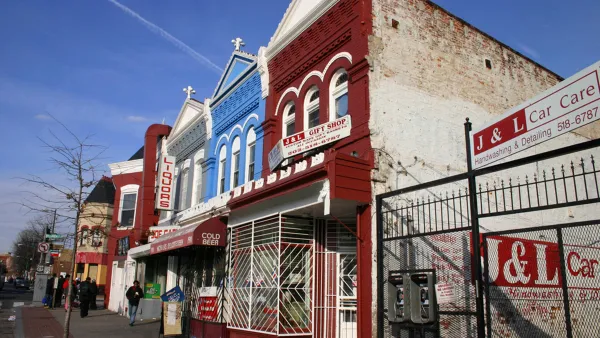
Is Anti-Growth the Wrong Approach to Fighting Gentrification?
Limiting development has been a powerful tool for anti-gentrification activists, but have these policies had counter-productive effects?

Planetizen Federal Action Tracker
A weekly monitor of how Trump’s orders and actions are impacting planners and planning in America.

California plans to bury El Niño’s downpour
If the state plays its cards right, it may be able to store a billion acre-feet of El Niño’s water in aquifers.

Desperate measures: Advocates weigh draining Lake Powell to fill Colorado River
Draining the reservoir could reduce evaporation losses by a couple hundred thousand acre-feet.

In Texas, data centers are swallowing promised parkland
Residents who moved to Taylor, Texas for a rural community now have to contend with three data centers in their backyard.

How a Chicago-sized wind farm beat the odds and powered on
The project spanned five presidential administrations and a standoff with a U.S. military base.

MTA gives itself 30 days to transform pit into basketball court
The site has been under construction since 2022; the city originally estimated it would finish the court in 2024.

FREE Course: Walkable City 1: Why Walkability?
After describing his path towards focusing on walkability as the essence of good planning, Jeff Speck marches through his five principal reasons for making more walkable places.
Reinventing Malls: Planning Alchemy—Turning Gray Fields Into Gold
The course focuses on the opportunities and imperatives that shape reinvention of mall sites.

City of Rosemead
Rutgers University, Edward J. Bloustein School of Planning and Public Policy
One Hundred Miles
Hunter College, City University of New York (CUNY)
The Architects Foundation
University of Cincinnati Online
City of Cambridge
Montrose County
The Pocatello Development Authority