With 520 miles of coastline, New York City is ready to implement the lessons of Hurricane Sandy in the zoning code for the entire city.


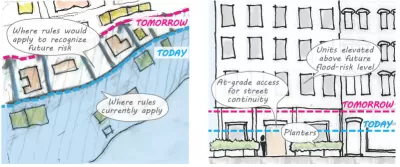
New York Department of City Planning is seeking public input on a citywide rezoning designed to improve resilience during flood events. The new zoning rules are proposed in the Zoning for Coastal Flood Resiliency (ZCFR) process, according to a press release from the Department of City Planning.
According to the ZCFR website, "Zoning for Coastal Flood Resiliency would improve homeowners’ and business owners’ ability to withstand and recover from future storms and other disaster events. It builds on years of collaboration with floodplain communities to support post-disaster recovery and promote long-term resiliency."
The zoning changes proposed by the ZCFR process would update temporary zoning changes implemented after Hurricane Sandy in 2012, according to the same web page.
"The proposal would allow homeowners, business owners, architects and others to design resilient buildings that are better protected from flood risk and reduce flood insurance costs. It would protect and support public access to waterfront sites through resilient open space design. It would also help New Yorkers recover quickly from other future disasters, including the COVID-19 crisis," according to the website.
New York City Planning Commission Chair Marisa Lago is quoted in the press release with the following soundbite: "This new zoning also provides needed flexibility to address all types of future disasters, whether another climate event or today’s COVID-19 pandemic."
"Currently, buildings are restricted by zoning regulations that do not take resiliency into account and thus force New Yorkers to choose between interior space and resiliency improvements. ZCFR will make it easier for buildings to meet or exceed modern resiliency codes without sacrificing their basement, for example, by adding some much-needed zoning flexibility," reads the press release.
In one crucial component of the rezoning, the changes would limit the construction of new nursing homes in areas of high flood risk.
FULL STORY: Making NYC More Resilient: Public Review Begins for DCP’s Important Zoning for Coastal Flood Resiliency

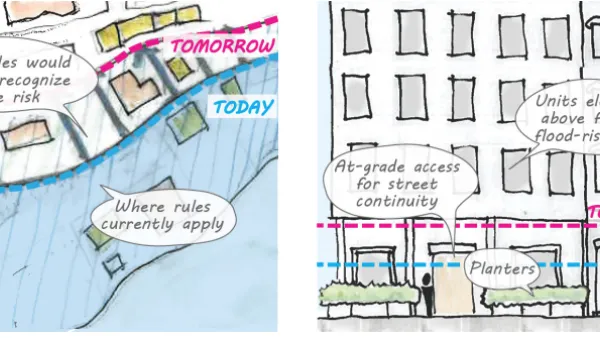
'Zoning for Coastal Flood Resiliency' Wins Planning Commission Approval in NYC
Emergency responses to Hurricane Sandy have turned into long-term lessons in New York City, as the nation's largest city crafts a response to sea-level rise and extreme weather by making changes to the zoning code of coastal areas.
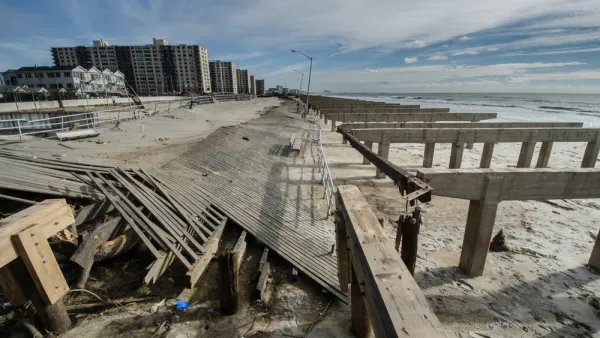
Zoning Reform for Coastal Resilience in New York City
The New York City Department of City Planning has released a large set of recommendations for zoning changes designed to help the city's many coastal areas weather the inevitable extreme weather events of climate change and sea level rise.
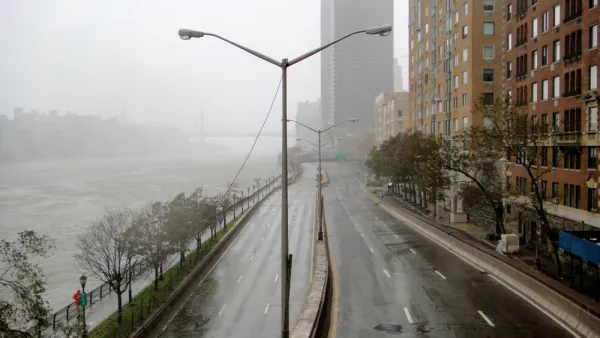
Saving Lower Manhattan
A debate over how to protect the East River waterfront from Sandy-level flooding and storm damage has delayed the project as community activists decry the city's last-minute change of plans.

Planetizen Federal Action Tracker
A weekly monitor of how Trump’s orders and actions are impacting planners and planning in America.

The state-sanctioned urbicide of Austin
People don’t kill cities. Freeways do.

US to reduce Colorado River water deliveries to Mexico
A new Colorado Treaty amendment reduces Mexico’s Colorado River water allocation by 250,000 acre feet.

5 New England states march closer to 800 megawatt wind energy project
Securing federal approval for the project may be complicated under the Trump administration, which has historically been hostile towards domestic wind power.

Baltimore to break ground on $50 million Transit Priority Project
The project will bring faster bus trips, safer streets and better bike connections to Baltimore.

Airbnb launches $250 million 'last-dollar financing' housing accelerator, makes first investment in Austin
The company will put $6.4 million towards affordable housing development in Texas’ capital.

FREE Course: Walkable City 1: Why Walkability?
After describing his path towards focusing on walkability as the essence of good planning, Jeff Speck marches through his five principal reasons for making more walkable places.
Reinventing Malls: Planning Alchemy—Turning Gray Fields Into Gold
The course focuses on the opportunities and imperatives that shape reinvention of mall sites.

Eagle County Government
Harvard University Graduate School of Design
Nashville Planning Department
The Architects Foundation
University of Cincinnati Online
The Pocatello Development Authority
The Urban Renewal Agency of the City of Pocatello
Journal of the American Planning Association