Add COVID-19 to the list of long-term consequences of the racist and discriminatory regulatory and lending practices of the 20th century.


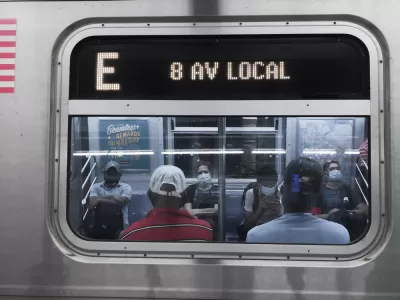
A report published last week by the National Community Reinvestment Coalition finds that formerly redlined neighborhoods are at greater risk for COVID-19.
According to the "Redlining and Neighborhood Health" report, formerly redlined neighborhoods "suffer not only from reduced wealth and greater poverty, but from lower life expectancy and higher incidence of chronic diseases that are risk factors for poor outcomes from COVID-19," according to the website that shares the new study.
Jared Brey, writing for Next City, provides news coverage of the report, describing the study's methodology, sharing soundbites front he researchers who worked on the report, and also mentioning the recommendations included in the report.
Brey writes: "The report builds on previous reporting on how the COVID-19 pandemic has disproportionately harmed Black communities. In order to address the disparities, the report’s authors recommend implementing inclusionary zoning to create affordable housing outside of redlined neighborhoods, restoring the Affirmatively Furthering Fair Housing Rule, and expanding housing vouchers and the Community Reinvestment Act."

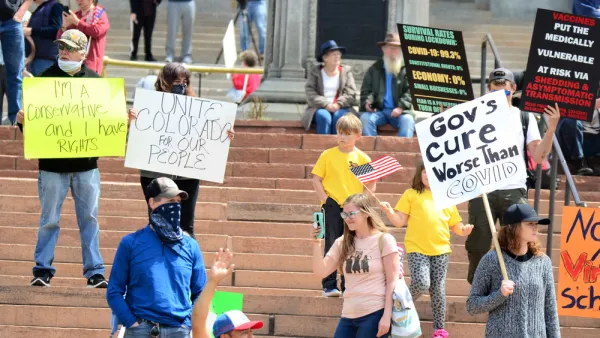
The Legacy of Redlining Made Clear by the Coronavirus
Covid-19 deaths track closely to the discriminatory boundaries set by housing lenders, sponsored by the government, in the 20th century.
Designing for Life
A Black architect calls on designers to recommit their training and expertise to account for the health and safety of all, especially those who have been most harmed by the status quo of the built environment.
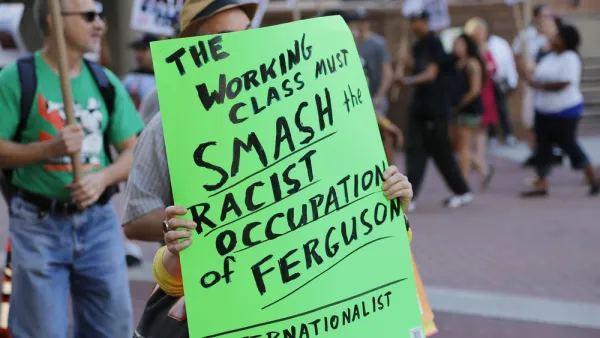
An Institutional Racism Syllabus
JSTOR Daily has compiled a syllabus for reading on the causes and consequences of institutional racism.

Planetizen Federal Action Tracker
A weekly monitor of how Trump’s orders and actions are impacting planners and planning in America.

The state-sanctioned urbicide of Austin
People don’t kill cities. Freeways do.

US to reduce Colorado River water deliveries to Mexico
A new Colorado Treaty amendment reduces Mexico’s Colorado River water allocation by 250,000 acre feet.

Mamdani overhauls NYC's Vision Zero plan with 100 new policy goals
The overhaul aims to reduce traffic deaths and make streets safer for pedestrians, cyclists and drivers through lower speed limits, new safety infrastructure and more.

Amtrak not solely to blame for New Jersey commuter rail's unreliability, report finds
A new study from the Garden State Initiative found that NJ Transit’s budget grew 20% across a 4 year period, but reliability declined significantly over the same period.

EPA erases limits on planet-warming pollution from power plants
Under Monday’s plan, power plants would still have some limits on how much mercury, arsenic and other contaminants they can emit.

FREE Course: Walkable City 1: Why Walkability?
After describing his path towards focusing on walkability as the essence of good planning, Jeff Speck marches through his five principal reasons for making more walkable places.
Reinventing Malls: Planning Alchemy—Turning Gray Fields Into Gold
The course focuses on the opportunities and imperatives that shape reinvention of mall sites.

Eagle County Government
Harvard University Graduate School of Design
Nashville Planning Department
The Architects Foundation
University of Cincinnati Online
The Pocatello Development Authority
The Urban Renewal Agency of the City of Pocatello
Journal of the American Planning Association