A $7 billion transit investment plan for Austin would include $300 million toward preventing displacement of communities in neighborhoods located near planned transit investments.


"The Austin City Council voted [in July] afternoon to move forward with plans to seek a property tax increase to help fund Project Connect, a plan to build more train and bus lines," reports Samuel King for KUT, Austin's NPR station.
Voters would still have to approve the property tax if the proposal makes it all the way through the City Council process. "The tax increase of 8.75 cents per $100 of property valuation would fund a $7 billion initial expansion of the transit system, as opposed to a higher tax rate of 11 cents that would have funded the full system plan of $10 billion. The council will formally vote next month on whether to put the plan to voters in a November referendum," explains King.
Another big contingency for the plan is funding from the federal government to match the local investment. If the new property tax is approved by voters, the federal government would still be expected to cover 45 percent of the $7 billion plan.
The new revenue generated by the property tax would also include funding for programs intended to mitigate displacement as a result of new development spurred by the city's transit investments. "The plan now calls for a $300 million fund to address displacement, up from $100 million," reports King.
Read the full story: Austin City Council Wants To Help Prevent People From Getting Priced Out If New Transit Is Built


Austin Hopes to Buck Tradition with Anti-Gentrification Measures in its New Transit Plan
Project Connect promises to prioritize equity and inclusion with $300 million dedicated to anti-displacement efforts.
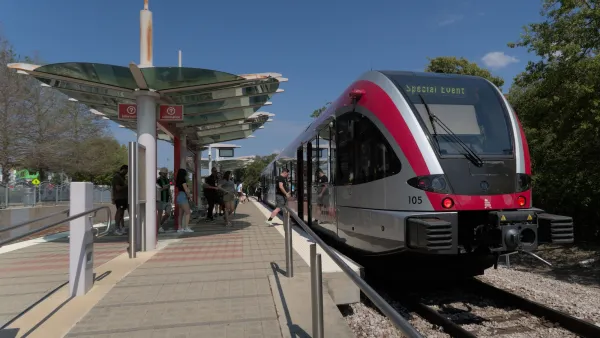
Austin's Project Connect has shrunk to less than half its proposed length — at a higher cost
A highly anticipated light rail project is quickly diminishing in scope as costs soar.
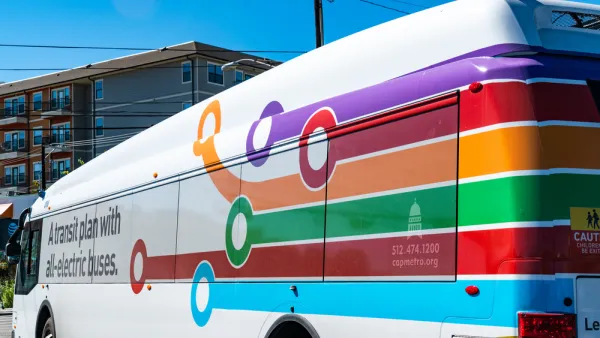
Austin’s Project Connect Transit Plan Drastically Reduced
The details of drastic reductions to the proposed building program for Austin’s Project Connect long-range transit plan are now open for public comment.

Planetizen Federal Action Tracker
A weekly monitor of how Trump’s orders and actions are impacting planners and planning in America.

California plans to bury El Niño’s downpour
If the state plays its cards right, it may be able to store a billion acre-feet of El Niño’s water in aquifers.

Desperate measures: Advocates weigh draining Lake Powell to fill Colorado River
Draining the reservoir could reduce evaporation losses by a couple hundred thousand acre-feet.

California city breaks ground on transit connector
The project includes three mobility hubs and a pedestrian bridge.

After public outcry, Massachusetts city releases housing development tracker
Cambridge’s tracker currently shows 250 housing projects in various stages of development.

40 years after approval, Chicago breaks ground on new park
The park honors Jean Baptiste Point du Sable, the city’s first permanent non-native settler.

FREE Course: Walkable City 1: Why Walkability?
After describing his path towards focusing on walkability as the essence of good planning, Jeff Speck marches through his five principal reasons for making more walkable places.
Reinventing Malls: Planning Alchemy—Turning Gray Fields Into Gold
The course focuses on the opportunities and imperatives that shape reinvention of mall sites.

City of Rosemead
Rutgers University, Edward J. Bloustein School of Planning and Public Policy
One Hundred Miles
Hunter College, City University of New York (CUNY)
The Architects Foundation
University of Cincinnati Online
City of Cambridge
Montrose County
The Pocatello Development Authority