Washington State planners have completed a feasibility study into the proposed East-West Passenger Rail System for Washington State.


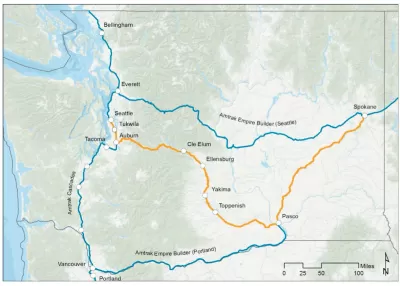
The Washington State Joint Transportation Committee (WSJTC) and its consultants at the end of June presented findings to state legislators on the east-west intercity passenger rail study.
"The study evaluates several corridor and service level options as well as ridership, costs, targeted corridor improvements, and operational models," according to an article by Stephen Fesler. "Findings by consultants show that ridership between Seattle and Spokane could top 205,000 rides per year under the most robust scenario. That would include two daily roundtrips running through Stampede Pass, Yakima Valley, and the Tri-Cities area."
Fesler provides more details on the findings of the study, including key findings for each of the eight service options and broad public support for the idea reported from survey data. All Aboard Washington (AAWA) wrote a follow-up opinion piece for The Urbanist voicing support for the study and the proposed project. As for next steps, Fesler reports that the study puts the project in a good position for next steps, but any movement will require support from the State Legislature and the governor.
Read the full story: Study Finds Limited New East-West Washington Passenger Rail Line Could Generate Substantial Ridership

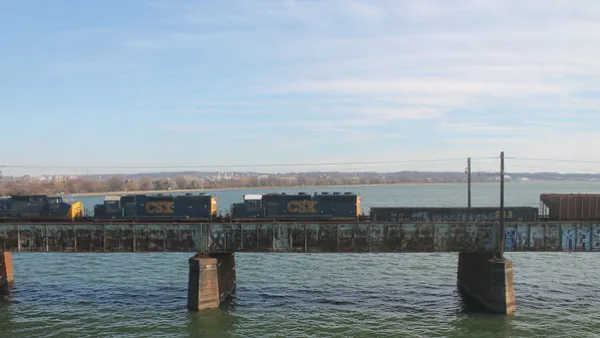
Virginia Passenger Rail Sets Ridership Records, Seeks More Wins
Virginia’s commitment to intercity rail is paying off in record ridership numbers, but more work will be necessary to achieve the state’s ambitions for passenger rail.
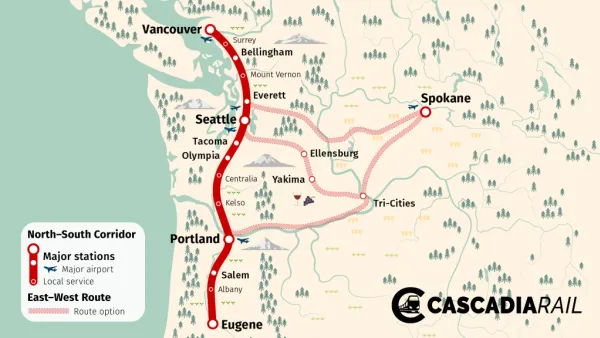
Cascadia High-Speed Rail Corridor Seeking Federal Funding
The state of Washington is hoping federal infrastructure funding can pay for $198 million of the $348 million necessary to plan the Cascadia High-Speed Rail project.
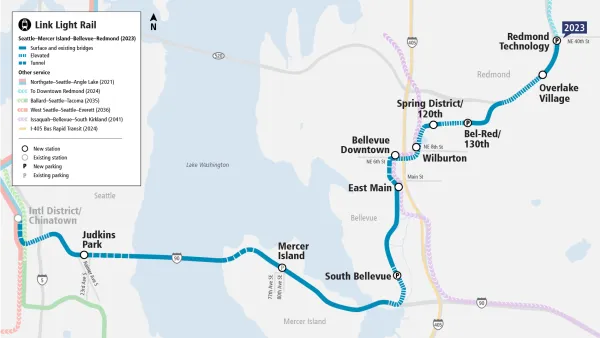
Sooner Rather Than Later: Support Builds for Eastside-Only Light Rail in Seattle
The Eastside Link light rail route, now known as Line 2, is delayed. A Sound Transit board officials is suggesting that some of the route can open soon, while the rest of the route is prepped to open later.

Planetizen Federal Action Tracker
A weekly monitor of how Trump’s orders and actions are impacting planners and planning in America.

The state-sanctioned urbicide of Austin
People don’t kill cities. Freeways do.
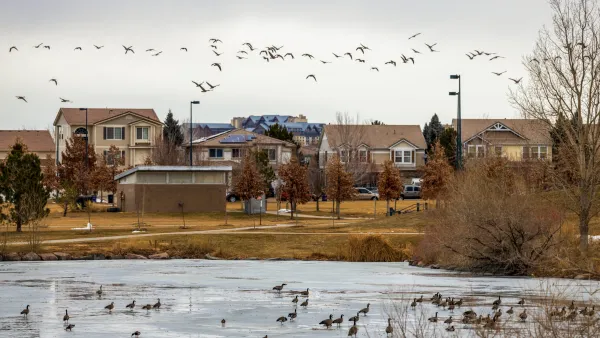
Colorado’s Largest Data Center Could Rise Next to Homes — Without a Public Hearing
The proposed campus would consume 11 times the power of Denver International Airport; as it has across the country, opposition mounts.

Nation's most wind-powered state turns to coal as data centers increase energy demand
For the first time in decades, Iowa has increased its generation of coal power.

NYC cools commuters with city's first rain garden above a bus stop
New York City officials say the plants in the rain garden can absorb 16 gallons of rainwater during heavy storms.

Brightline West’s future may rely on $6 billion federal loan
The company has until Nov. 2 to make a $400 million equity investment into its proposed high-speed rail line.

FREE Course: Walkable City 1: Why Walkability?
After describing his path towards focusing on walkability as the essence of good planning, Jeff Speck marches through his five principal reasons for making more walkable places.
Reinventing Malls: Planning Alchemy—Turning Gray Fields Into Gold
The course focuses on the opportunities and imperatives that shape reinvention of mall sites.

Greater Baltimore Committee
Eagle County Government
Harvard University Graduate School of Design
The Architects Foundation
University of Cincinnati Online
The Pocatello Development Authority
The Urban Renewal Agency of the City of Pocatello
Journal of the American Planning Association