Since the outset of the pandemic, predictions about waves of Americans moving, whether due to necessity or choice, have been rampant. Now, survey results reveal the first indications of how true those predictions turned out to be.



"Overall, around one-in-five U.S. adults (22%) say they either changed their residence due to the pandemic or know someone who did, according to a new Pew Research Center survey."
D'Vera Cohen shares insight into the findings of the new survey, including the additional details that reveal the demographic nuances of the survey findings.
The age group most likely to have had at least one of these things happen to them are the nation’s young adults: Overall, 37% of those ages 18 to 29 say they moved, someone moved into their home or they know someone who moved because of the outbreak. By race and ethnicity, 28% of Hispanics have had one of these experiences, compared with 20% of white adults, 19% of Black adults and 24% of Asian Americans.
Educational attainment and income are also linked to the likelihood of moving during the pandemic, according to the survey.
Read the full story: About a fifth of U.S. adults moved due to COVID-19 or know someone who did
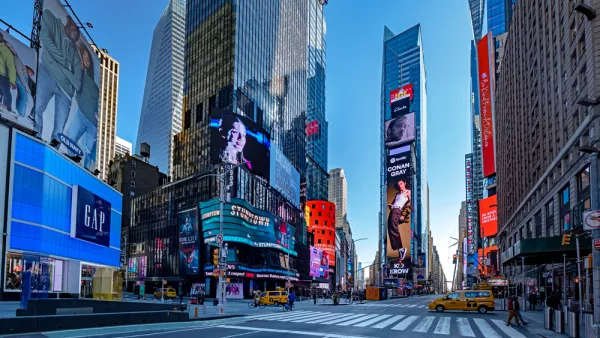
Poll: One-Third of Americans Thinking of Moving to Less Densely Populated Areas
In the midst of the pandemic, Americans are expressing a new preference for less crowded spaces, according to the results of a Harris Poll conducted last week.

Low-Income Residents Less Likely to Move During the Pandemic, Freddie Mac Says
Does low-income residents staying put in large metro areas, relative to higher-income groups, mean that low-income households are missing out on affordable housing options? Freddie Mac researchers think so.
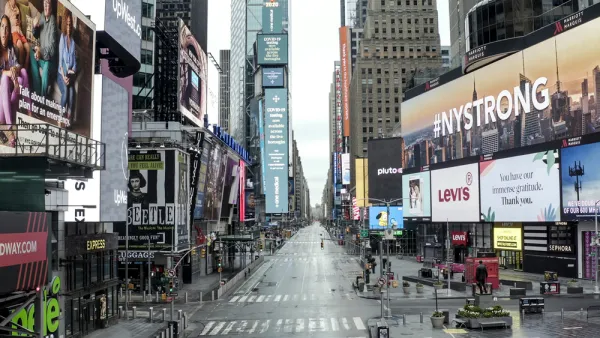
Biden Signs Legislation Ending Covid 19 National Emergency
The Covid 19 national emergency enacted by then-President Donald Trump in March 2020 was officially ended on Monday by President Joe Biden.

Planetizen Federal Action Tracker
A weekly monitor of how Trump’s orders and actions are impacting planners and planning in America.

California plans to bury El Niño’s downpour
If the state plays its cards right, it may be able to store a billion acre-feet of El Niño’s water in aquifers.

Desperate measures: Advocates weigh draining Lake Powell to fill Colorado River
Draining the reservoir could reduce evaporation losses by a couple hundred thousand acre-feet.

In Texas, data centers are swallowing promised parkland
Residents who moved to Taylor, Texas for a rural community now have to contend with three data centers in their backyard.

How a Chicago-sized wind farm beat the odds and powered on
The project spanned five presidential administrations and a standoff with a U.S. military base.

MTA gives itself 30 days to transform pit into basketball court
The site has been under construction since 2022; the city originally estimated it would finish the court in 2024.

FREE Course: Walkable City 1: Why Walkability?
After describing his path towards focusing on walkability as the essence of good planning, Jeff Speck marches through his five principal reasons for making more walkable places.
Reinventing Malls: Planning Alchemy—Turning Gray Fields Into Gold
The course focuses on the opportunities and imperatives that shape reinvention of mall sites.

City of Rosemead
Rutgers University, Edward J. Bloustein School of Planning and Public Policy
One Hundred Miles
Hunter College, City University of New York (CUNY)
The Architects Foundation
University of Cincinnati Online
City of Cambridge
Montrose County
The Pocatello Development Authority