As coronavirus infections grow throughout the South and West, governors and local officials will need to consider rolling back their reopenings. Bars and nightclubs closed in Boise on Wednesday in what may be a sign of what's to come.


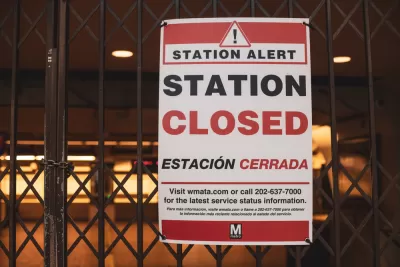
As posted here June 15, the governors of Utah and Oregon and the mayor of Nashville did something that few other elected leaders have been willing to do: they pressed the "pause" button, if only temporarily, on the reopening of their respective jurisdictions due to rising coronavirus infections. What they didn't do is hit the reverse button.
Also on June 15, local health officials in Idaho's most populous county, Ada, "saw a noticeable increase in COVID cases," states Russell Duke, director of Central District Health, one of seven public health districts within the state of Idaho, in a video statement that accompanies the June 22 source article in the Idaho Statesman. "This trend upward has continued throughout the week."
While initially associated with the reopening of bars and nightclubs, "the infection has reached out further into our communities and has risen to the point of great concern," he added.
"The Board of Health for Central District Health, which covers Ada, Boise, Elmore and Valley counties, met Saturday [June 20] and decided it needed to increase restrictions, Duke said, report Ron Counts, Chadd Cripe and Michael Deeds. The official order [pdf] was released Monday night and announced on the Ada County website:
Ada County Returns To STAGE 3: 500% Increase in COVID 19 cases prompts move
Nightclubs, bars and large venues must close. Gatherings of more than 50 people not allowed. Out of state visitors are required to self-quarantine for 14 days.
The rush to reopen
What's somewhat discomforting is reading that the opening of bars and nightclubs wasn't originally in Phase 3 of the state reopening plan called Idaho Rebounds.
"Originally slated to be part of Stage 4, bars were moved up by Gov. Brad Little when he announced the Stage 2 reopening two weeks ago," reported Jacob Scholl and Ruth Brown for the Statesman on May 28.
He said during a news conference on May 14 that the decision was based on science and not any political pressure. Idaho Lt. Gov. Janice McGeachin, who owns a restaurant and pub in Idaho Falls, has been among the many to speak in opposition to the state’s mandated closures.
Transmission rate
"In Ada County, one infected person is expected to lead to seven more cases versus a typical number early in the pandemic of 2.5, according to Dr. Ted Epperly, a Board of Health member for CDH," add Counts, Cripe and Deeds. "The outbreak is being driven by 18-to-29-year-olds — and up to one-third of them won’t show symptoms, Epperly said."
Epperly uses the term, "infectivity rate" in the widely circulated video statement to describe the transmission rate, which he states is seven, and is often referred to as the reproduction number. The number is incredibly high – "compare it to the Rt of 1.4 to 1.7 for influenza," noted Dr. Tom Inglesby, director of the Center for Health Security at the Johns Hopkins Bloomberg School of Public Health in a May 1 paper published in the Journal of the American Medical Associaton, "Public Health Measures and the Reproduction Number of SARS-CoV-2.
Related in Planetizen:
-
Oregon and Utah Press Pause on Reopening, June 15, 20205
Read the full story: Ada County to move back to Stage 3 in Idaho’s reopening process after coronavirus spike

Georgia Mask Ban Reversed After White House Coronavirus Task Force Issues Critical Report
Shortly after a private White House report blasted Georgia's pandemic response, Gov. Brian Kemp issued an executive order allowing cities and counties to impose requirements on mask-wearing. The report was leaked to The Atlanta-Journal Constitution.

Bars or Schools? Governors Need to Decide
In a frank assessment of the reopening choices confronting the nation's governors, Harvard's global health expert, Ashish Jha, asserts that the opening of bars and some other indoor businesses jeopardizes the opening of schools in the fall.

Pandemic to End in California on June 15, Governor Decides
Gov. Gavin Newsom has foreseen the end of the pandemic that has killed over 61,000 Californians and has taken a page from his Republican counterpart in the second most populous state by setting a date when all restrictions will be lifted.

Planetizen Federal Action Tracker
A weekly monitor of how Trump’s orders and actions are impacting planners and planning in America.

Eastern Nebraska is running out of electricity
Data centers and electrification are straining eastern Nebraska’s grid, throttling economic development.

Washington state to charge fee to drivers with fuel-efficient cars
Revenue from the fee will go towards supporting the state’s highways.

How a Massachusetts city used laser beams to find the root of its tree loss
Cambridge discovered that the most tree loss was occurring on residential lots rather than city-owned property.

Instead of building new housing, LA developers are turning mansions into mega-mansions
In the richest areas, the number of houses valued at $30 million with demolition permits has skyrocketed since 2018.

Illinois considers spending $1 billion in taxpayer money on data center
A quantum computing campus and data center are currently under construction in Chicago.

FREE Course: Walkable City 1: Why Walkability?
After describing his path towards focusing on walkability as the essence of good planning, Jeff Speck marches through his five principal reasons for making more walkable places.
Reinventing Malls: Planning Alchemy—Turning Gray Fields Into Gold
The course focuses on the opportunities and imperatives that shape reinvention of mall sites.

City of Charlotte
City of Rosemead
Rutgers University, Edward J. Bloustein School of Planning and Public Policy
University of Michigan School for Environment and Sustainability (SEAS)
Hunter College, City University of New York (CUNY)
The Architects Foundation
University District Partnership
City of Cambridge
The Pocatello Development Authority