Sad days for public transit agencies in Canadian cities could be a sign of layoffs to come for U.S. transit agencies.


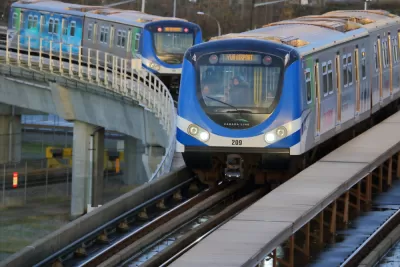
"Almost 1,500 temporary layoffs will take place at TransLink, Coast Mountain Bus Company and B.C. Rapid Transit Company, with the bus company again feeling the effects most because more than half of the transit system’s employees work there," reports Jennifer Saltman in Vancouver, British Columbia.
"The cuts come a week after TransLink revealed that due to plunging ridership, farebox revenue and fuel tax income, it is losing about $2.5 million per day, and it is expected that April’s revenue will be down $70 million, or 51 per cent, from what was forecasted earlier this year," adds Saltman. Translink expects to lose $75 million to $93 million every month for the next six months.
In addition to the wave of temporary layoffs, service is also taking a huge hit, with 18 bus routes suspended around the city already last week, and another 47 routes expected to be cut in May. "According to the transit agency, it prioritized preserving routes serving hospitals and other health facilities, and routes that are suspended either duplicate other routes or have low ridership," reports Saltman.
As of this writing, the reporting on state of transit agencies in the United States during the pandemic has focused mostly on service reductions, lost revenue at the farebox, and the potential for transit to continue to suffer in the a recession or if people flock to automobiles to reduce public health risk (whether transit proves to be a significant risk or not). Stories in the United States, like a broadly sweeping article about U.S. transit agencies from The New York Times, or another article focusing specifically on D.C. Metro, have tended to mention the future threat of massive layoffs.
FULL STORY: COVID-19: Service reductions, layoffs, executive pay cuts begin this week at TransLink

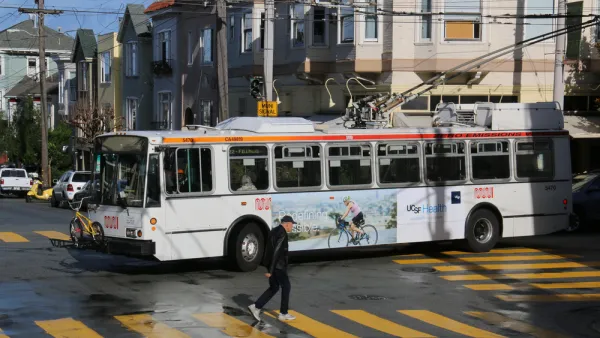
The Transit Catastrophe Continues: San Francisco, D.C. Forecast Service Cuts, Layoffs
Advocates have been waiting for the other shoe to drop as transit agencies deal with cratered revenues during the pandemic without support from Congress.
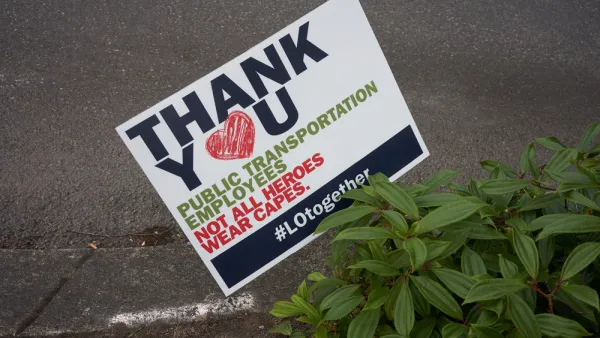
Pandemic Persists With Tragic Consequences for Transit Workers
Labor unions are raising alarms about the difficulties of keeping transit workers—the essential workers upon which so many essential workers rely—safe during the pandemic.
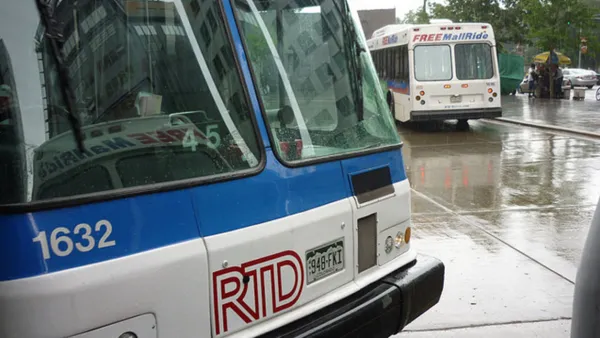
Drastic Transit Layoffs Planned in Denver Area to Offset Budget Deficit
As Colorado's Regional Transportation District plans for the 2021 budget, over 800 jobs could be cut as in attempts to regain financial losses caused by the coronavirus.

Planetizen Federal Action Tracker
A weekly monitor of how Trump’s orders and actions are impacting planners and planning in America.

The state-sanctioned urbicide of Austin
People don’t kill cities. Freeways do.

US to reduce Colorado River water deliveries to Mexico
A new Colorado Treaty amendment reduces Mexico’s Colorado River water allocation by 250,000 acre feet.

Mamdani overhauls NYC's Vision Zero plan with 100 new policy goals
The overhaul aims to reduce traffic deaths and make streets safer for pedestrians, cyclists and drivers through lower speed limits, new safety infrastructure and more.

Amtrak not solely to blame for New Jersey commuter rail's unreliability, report finds
A new study from the Garden State Initiative found that NJ Transit’s budget grew 20% across a 4 year period, but reliability declined significantly over the same period.

EPA erases limits on planet-warming pollution from power plants
Under Monday’s plan, power plants would still have some limits on how much mercury, arsenic and other contaminants they can emit.

FREE Course: Walkable City 1: Why Walkability?
After describing his path towards focusing on walkability as the essence of good planning, Jeff Speck marches through his five principal reasons for making more walkable places.
Reinventing Malls: Planning Alchemy—Turning Gray Fields Into Gold
The course focuses on the opportunities and imperatives that shape reinvention of mall sites.

Eagle County Government
Harvard University Graduate School of Design
Nashville Planning Department
The Architects Foundation
University of Cincinnati Online
The Pocatello Development Authority
The Urban Renewal Agency of the City of Pocatello
Journal of the American Planning Association