Cities have an opportunity to make bold changes that would give pedestrians and cyclists the space on streets that they deserve.


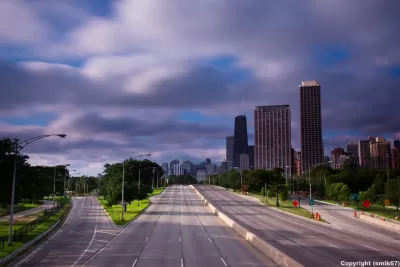
"With public transportation ridership cratering, demand for Uber and other ride-hailing services fizzling, and people everywhere looking to get the hell off their couches and feel a little bit of breeze on their skin, the time for cities to take a bold stand against cars and parking is undeniably now," writes Andrew J. Hawkins.
As the coronavirus continues to spread and social distancing becomes more essential, some cities have already taken steps to make streets more available for biking and walking. He points out that interest in car-free streets was growing before the coronavirus crisis started shutting cities down, with projects in New York and San Francisco proving to be popular.
Hawkins argues that the measures taken during this crisis should not be temporary. "The coronavirus pandemic has already changed many of our personal habits related to work and social interaction. It’s an opportunity for a different way of thinking about urban design and planning as well."
FULL STORY: There’s no better time for cities to take space away from cars

A Love Letter to the Bicycle
Riding a bicycle is not only a coping mechanism; it's also a way to protect ourselves during the coronavirus pandemic.
Charlotte Mobility Plan Centers Improved Multimodal Options and Economic Mobility
The city’s newly approved Strategic Mobility Plan highlights the need for better options when it comes to walking, biking, and public transit, setting a goal to reduce driving to half of total trips.
Miami Beach to Reopen Ocean Drive to Cars
The famous cruising strip was off-limits to cars during the pandemic. Now, the city is letting vehicles return with some pedestrian-oriented compromises.

Planetizen Federal Action Tracker
A weekly monitor of how Trump’s orders and actions are impacting planners and planning in America.

The state-sanctioned urbicide of Austin
People don’t kill cities. Freeways do.

US to reduce Colorado River water deliveries to Mexico
A new Colorado Treaty amendment reduces Mexico’s Colorado River water allocation by 250,000 acre feet.

5 New England states march closer to 800 megawatt wind energy project
Securing federal approval for the project may be complicated under the Trump administration, which has historically been hostile towards domestic wind power.

Baltimore to break ground on $50 million Transit Priority Project
The project will bring faster bus trips, safer streets and better bike connections to Baltimore.

Airbnb launches $250 million 'last-dollar financing' housing accelerator, makes first investment in Austin
The company will put $6.4 million towards affordable housing development in Texas’ capital.

FREE Course: Walkable City 1: Why Walkability?
After describing his path towards focusing on walkability as the essence of good planning, Jeff Speck marches through his five principal reasons for making more walkable places.
Reinventing Malls: Planning Alchemy—Turning Gray Fields Into Gold
The course focuses on the opportunities and imperatives that shape reinvention of mall sites.

Eagle County Government
Harvard University Graduate School of Design
Nashville Planning Department
The Architects Foundation
University of Cincinnati Online
The Pocatello Development Authority
The Urban Renewal Agency of the City of Pocatello
Journal of the American Planning Association