"Who do you learn from?" is a question that transportation planners, particularly in the United States, should ask themselves.


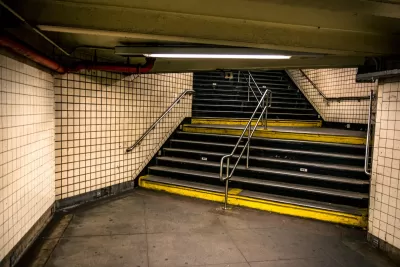
Alon Levy argues that countries in Europe and Asia look for lessons about transportation planning from a range of places in contrast to the approach of English-speaking countries that tend to operate in a closed network.
"Rather, the shared characteristics in the Anglosphere seem to be that these countries mostly learn from each other. The idea of road pricing was introduced to the world by the Smeed Report in 1962-4, then actually implemented in Singapore in 1975, then failed to make it to Hong Kong, then got back to London in 2003, and only then became a well-known idea in the American discourse," says Levy.
Levy uses the current coronavirus epidemic as an analogy by pointing out that Asian countries learned response lessons quickly from each other, while the United States and European countries have been slow to follow. In the case of transportation planning, Anglosphere countries choose to value their experiences and knowledge over those of other countries, Levy asserts.
“Senior management in big American cities does not understand anything about how things work in other countries, nor do the managers have any social relationships with their peers abroad. Domestically, and sometimes even across the northern border, it’s different – a senior manager in New York has gone to national conferences and met peers from Los Angeles and Chicago and Boston and Seattle and probably also Toronto. A best practices effort that’s restricted to North America empowers such managers,” says Levy.
FULL STORY: Who Do You Learn From?

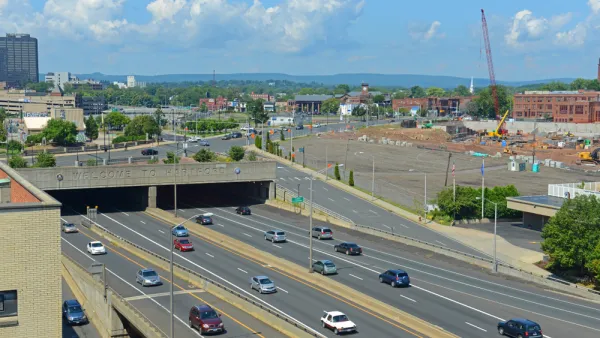
Connecticut DOT Announces Five-Year, $6 Billion Capital Investment Plan
The Nutmeg State will spend 64 percent of its capital investments over the next five years on highway and bridge projects.
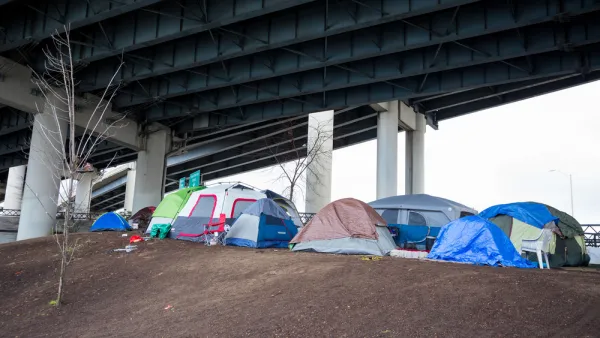
The Onion Has a Blistering Take on Congress' Idea of a Social Safety Net
The latest foray by The Onion into the world of planning satirizes the American tendency to prioritize highway spending over housing and the homeless.
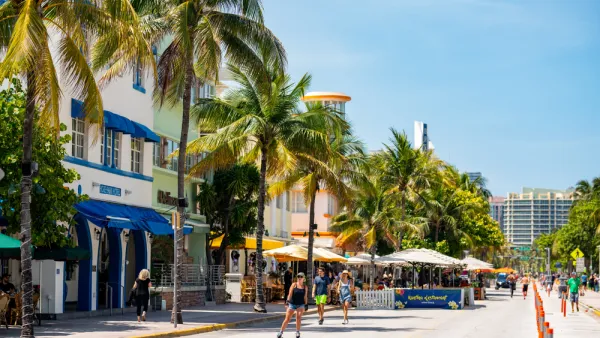
Cars Retake Their Place on Ocean Drive in Miami Beach
Ocean Drive in South Beach is the site of an ongoing pilot project in making space for pedestrians and businesses in space previously devoted to cars. Advocates and some local politicians don't like the direction that the experiment is headed.

Planetizen Federal Action Tracker
A weekly monitor of how Trump’s orders and actions are impacting planners and planning in America.

The state-sanctioned urbicide of Austin
People don’t kill cities. Freeways do.

US to reduce Colorado River water deliveries to Mexico
A new Colorado Treaty amendment reduces Mexico’s Colorado River water allocation by 250,000 acre feet.

5 New England states march closer to 800 megawatt wind energy project
Securing federal approval for the project may be complicated under the Trump administration, which has historically been hostile towards domestic wind power.

Baltimore to break ground on $50 million Transit Priority Project
The project will bring faster bus trips, safer streets and better bike connections to Baltimore.

Airbnb launches $250 million 'last-dollar financing' housing accelerator, makes first investment in Austin
The company will put $6.4 million towards affordable housing development in Texas’ capital.

FREE Course: Walkable City 1: Why Walkability?
After describing his path towards focusing on walkability as the essence of good planning, Jeff Speck marches through his five principal reasons for making more walkable places.
Reinventing Malls: Planning Alchemy—Turning Gray Fields Into Gold
The course focuses on the opportunities and imperatives that shape reinvention of mall sites.

Eagle County Government
Harvard University Graduate School of Design
Nashville Planning Department
The Architects Foundation
University of Cincinnati Online
The Pocatello Development Authority
The Urban Renewal Agency of the City of Pocatello
Journal of the American Planning Association