The historic, car-free transformation of San Francisco's busiest street opens to the public today.


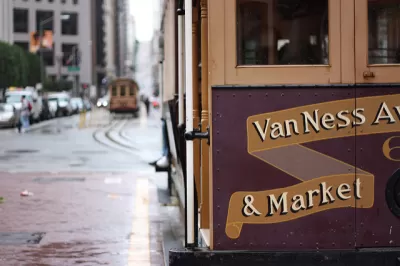
Mayor London Breed takes to the Internet today to announce the arrival of a whole new Market Street in San Francisco.
Starting today, over 2 miles of Market Street will become car-free, a historic milestone in the history of San Francisco and in the world-wide movement to create more spaces that are made for people.
According to Breed, Market Street is the busiest street in the city, and it's taken decades of politics and planning to complete this transformation. The final clearance for today's big reveal came in October 2019—the culmination of the Better Market Street process, which invested $604 million to improve the public realm for all users of the street.
Jeffrey Tumlin, the recently hired executive director of the San Francisco Municipal Transportation Agency, was on the scene this morning to reveal the new Market Street, and it almost looks like a scene in Europe.
Market St this morning pic.twitter.com/5z2GZI6P35
— Jeffrey Tumlin (@jeffreytumlin) January 29, 2020
The comments on a celebratory tweet from Mayor Breed, however, are typically American.
Starting today, San Francisco's main civic boulevard puts people first.
Market Street is officially car-free!https://t.co/lJbk8R2jMS— London Breed (@LondonBreed) January 29, 2020
FULL STORY: Making Market Street Car-Free

Car-Free Streets Aren't a Silver Bullet
The San Francisco Chronicle's urban design critic tempers expectations for Market Street in San Francisco, where the city this week undertook an ambitious, but perhaps over-sold, redesign of the busy street.
Car-Free Market Street Approved in San Francisco
The San Francisco Municipal Transportation Agency Board of Directors approved the Better Market Street plan on October 15, 2019.
San Francisco Returns $15 Million Federal Grant for Market Street Improvements
San Francisco was awarded a federal grant in 2018 that it was forced to return in 2022 because it couldn't start construction by 2025.

Planetizen Federal Action Tracker
A weekly monitor of how Trump’s orders and actions are impacting planners and planning in America.

The state-sanctioned urbicide of Austin
People don’t kill cities. Freeways do.

US to reduce Colorado River water deliveries to Mexico
A new Colorado Treaty amendment reduces Mexico’s Colorado River water allocation by 250,000 acre feet.

5 New England states march closer to 800 megawatt wind energy project
Securing federal approval for the project may be complicated under the Trump administration, which has historically been hostile towards domestic wind power.

Baltimore to break ground on $50 million Transit Priority Project
The project will bring faster bus trips, safer streets and better bike connections to Baltimore.

Airbnb launches $250 million 'last-dollar financing' housing accelerator, makes first investment in Austin
The company will put $6.4 million towards affordable housing development in Texas’ capital.

FREE Course: Walkable City 1: Why Walkability?
After describing his path towards focusing on walkability as the essence of good planning, Jeff Speck marches through his five principal reasons for making more walkable places.
Reinventing Malls: Planning Alchemy—Turning Gray Fields Into Gold
The course focuses on the opportunities and imperatives that shape reinvention of mall sites.

Eagle County Government
Harvard University Graduate School of Design
Nashville Planning Department
The Architects Foundation
University of Cincinnati Online
The Pocatello Development Authority
The Urban Renewal Agency of the City of Pocatello
Journal of the American Planning Association