The world is sprawling as it develops, according to ambitious new research.


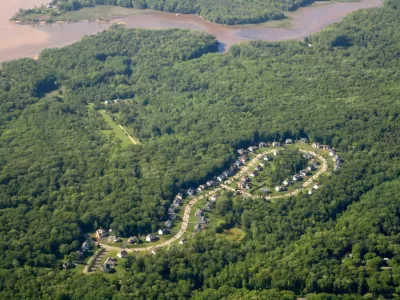
"New research from McGill University and the University of California, Santa Cruz has found that the local streets of the world's cities are becoming less connected, a global trend that is driving urban sprawl and discouraging the use of public transportation," according to an article provided by McGill University on the PhysOrg website.
"The new study published in Proceedings of the National Academy of Sciences is the first global history of sprawl as measured by local connectivity of street networks."
Co-author Christopher Barrington-Leigh is quoted in the article explaining the motivation behind the study, which required a seven-year collaboration to build a Street-Network Disconnectedness Index to support a global street connectivity map. The findings show that Asian cities are quickly joining the ranks of the world's most sprawling cities.
Read the full story: Street network patterns reveal worrying worldwide trend towards urban sprawl


Cities Have Doubled in Size Globally in the Last 20 Years, Study Says
New research from China finds an incredible rate of urban expansion in North America and China.
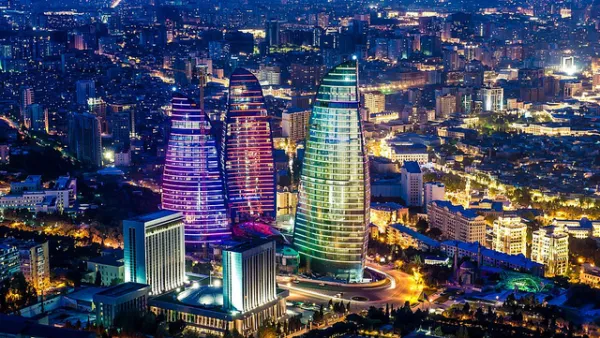
Mapping the Collision Course of Sprawl and Biodiversity
The expansion of the built environment proceeds with little regard for the loss of biodiversity, and the planning field isn't doing enough to help.
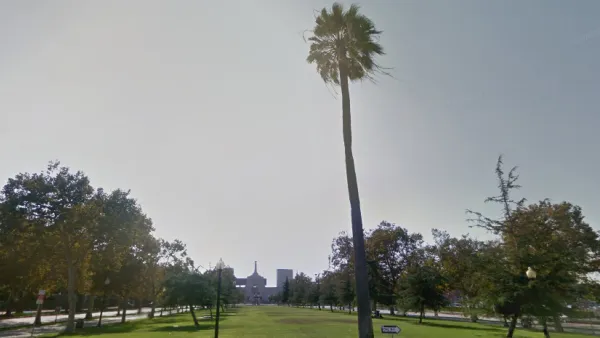
Study Examines the Effect of 'Holdouts' on the Development Patterns of Los Angeles
After building an argument that land assembly is key to reinventing cities for a new era, a new study identifies the impact of the landowners standing in the way of that progress.

Planetizen Federal Action Tracker
A weekly monitor of how Trump’s orders and actions are impacting planners and planning in America.

The state-sanctioned urbicide of Austin
People don’t kill cities. Freeways do.

US to reduce Colorado River water deliveries to Mexico
A new Colorado Treaty amendment reduces Mexico’s Colorado River water allocation by 250,000 acre feet.

Nation's most wind-powered state turns to coal as data centers increase energy demand
For the first time in decades, Iowa has increased its generation of coal power.

NYC cools commuters with city's first rain garden above a bus stop
New York City officials say the plants in the rain garden can absorb 16 gallons of rainwater during heavy storms.

Brightline West’s future may rely on $6 billion federal loan
The company has until Nov. 2 to make a $400 million equity investment into its proposed high-speed rail line.

FREE Course: Walkable City 1: Why Walkability?
After describing his path towards focusing on walkability as the essence of good planning, Jeff Speck marches through his five principal reasons for making more walkable places.
Reinventing Malls: Planning Alchemy—Turning Gray Fields Into Gold
The course focuses on the opportunities and imperatives that shape reinvention of mall sites.

Eagle County Government
Harvard University Graduate School of Design
Nashville Planning Department
The Architects Foundation
University of Cincinnati Online
The Pocatello Development Authority
The Urban Renewal Agency of the City of Pocatello
Journal of the American Planning Association