New research from China finds an incredible rate of urban expansion in North America and China.


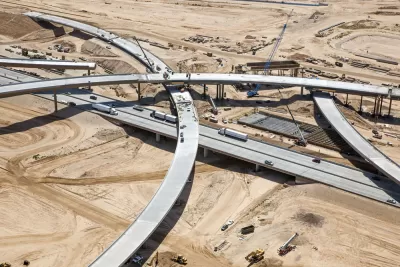
Stephen Chen reports the findings of a new study from researchers in China ad published in Science Bulletin earlier this month. The key finding of the research: "The collective size of cities more than doubled over the past two decades in an unequal pace of expansion across the globe…"
"Measurements based on satellite images suggest the total size of urban areas increased from nearly 240,000 sq km (92,700 square miles) in the year 2000 to almost 520,000 sq km (200,000 square miles) in 2020," explain Chen.
The continent with the fastest rate of expansion: North America, with 3,921 square kilometers of developer land added every year over that time period. Chinese cities, infamous for a quick rate of urbanization and expansion, "trailed closely behind with a 73,300 sq km increase in total."
The research team behind the study created a new tool to define boundaries of cities, acknowledging the inaccuracies of previously extant automated processing tools, according to the article. The researchers also credited the quick rate of urban expansion in North America and China to people seeking more space to live in the relatively undeveloped expanses of the country and an intensive use of automobiles.
The news about the expansion of urban areas follows closely on the heels of news that the United Nations has updated its definition of urban, as compared to rural.
FULL STORY: World’s cities doubled in land use over 20 years, with America leading urban sprawl, study finds


Planning for Congestion Relief
The third and final installment of Planetizen's examination of the role of the planning profession in both perpetuating and solving traffic congestion.

How Planning Fails to Solve Congestion
Solutions for congestion are never as simple and easy as armchair planners and engineers would like you to believe—especially those who suggest that congestion can be solved by forever building more roadway capacity.
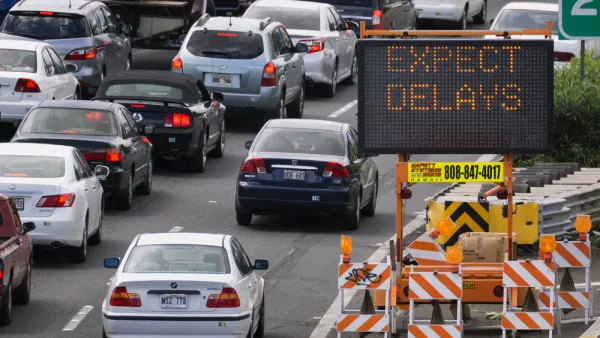
Planning and the Complicated Causes and Effects of Congestion
What do planners know about congestion, and what can they do about it? Explanations and solutions are less obvious than they seem (part one of a three-part series).

The state-sanctioned urbicide of Austin
People don’t kill cities. Freeways do.

US to reduce Colorado River water deliveries to Mexico
A new Colorado Treaty amendment reduces Mexico’s Colorado River water allocation by 250,000 acre feet.

New Jersey’s second-largest city bans standalone data centers
Jersey City will continue to allow co-location facilities, such as those meant for research institutions that store their own data.

Amtrak not solely to blame for New Jersey commuter rail's unreliability, report finds
A new study from the Garden State Initiative found that NJ Transit’s budget grew 20% across a 4 year period, but reliability declined significantly over the same period.

EPA erases limits on planet-warming pollution from power plants
Under Monday’s plan, power plants would still have some limits on how much mercury, arsenic and other contaminants they can emit.

Phoenix announces new on-demand transit service, more frequent RAPID buses
Both new services will launch in October, and are part of Phoenix's Project Effective Access Solutions for Easing Congestion.

FREE Course: Walkable City 1: Why Walkability?
After describing his path towards focusing on walkability as the essence of good planning, Jeff Speck marches through his five principal reasons for making more walkable places.
Reinventing Malls: Planning Alchemy—Turning Gray Fields Into Gold
The course focuses on the opportunities and imperatives that shape reinvention of mall sites.

Eagle County Government
Harvard University Graduate School of Design
Nashville Planning Department
The Architects Foundation
University of Cincinnati Online
The Pocatello Development Authority
The Urban Renewal Agency of the City of Pocatello
Journal of the American Planning Association