This performance ranking separates the fakers from the legit operation to reduce carbon emissions from transportation.


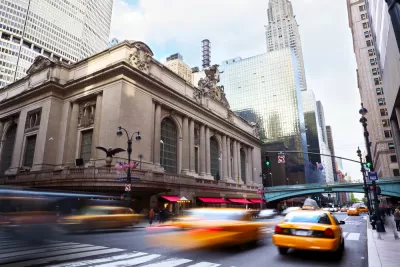
Streetlight Data released its "2020 U.S. Transportation Climate Impact Index," which ranks the 100 largest metropolitan areas on climate impact using performance-based transportation metrics.
As explained in an article that introduces the index, the rankings boil down to the difference between car travel and low-carbon alternative modes of travel. Thus, the number one metropolitan area probably won't come as a surprise: New York City-Newark-Jersey City. Coming in second is San Francisco-Oakland-Hayward, and coming in third is Madison, Wisconsin.
Streetlight Data released a package of data and articles to help offer insight into the details of the index beyond the rankings. So the entire list of metropolitan areas and rankings by key metrics in the index are also available.
The decline of the coal industry in recent years has pushed transportation to the top of the list as the largest emitter of greenhouse gas by sector. Streetlight Data puts a finer point on the origins of that leading source of greenhouse gases.
Read the full story: 2020 U.S. Transportation Climate Impact Index

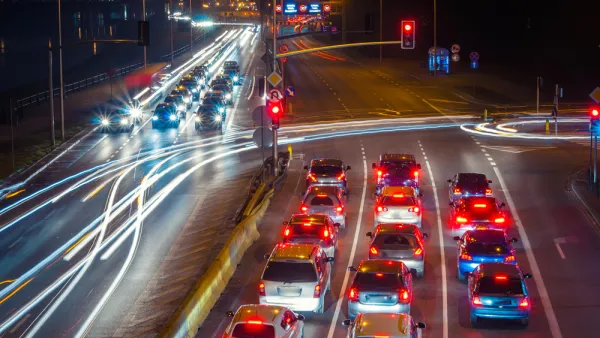
Where the Pandemic Has Scrambled Traffic Patterns
The map of metropolitan areas that drive least, and thus emit fewer greenhouse gas emissions, has been completely redrawn by the pandemic, according to a recent report.
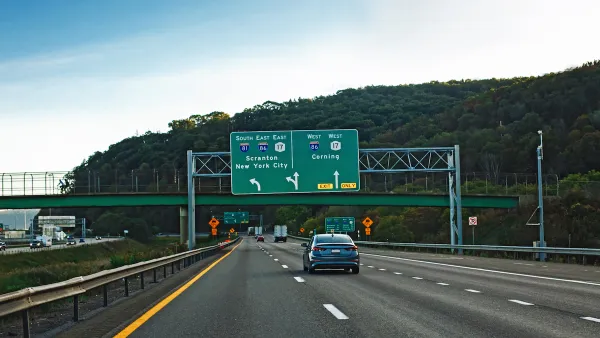
Proposed New York Bill Would Align Transportation Projects With Driving Reduction Goals
If passed, the law would require all highway projects to show how they would reduce VMT or mitigate their impact.
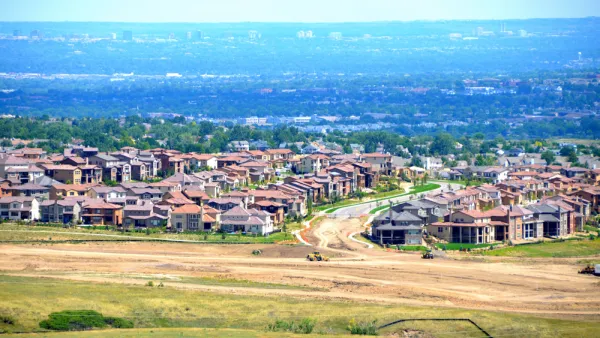
Connecting Land Use and Transportation Planning to Save the Climate
The United States will have to make major changes to long-standing land use and transportation paradigms to prevent the worst outcomes of climate change. How to make those changes was the subject of a recent podcast.

Planetizen Federal Action Tracker
A weekly monitor of how Trump’s orders and actions are impacting planners and planning in America.

The state-sanctioned urbicide of Austin
People don’t kill cities. Freeways do.

Colorado’s Largest Data Center Could Rise Next to Homes — Without a Public Hearing
The proposed campus would consume 11 times the power of Denver International Airport; as it has across the country, opposition mounts.

Nation's most wind-powered state turns to coal as data centers increase energy demand
For the first time in decades, Iowa has increased its generation of coal power.

NYC cools commuters with city's first rain garden above a bus stop
New York City officials say the plants in the rain garden can absorb 16 gallons of rainwater during heavy storms.

Brightline West’s future may rely on $6 billion federal loan
The company has until Nov. 2 to make a $400 million equity investment into its proposed high-speed rail line.

FREE Course: Walkable City 1: Why Walkability?
After describing his path towards focusing on walkability as the essence of good planning, Jeff Speck marches through his five principal reasons for making more walkable places.
Reinventing Malls: Planning Alchemy—Turning Gray Fields Into Gold
The course focuses on the opportunities and imperatives that shape reinvention of mall sites.

Greater Baltimore Committee
Eagle County Government
Harvard University Graduate School of Design
The Architects Foundation
University of Cincinnati Online
The Pocatello Development Authority
The Urban Renewal Agency of the City of Pocatello
Journal of the American Planning Association