A feasibility analysis published today estimates costs and benefits for the still-unproven Hyperloop technology, as envisioned for a route connecting Cleveland and Chicago.


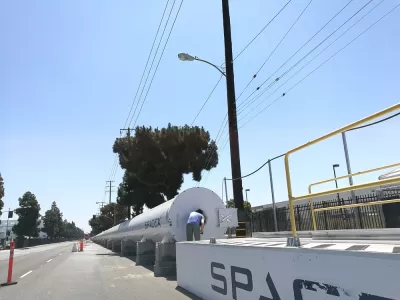
Steven Litt reports the details of a feasibility analysis of a Hyperloop connecting Cleveland to Chicago, published today by the Northeast Ohio Areawide Coordinating Agency (NOACA) and the Los Angeles-based Hyperloop Transportation Technologies.
"A high-speed hyperloop line that could zoom passengers through a vacuum tube from Cleveland to Chicago and Pittsburgh could cost from $24.7 billion to $29.8 billion to build, depending on variations in the route and stops along the way," explains Litt of the findings included in the feasibility analysis.
NOACA Executive Director Grace Gallucci is quoted extensively in the article explaining that the impetus for the study and the project is coming from the private sector, which would be expected to pay most of the costs of any project.
"NOACA’s not trying to push this," says Gallucci in the article. "NOACA wants to be part of the innovation and a leader, but that’s very different from pushing it. This is not our agenda."
The article includes details on how the technology is expected to work, along with data on the jobs and economic benefit the project's construction could deliver to the region's along the Cleveland to Chicago route.
FULL STORY: Cleveland hyperloop benefits would justify $29.8 billion price tag: study


Experts: Great Lakes Hyperloop Study Full of Dubious Claims
About that Hyperloop report…
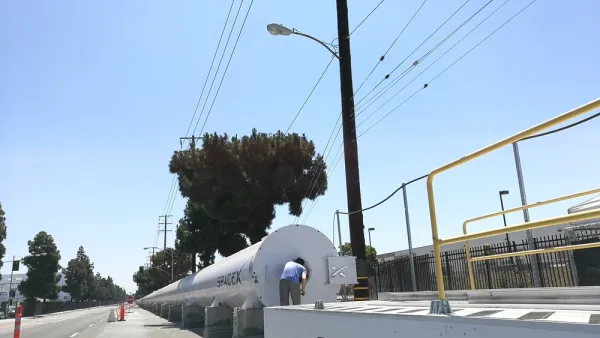
Hyperloop for the Great Lakes Gets Initial Blessing the U.S House of Representatives
The U.S. Senate still needs to approve the bill that would spend $5 million in initial funding for the Great Lakes Hyperloop System.
Planning in Earnest for a Hyperloop From Pittsburgh to Chicago
Funded studies of the hyperloop concept are underway in the Midwest.

Planetizen Federal Action Tracker
A weekly monitor of how Trump’s orders and actions are impacting planners and planning in America.

The state-sanctioned urbicide of Austin
People don’t kill cities. Freeways do.

US to reduce Colorado River water deliveries to Mexico
A new Colorado Treaty amendment reduces Mexico’s Colorado River water allocation by 250,000 acre feet.

Mamdani overhauls NYC's Vision Zero plan with 100 new policy goals
The overhaul aims to reduce traffic deaths and make streets safer for pedestrians, cyclists and drivers through lower speed limits, new safety infrastructure and more.

Amtrak not solely to blame for New Jersey commuter rail's unreliability, report finds
A new study from the Garden State Initiative found that NJ Transit’s budget grew 20% across a 4 year period, but reliability declined significantly over the same period.

EPA erases limits on planet-warming pollution from power plants
Under Monday’s plan, power plants would still have some limits on how much mercury, arsenic and other contaminants they can emit.

FREE Course: Walkable City 1: Why Walkability?
After describing his path towards focusing on walkability as the essence of good planning, Jeff Speck marches through his five principal reasons for making more walkable places.
Reinventing Malls: Planning Alchemy—Turning Gray Fields Into Gold
The course focuses on the opportunities and imperatives that shape reinvention of mall sites.

Eagle County Government
Harvard University Graduate School of Design
Nashville Planning Department
The Architects Foundation
University of Cincinnati Online
The Pocatello Development Authority
The Urban Renewal Agency of the City of Pocatello
Journal of the American Planning Association