As the technology gets cheaper, AI surveillance systems are gaining popularity in some parts of the country, like the neighborhood of Magnolia in Seattle.



Melissa Hellman reports on the proliferation of a private artificial-intelligence security system called Flock Safety in the city of Seattle. Ten neighborhoods around the city are using Flock Safety, including Magnolia, which is where the article's attention focuses.
"The system uses computer vision and machine learning to digitize and categorize images of license plates, the color, make and model of vehicles, as well as how many times a car has entered the neighborhood in a 30-day period," according to Hellman. With that technology, resident Phil Andrews has detected "an uptick in neighborhood disruptions near the secluded waterfront community of dead-end streets called Land’s End. He noted a break-in, package theft and people meandering through the neighborhood who appeared 'high as a kite."
According to Hellman, studies say there are two sides to this private surveillance coin: "While studies show that security cameras can prevent crime when used in conjunction with other deterrents, such as increased lighting, some researchers say AI surveillance systems exacerbate users’ inherent biases and impact people who are disproportionately policed, such as people of color and those experiencing homelessness."
The feature-length article includes more details on how Magnolia residents bought and adopted the technology, how police use surveillance footage from systems like Flock Safety, the adoption of Flock Safety in other 300 U.S. cities, and the business of private security systems, with home security expected to be a $48 billion business next year.

Under Surveillance
The city of Lancaster, Pennsylvania, will soon be one of the most watched cities in the world, with plans for 165 closed circuit cameras monitoring public spaces.
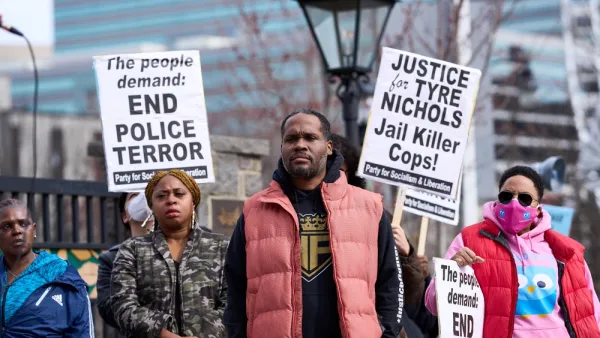
Memphis: Crime-fighting Camera Sheds Light on Police Abuse
The irony is unmistakable. Public surveillance cameras, long controversial in the criminal justice community, provided pivotal video footage of the beating of motorist Tyre Nichols by five Memphis police officers at a traffic stop on January 7.
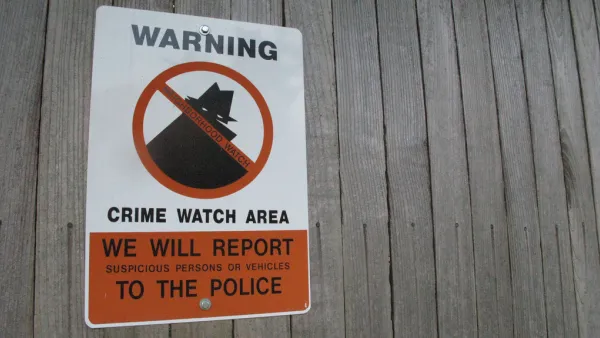
Op-Ed: Seattle Should Do More About Crime in Business Districts
To combat a rash of incivility and outright criminal acts, three Business Improvement Area directors argue that Seattle needs to commit more law enforcement resources to business districts.

Planetizen Federal Action Tracker
A weekly monitor of how Trump’s orders and actions are impacting planners and planning in America.

The state-sanctioned urbicide of Austin
People don’t kill cities. Freeways do.

US to reduce Colorado River water deliveries to Mexico
A new Colorado Treaty amendment reduces Mexico’s Colorado River water allocation by 250,000 acre feet.

Baltimore to break ground on $50 million Transit Priority Project
The project will bring faster bus trips, safer streets and better bike connections to Baltimore.

Airbnb launches $250 million 'last-dollar financing' housing accelerator, makes first investment in Austin
The company will put $6.4 million towards affordable housing development in Texas’ capital.

Guerilla urbanists are building DIY bus stop benches in Chicago
A before-and-after of one of the bus stops with a new bench. The new benches are not officially sanctioned or permitted, but the residents who placed them hope they will be the start of a network of DIY benches across the city.

FREE Course: Walkable City 1: Why Walkability?
After describing his path towards focusing on walkability as the essence of good planning, Jeff Speck marches through his five principal reasons for making more walkable places.
Reinventing Malls: Planning Alchemy—Turning Gray Fields Into Gold
The course focuses on the opportunities and imperatives that shape reinvention of mall sites.

Eagle County Government
Harvard University Graduate School of Design
Nashville Planning Department
The Architects Foundation
University of Cincinnati Online
The Pocatello Development Authority
The Urban Renewal Agency of the City of Pocatello
Journal of the American Planning Association