Extremely poor ridership might be dooming the St. Louis Loop Trolley less than a year after it opened to the public.


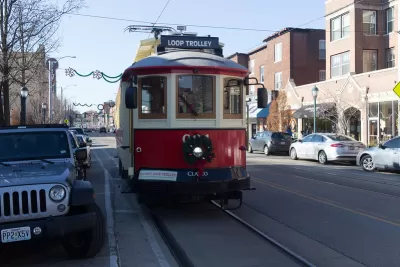
"The agency behind the circuitous street car has told St. Louis County it needs $200,000 to stay solvent through November, followed by another $500,000 shortly after to keep operating into 2020," reports Doyle Murphy.
"The trolley has struggled from the start of the $52 million project, opening years behind schedule. It then bumbled through permitting issues that briefly sidelined it, the occasional collision and a variety of other miscues," according to Murphy.
The fundamental problem facing the Loop Trolley, however, is a lack of ridership. An earlier article by Brittany Robbins reports that in its first 11 months of service, the streetcar has sold only $32,456 in tickets. "Officials previously estimated ticket sales would reach $428,672 this year," according to Robbins.
The federal government contributed $33.9 million to the project, and local officials are concerned that letting such a project fail so early in its existence would set a terrible precedent for the city of St. Louis' future federal funding prospects.
FULL STORY: Loop Trolley Could Fold in November Unless St. Louis County Gives it $700,000

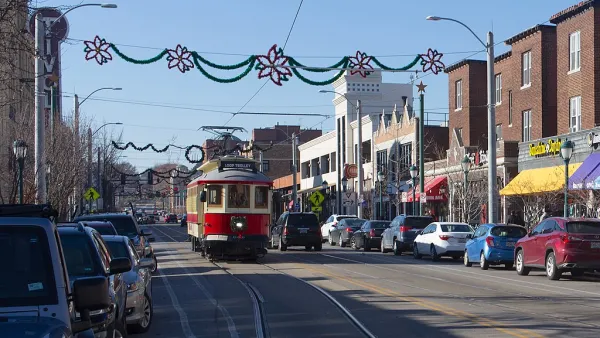
St. Louis Trolley Streetcar Ridership Dismal in the Early Days
The St. Louis Loop Trolley isn't running at full capacity, yet, but it's also falling well short of its projected ridership.
St. Louis Trolley Plans Hit a Snag
The St. Louis trolley revival is running out of cash.
St. Louis Trolley Hoping to Increase Hours
The St. Louis Trolley should begin operating later this year, but planners are hoping for additional funding to allow the service to operate longer hours.

Planetizen Federal Action Tracker
A weekly monitor of how Trump’s orders and actions are impacting planners and planning in America.

The state-sanctioned urbicide of Austin
People don’t kill cities. Freeways do.

US to reduce Colorado River water deliveries to Mexico
A new Colorado Treaty amendment reduces Mexico’s Colorado River water allocation by 250,000 acre feet.

5 New England states march closer to 800 megawatt wind energy project
Securing federal approval for the project may be complicated under the Trump administration, which has historically been hostile towards domestic wind power.

Baltimore to break ground on $50 million Transit Priority Project
The project will bring faster bus trips, safer streets and better bike connections to Baltimore.

Airbnb launches $250 million 'last-dollar financing' housing accelerator, makes first investment in Austin
The company will put $6.4 million towards affordable housing development in Texas’ capital.

FREE Course: Walkable City 1: Why Walkability?
After describing his path towards focusing on walkability as the essence of good planning, Jeff Speck marches through his five principal reasons for making more walkable places.
Reinventing Malls: Planning Alchemy—Turning Gray Fields Into Gold
The course focuses on the opportunities and imperatives that shape reinvention of mall sites.

Eagle County Government
Harvard University Graduate School of Design
Nashville Planning Department
The Architects Foundation
University of Cincinnati Online
The Pocatello Development Authority
The Urban Renewal Agency of the City of Pocatello
Journal of the American Planning Association