The Chicago Tribune supports the use of tax increment financing to fund a $2.1 billion project to revamp the Red and Purple lines on the CTA system in Chicago.


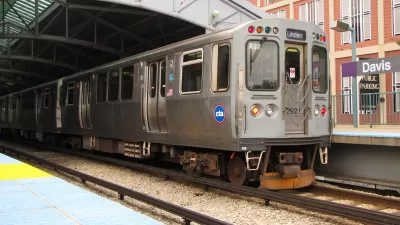
Capital investment is an expensive proposition for transit systems in the United States, and the Chicago Transit Authority is no different. The city recently broke ground on its largest ever transit project, a $2.1 effort to modernize the Red and Purple lines.
The Chicago Tribune Editorial Board weighs in on the project, praising the city for investing in public transit "in an era when many people are inclined to look to their Uber or Lyft apps for a ride."
Also earning plaudits from the Editorial Board is the city's use of tax increment financing (TIF) to help fund the project.
In 2016, City Hall endorsed the use of tax increment financing to help fund the project. It marked the city’s first use of TIF dollars to finance transit needs. Under a TIF, a project is paid for using the incremental tax dollars generated by rising property values on the surrounding land. In this case, that land is a 6-mile long, mile-wide corridor from Devon Avenue in Rogers Park to North Avenue in Lincoln Park.
Despite the skepticism among Chicago residents about TIF ("and for good reason," according to the Editorial Board), the editorial makes a case that TIF is the right tool for the right job in the case of the Red and Purple Line modernization project.
Read the full story: Editorial: Using TIF money for the CTA Red-Purple Line rebuild is the right way to go

Update: Chicago Red Line Extension TIF Approved
The long-anticipated project that will bring the Chicago Transit Authority rail system into transit deserts on the Southside of Chicago is making substantial progress.
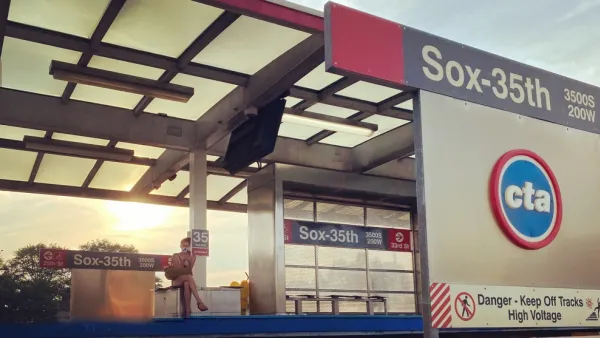
Chicago’s Red Line Extension Environmental Review Complete
The Red Line Extension on Chicago’s South Side could be a game changer, if the city can figure out the local funding.
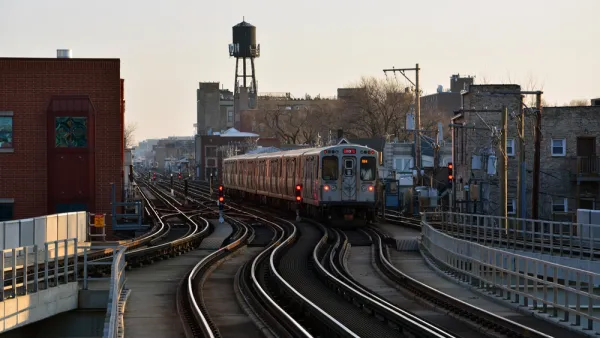
Work Ready to Begin on $2.1 Billion Red and Purple Line Modernization in Chicago
The Chicago Transit Authority's largest-ever construction project, also one of its most controversial projects, will begin construction soon.

Planetizen Federal Action Tracker
A weekly monitor of how Trump’s orders and actions are impacting planners and planning in America.

The state-sanctioned urbicide of Austin
People don’t kill cities. Freeways do.

US to reduce Colorado River water deliveries to Mexico
A new Colorado Treaty amendment reduces Mexico’s Colorado River water allocation by 250,000 acre feet.

Nation's most wind-powered state turns to coal as data centers increase energy demand
For the first time in decades, Iowa has increased its generation of coal power.

NYC cools commuters with city's first rain garden above a bus stop
New York City officials say the plants in the rain garden can absorb 16 gallons of rainwater during heavy storms.

Brightline West’s future may rely on $6 billion federal loan
The company has until Nov. 2 to make a $400 million equity investment into its proposed high-speed rail line.

FREE Course: Walkable City 1: Why Walkability?
After describing his path towards focusing on walkability as the essence of good planning, Jeff Speck marches through his five principal reasons for making more walkable places.
Reinventing Malls: Planning Alchemy—Turning Gray Fields Into Gold
The course focuses on the opportunities and imperatives that shape reinvention of mall sites.


Greater Baltimore Committee
Eagle County Government
Harvard University Graduate School of Design
The Architects Foundation
University of Cincinnati Online
The Pocatello Development Authority
The Urban Renewal Agency of the City of Pocatello
Journal of the American Planning Association