The agency could see an influx of capital funds from congestion pricing, but cuts to bus and rail service to make up for budget shortfalls would result in long-term setbacks to the system.


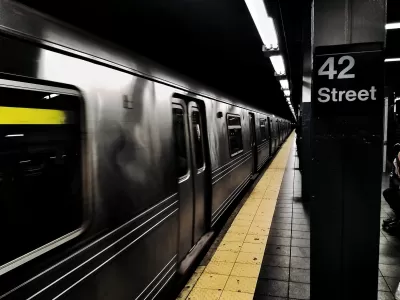
The New York Metropolitan Transportation Authority is looking at ways to cut back to address an increasing budget shortfall, but service cuts are not the way to do this, argues Andrew Albert. Widespread support for congestion pricing points to $40 billion of capital funds in the future, which would result in more people moving to transit.
"That means there has to be service to get people where they need to go. It’s simple: if the service isn’t there, the riders won’t come. Why fund new signals when there are fewer trains to take advantage of them?" says Albert.
Instead, he urges a dedicated funding stream for operations, which could come from a sales tax increase or changes to the gas tax. "Clearly, no one wants to raise taxes, but neither can we ignore the deleterious results of service cuts. New York and the surrounding region cannot afford to be caught in a transit death spiral. Our economy will suffer but riders will be the biggest losers," adds Albert.
FULL STORY: MTA needs more revenue, not service cuts

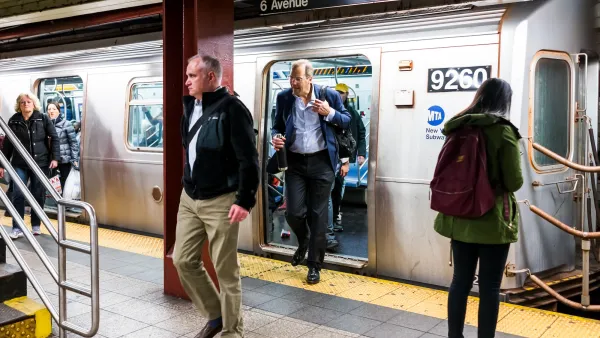
NYC to Upgrade 1/3 of its Subway Car Fleet
The MTA is seeking proposals for up to 2,390 new subway cars to upgrade its aging fleet.

New York MTA Officials Warn of Massive Budget Gaps Without Congestion Pricing
The agency will lose hundreds of millions in projected congestion pricing revenue, forcing cuts to expansion plans.
New York MTA Upholds Pause on Congestion Pricing, Scales Back Projects
The agency will not be able to go forward with former plans to improve station facilities and transit safety, and expand service.

The state-sanctioned urbicide of Austin
People don’t kill cities. Freeways do.

US to reduce Colorado River water deliveries to Mexico
A new Colorado Treaty amendment reduces Mexico’s Colorado River water allocation by 250,000 acre feet.

New Jersey’s second-largest city bans standalone data centers
Jersey City will continue to allow co-location facilities, such as those meant for research institutions that store their own data.

Amtrak not solely to blame for New Jersey commuter rail's unreliability, report finds
A new study from the Garden State Initiative found that NJ Transit’s budget grew 20% across a 4 year period, but reliability declined significantly over the same period.

EPA erases limits on planet-warming pollution from power plants
Under Monday’s plan, power plants would still have some limits on how much mercury, arsenic and other contaminants they can emit.

Phoenix announces new on-demand transit service, more frequent RAPID buses
Both new services will launch in October, and are part of Phoenix's Project Effective Access Solutions for Easing Congestion.

FREE Course: Walkable City 1: Why Walkability?
After describing his path towards focusing on walkability as the essence of good planning, Jeff Speck marches through his five principal reasons for making more walkable places.
Reinventing Malls: Planning Alchemy—Turning Gray Fields Into Gold
The course focuses on the opportunities and imperatives that shape reinvention of mall sites.

Eagle County Government
Harvard University Graduate School of Design
Nashville Planning Department
The Architects Foundation
University of Cincinnati Online
The Pocatello Development Authority
The Urban Renewal Agency of the City of Pocatello
Journal of the American Planning Association