Texas overhauled its property tax system with two bills in June. The debate about the consequences of that bill continues.


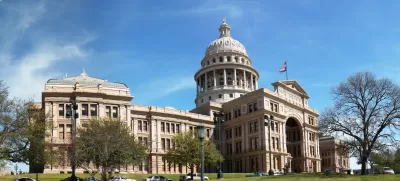
In June, Texas Governor Greg Abbott signed SB 2, "an expansive reform measure meant to slow the growth of Texans’ property tax bills, long a priority issue for GOP state leaders," according to an article by Riane Roldan and Shannon Najmabadi.
Included in the bill's reforms: a requirement that tax rates and other information be posted in an online database as well as a "controversial provision that requires many cities, counties and other taxing units to hold an election if they wish to raise 3.5% more property tax revenue than the previous year."
Local governments opposed the bill, for the effect the bill would likely have on their municipal finances. "Moody’s Investors Service, a credit-rating agency, issued a May analysis that said the law would lead to 'minimal' homeowner savings and 'hurt local governments substantially.'"
Texas Republicans paired the property tax reforms in SB 2 with school finance reform that also lowered property tax bills by $5.1 billion, according to the article. Ed Emmett recently penned an opinion piece, several weeks after the bill signing, criticizing the arguments made by Texas republicans in support of the property tax reforms. According to Emmett, property taxes in the state are far from fixed, and tax consultants are more likely to benefit from the law than property owners.
Emmett claims that these two bills are a result of the State Legislature's continued negotiation of the boundaries of its authority and responsibility relative to that of the many local governments that make up the large state of Texas:
At its core, SB 2 continues state leaders’ war against local governments. For years local governments have had to make up for the state’s underfunding of public education. But the state’s top elected officials, Gov. Greg Abbott and Lt. Gov. Dan Patrick, didn’t want the public to understand that those state budget decisions were the main reason property taxes were going up. So they criticized city and county policies.
Emmett lists the well known negative consequences of property tax limits, without actually using the words "California" or "Prop 13." Governor Abbott has in the past used California as an example of what not to do with regard to local control—in this case, however, the governor seems determined to follow in California's footsteps.
FULL STORY: Gov. Greg Abbott signs bill designed to limit property tax growth

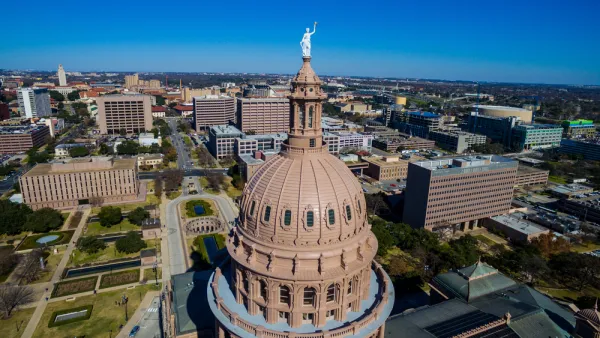
Local Governments Brace for Property Tax Relief in Texas
Before property tax relief, the property taxes will increase.

As New Orleans Property Values Climb, Property Taxes Relief Considered
New Orleans Mayor LaToya Cantrell is searching for ways to mitigate the impacts of "skyrocketing property values" while also holding on to some of the new revenue created by the corresponding rising property taxes.
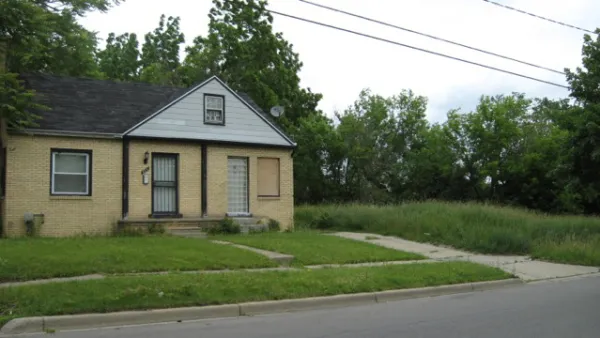
Detroit Program Would Offer Property Tax Relief to Low-Income Homeowners
The Pay As You Stay program would lower back taxes for qualifying homeowners and help them avoid foreclosure.

Planetizen Federal Action Tracker
A weekly monitor of how Trump’s orders and actions are impacting planners and planning in America.

The state-sanctioned urbicide of Austin
People don’t kill cities. Freeways do.

US to reduce Colorado River water deliveries to Mexico
A new Colorado Treaty amendment reduces Mexico’s Colorado River water allocation by 250,000 acre feet.

5 New England states march closer to 800 megawatt wind energy project
Securing federal approval for the project may be complicated under the Trump administration, which has historically been hostile towards domestic wind power.

Baltimore to break ground on $50 million Transit Priority Project
The project will bring faster bus trips, safer streets and better bike connections to Baltimore.

Airbnb launches $250 million 'last-dollar financing' housing accelerator, makes first investment in Austin
The company will put $6.4 million towards affordable housing development in Texas’ capital.

FREE Course: Walkable City 1: Why Walkability?
After describing his path towards focusing on walkability as the essence of good planning, Jeff Speck marches through his five principal reasons for making more walkable places.
Reinventing Malls: Planning Alchemy—Turning Gray Fields Into Gold
The course focuses on the opportunities and imperatives that shape reinvention of mall sites.

Eagle County Government
Harvard University Graduate School of Design
Nashville Planning Department
The Architects Foundation
University of Cincinnati Online
The Pocatello Development Authority
The Urban Renewal Agency of the City of Pocatello
Journal of the American Planning Association