The Pay As You Stay program would lower back taxes for qualifying homeowners and help them avoid foreclosure.


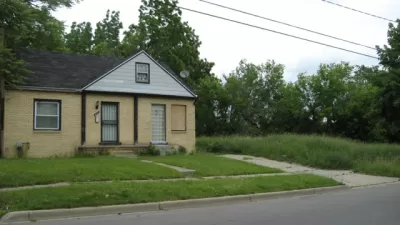
"A new program backed by Detroit Mayor Mike Duggan, Wayne County Executive Warren Evans and Wayne County Treasurer Eric Sabree could offer significant relief to impoverished Detroiters who owe back taxes," reports Nancy Kaffer.
The Pay As You Stay program would reduce back taxes for homeowners who qualify for a state-mandated poverty exemption. "[The program] would wipe out fees and interest associated with the back-tax debt for qualifying homeowners, and cap the amount of taxes owed at 10% of the home's taxable value, about half the home's market value," says Kaffer.
She notes that foreclosures have hit Detroit hard in recent years. In addition, about 90 percent of homeowners owing back taxes should have qualified for poverty exemptions. Under the Pay As You Stay program, the exemption will not be applied retroactively, but city officials hope the prospect of lower tax bills will encourage people to apply for the exemption in the future. The plan proposal will now move on to the state legislature.
FULL STORY: New program could keep thousands of Detroiters in their homes


Dan Gilbert Announces $500 Million Investment in Detroit Neighborhoods
Dan Gilbert, the billionaire credited with the revitalization of development interest in and around Downtown Detroit, made a bombshell announcement in his first in-depth interview since suffering a stroke in 2019.
Detroit Continues Demolition Program After Lead Risks Revealed
The city of Detroit said it would halt a demolition program after a report revealed the amount of lead released by demolitions into the environment, risking the health of children and other local residents.

Dormant Michigan State Fairground Site to Make Way for Amazon Distribution Center
Detroit officials have been trying to find a new life for the former site of the Michigan State Fair for a long time. Amazon will fill the void, according to a redevelopment proposal announced last week.

Planetizen Federal Action Tracker
A weekly monitor of how Trump’s orders and actions are impacting planners and planning in America.

The state-sanctioned urbicide of Austin
People don’t kill cities. Freeways do.

US to reduce Colorado River water deliveries to Mexico
A new Colorado Treaty amendment reduces Mexico’s Colorado River water allocation by 250,000 acre feet.

5 New England states march closer to 800 megawatt wind energy project
Securing federal approval for the project may be complicated under the Trump administration, which has historically been hostile towards domestic wind power.

Baltimore to break ground on $50 million Transit Priority Project
The project will bring faster bus trips, safer streets and better bike connections to Baltimore.

Airbnb launches $250 million 'last-dollar financing' housing accelerator, makes first investment in Austin
The company will put $6.4 million towards affordable housing development in Texas’ capital.

FREE Course: Walkable City 1: Why Walkability?
After describing his path towards focusing on walkability as the essence of good planning, Jeff Speck marches through his five principal reasons for making more walkable places.
Reinventing Malls: Planning Alchemy—Turning Gray Fields Into Gold
The course focuses on the opportunities and imperatives that shape reinvention of mall sites.

Eagle County Government
Harvard University Graduate School of Design
Nashville Planning Department
The Architects Foundation
University of Cincinnati Online
The Pocatello Development Authority
The Urban Renewal Agency of the City of Pocatello
Journal of the American Planning Association