The Public Policy Institute of California recently checked on the public opinion of Proposition 13, California's controversial and game-changing property tax cap.



In the 40th year since the approval of Proposition 13, Mark Baldassare, Dean Bonner, Alyssa Dykman, and Lunna Lopes of the Public Policy Institute of California (PPIC) have produced a brief fact sheet on the effects of proposition 13, which includes a few surprising revelations about how proposition 13 fits into the political milieu of the state.
For instance, the PPIC reports that most Californians support Prop 13. "A majority of Californians (57%) and likely voters (65%) feel that Proposition 13 turned out to be mostly a good thing for the state," according to the fact sheet.
PPIC surveyed opinions on a number of related questions, finding support for a "split roll" tax system that could appear on the ballot in 2020. That split roll system would tax commercial properties at current market value, but would not lift Prop 13 limits on residential property taxes.
Read the full story: Proposition 13: 40 Years Later

California's 'Split Roll' Property Tax Reform, Explained
California voters will consider a landmark reform of its infamous property tax system this November. Prop. 15 would remove property tax caps on commercial properties established by Prop. 13 in 1978.
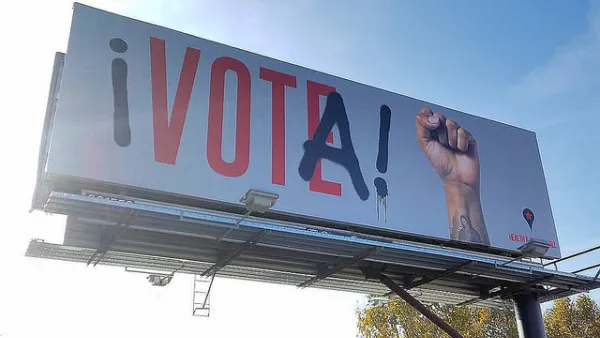
Prop 13 on the Ballot in California—Just Not the Prop 13 Everyone's Worried About
A case of mistaken identity has embroiled California in election controversy, as claims of bias and misinformation swirl around Prop 13 (2020), Prop 13 (1978), and an anticipated "split roll" initiative.
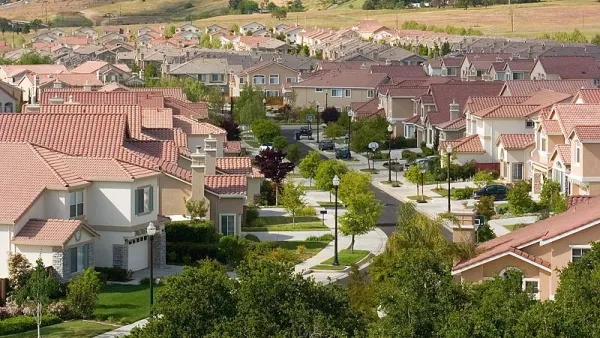
Through Thick and Thin, Support for California’s Proposition 13 Hasn’t Waned
Since its passage 40 years ago, the controversial legislation has remained consistently popular with Californians.

Planetizen Federal Action Tracker
A weekly monitor of how Trump’s orders and actions are impacting planners and planning in America.

Washington state to charge fee to drivers with fuel-efficient cars
Revenue from the fee will go towards supporting the state’s highways.

Illinois considers spending $1 billion in taxpayer money on data center
A quantum computing campus and data center are currently under construction in Chicago.

‘Demolition of our heritage:’ Some US tribes speak out against BAAJA
A coalition of indigenous groups in the United States are concerned about provisions in the bill that may weaken their ability to halt large energy projects.

How LA’s new mayor plans to tackle affordable housing crisis
Mayor-elect Nithya Raman has proposed overhauling the city’s permitting process.

Interactive map reveals Pennsylvania's abandoned oil, gas wells — many on residential property
It is difficult for residents to know if a well is near their home, or if it poses a threat to them.

FREE Course: Walkable City 1: Why Walkability?
After describing his path towards focusing on walkability as the essence of good planning, Jeff Speck marches through his five principal reasons for making more walkable places.
Reinventing Malls: Planning Alchemy—Turning Gray Fields Into Gold
The course focuses on the opportunities and imperatives that shape reinvention of mall sites.


City of Charlotte
City of Rosemead
Rutgers University, Edward J. Bloustein School of Planning and Public Policy
University of Michigan School for Environment and Sustainability (SEAS)
Hunter College, City University of New York (CUNY)
The Architects Foundation
University District Partnership