Following Salesforce's lead, the healthcare giant will relocate to a high-rise urban headquarters, transitioning out of seven locations it currently occupies in the East Bay.



Kaiser Permanente's planned new headquarters will encompass 1.6 million square feet of floor space, making it "one of the largest new buildings in the Bay Area — larger in space, though not height, than San Francisco's Salesforce Tower," Roland Li writes.
The healthcare corporation, already Oakland's largest employer, will consolidate over 7,000 employees from seven locations into the new 29-story tower, which is set to open in 2023. Occupying a site currently graced with "a parking garage and vacant lots," the new headquarters will be dubbed the Kaiser Permanente Thrive Center and cost a total of $900 million, saving the firm $60 million a year compared with its current set-up.
Kaiser's move makes it one of the latest major firms to set up shop downtown, moving away from the suburban office park mode. "The building is comparable in size to the huge suburban buildings occupied by tech giants Facebook and Google in Silicon Valley," Li writes.
FULL STORY: Kaiser Permanente to build giant, new $900 million Oakland headquarters

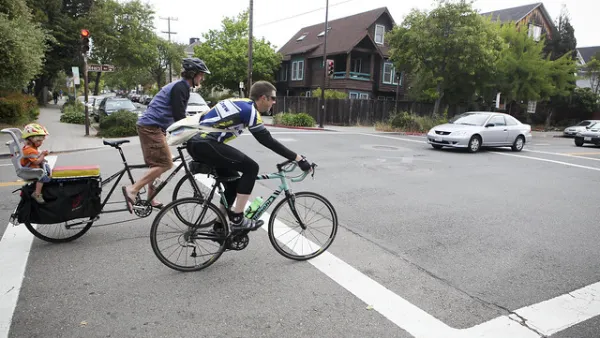
City to Bicyclists: Berkeley Not in Idaho
Berkeley, California might have a reputation of a very progressive city, but when it comes to cycling, it appears to have little tolerance for cyclists who roll through stop signs. Police are justifying the crackdown on the terms of a state grant.
Second Largest Bikeshare in U.S. will be Bay Area's by 2017
Bay Area Bike Share will grow from 700 to 7,000 bikes by 2017 after the expansion proposal was approved by a unanimous vote of the Metropolitan Transportation Commission. It is a regional, not a city program, though most usage is in San Francisco.
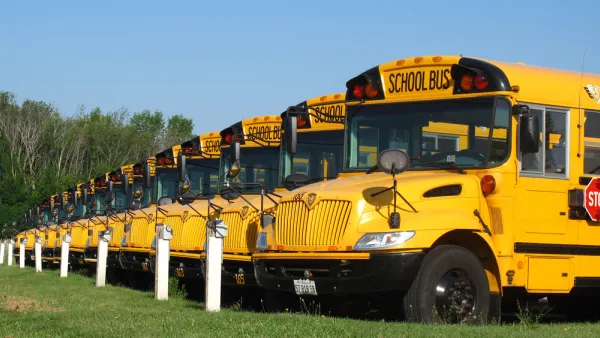
Transportation Start-up Fails for Being Too Public-Minded
Night School, planning to use school bus fleets to supplement late-night Bay Area transit, lost the regulatory fights Uber and Lyft handily won.

The state-sanctioned urbicide of Austin
People don’t kill cities. Freeways do.

US to reduce Colorado River water deliveries to Mexico
A new Colorado Treaty amendment reduces Mexico’s Colorado River water allocation by 250,000 acre feet.

New Jersey’s second-largest city bans standalone data centers
Jersey City will continue to allow co-location facilities, such as those meant for research institutions that store their own data.

Amtrak not solely to blame for New Jersey commuter rail's unreliability, report finds
A new study from the Garden State Initiative found that NJ Transit’s budget grew 20% across a 4 year period, but reliability declined significantly over the same period.

EPA erases limits on planet-warming pollution from power plants
Under Monday’s plan, power plants would still have some limits on how much mercury, arsenic and other contaminants they can emit.

Phoenix announces new on-demand transit service, more frequent RAPID buses
Both new services will launch in October, and are part of Phoenix's Project Effective Access Solutions for Easing Congestion.

FREE Course: Walkable City 1: Why Walkability?
After describing his path towards focusing on walkability as the essence of good planning, Jeff Speck marches through his five principal reasons for making more walkable places.
Reinventing Malls: Planning Alchemy—Turning Gray Fields Into Gold
The course focuses on the opportunities and imperatives that shape reinvention of mall sites.

Eagle County Government
Harvard University Graduate School of Design
Nashville Planning Department
The Architects Foundation
University of Cincinnati Online
The Pocatello Development Authority
The Urban Renewal Agency of the City of Pocatello
Journal of the American Planning Association