The el/El/L debate has never been resolved, but the CTA says its usage is the correct one.


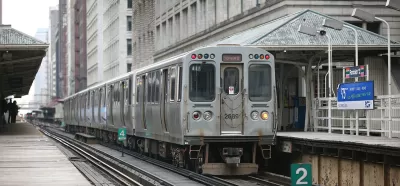
Edward McClelland surveys the various references to Chicago’s elevated rail system over the years. Authors writing about Chicago—including James T. Farrell, Nelson Algren, and Gwendolyn Brooks—have called it a variety of names: the el, the El, and the L.
But the Chicago Transit Authority is clear about what it considers the right name. "The term 'el' can be short for 'elevated railway' generically, but our system has used 'L' since the 1890s. This proper, official nickname extends to elevated, at-grade, and underground tracks, and is used on official CTA materials."
McClelland notes that using L can confuse readers and El probably makes more sense. "In New York City, which assigns letters to its subway routes, the L train runs from Eighth Avenue in Manhattan to Rockaway Park in Brooklyn. (Also, in Chicago, the letter L has the negative connotation of appearing on blue flags after Cubs losses.)"
Read the full story: Once and for All: Is It the El, el, L, or ‘L’?
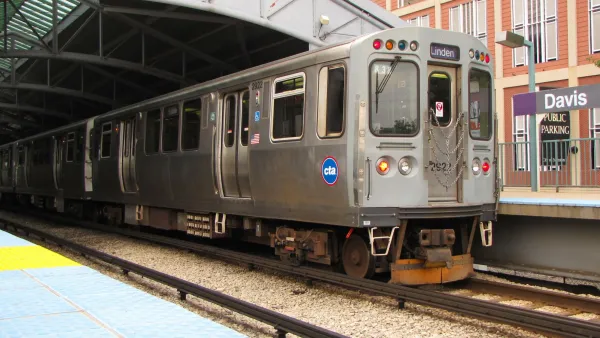
Fans of Transit and/or Chicago: We Have a Card Game for You
The card game LOOP was made by people who obviously put in some serious time hanging from straps on the L.
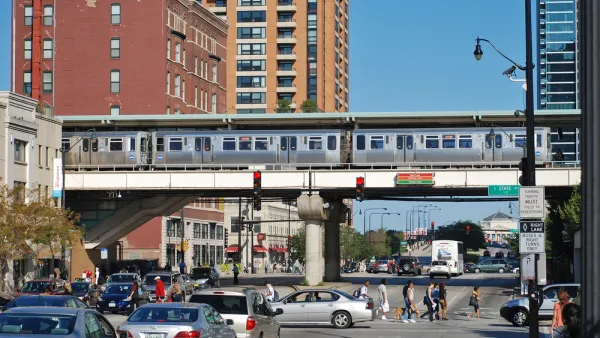
Chicago Transit Increasing Rail Service to Pre-Pandemic Levels
The Chicago Transit Authority is close to returning both rail and bus service to pre-pandemic schedules, with some adjustments for new travel demand.
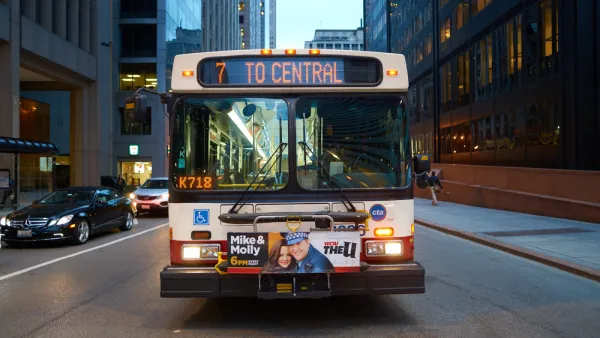
Chicago Announces First Five ‘Better Streets for Buses’ Corridors
The CTA will develop a series of options for improving bus service on key transit corridors.

Planetizen Federal Action Tracker
A weekly monitor of how Trump’s orders and actions are impacting planners and planning in America.

California plans to bury El Niño’s downpour
If the state plays its cards right, it may be able to store a billion acre-feet of El Niño’s water in aquifers.

Desperate measures: Advocates weigh draining Lake Powell to fill Colorado River
Draining the reservoir could reduce evaporation losses by a couple hundred thousand acre-feet.

Mamdani’s pied-à-terre tax survives legal challenge
A panel of judges found that the plaintiffs failed to demonstrate injury as a result of New York City's implementation of the tax.

Eastern Nebraska is running out of electricity
Data centers and electrification are straining eastern Nebraska’s grid, throttling economic development.

Seattle passes record-breaking transit services expansion
Proposition 1 will double the city’s transit tax to add 95,000 more bus trips and preserve 180,000 bus trips annually.

FREE Course: Walkable City 1: Why Walkability?
After describing his path towards focusing on walkability as the essence of good planning, Jeff Speck marches through his five principal reasons for making more walkable places.
Reinventing Malls: Planning Alchemy—Turning Gray Fields Into Gold
The course focuses on the opportunities and imperatives that shape reinvention of mall sites.


City of Rosemead
Rutgers University, Edward J. Bloustein School of Planning and Public Policy
One Hundred Miles
University of Michigan School for Environment and Sustainability (SEAS)
Hunter College, City University of New York (CUNY)
The Architects Foundation
City of Cambridge
Montrose County
The Pocatello Development Authority