Sidewalk Labs, a smart cities shop within the Alphabet corporate structure, is working to revolutionize technology's role in city planning. Sidewalk Labs recently released the street design principles it's using to guide that effort.


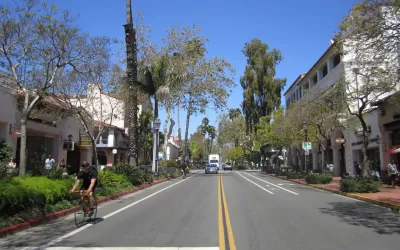
"Sidewalk Labs, the smart cities arm of Google parent company Alphabet, has released a set of design principles to make streets safer and more efficient as new mobility technologies come online," reports Jason Plautz.
Willa Ng laid out the four principles in a blog post posted on Medium. According to Ng, Sidewalk Labs is attempting to push the current era of critical thinking about streets (in the era of building political support for complete streets and the dawn of autonomous vehicles).
Here are the four principles Sidewalk Labs is using to guide street designs:
- Principle 1: Tailor streets for different modes.
- Principle 2: Separate streets by speed.
- Principle 3: Incorporate flexibility into street space.
- Principle 4: Recapture street space for the public realm, transit, bikes, and pedestrians.
As noted by Plautz, Sidewalk Labs will get a chance to test its principles with the Quayside development, moving forward in Toronto despite controversy. There's also a full report on the design principles.
Read the full story: Sidewalk Labs releases street design principles
Autonomous Vehicles and Streets: A Guide to Potential Impacts
As the arrival of autonomous vehicles (AVs) becomes more of a reality, cities need to start considering how this new technology will affect streets and street networks. This brief guide provides an overview and resources on this topic.
NHTSA Cuts Could Make Roads More Dangerous
The agency is losing almost half of the team that oversees autonomous vehicle safety, among dozens of other key personnel.

US Street Design Manual Inches Toward Safer Roads
The guiding document for U.S. road design is starting to recognize the needs of people walking and biking, but safe streets advocates say more significant changes are needed to reduce the high number of pedestrian deaths and improve connectivity for all road users.

Planetizen Federal Action Tracker
A weekly monitor of how Trump’s orders and actions are impacting planners and planning in America.

California plans to bury El Niño’s downpour
If the state plays its cards right, it may be able to store a billion acre-feet of El Niño’s water in aquifers.

Desperate measures: Advocates weigh draining Lake Powell to fill Colorado River
Draining the reservoir could reduce evaporation losses by a couple hundred thousand acre-feet.

US buildings threatened, destroyed by fires set to triple by 2060
Researchers found a high fire risk for socioeconomically vulnerable neighborhoods in the American West.

LA residents may be allowed to paint their own crosswalks
Councilwoman Katy Yaroslavsky put out a motion instructing the Los Angeles Department of Public Transportation to study the feasibility of allowing volunteers to paint crosswalks.

Dallas moves to overhaul its zoning code
The city's zoning reform will allow more multi-family and mixed-use developments.

FREE Course: Walkable City 1: Why Walkability?
After describing his path towards focusing on walkability as the essence of good planning, Jeff Speck marches through his five principal reasons for making more walkable places.
Reinventing Malls: Planning Alchemy—Turning Gray Fields Into Gold
The course focuses on the opportunities and imperatives that shape reinvention of mall sites.

City of Rosemead
Rutgers University, Edward J. Bloustein School of Planning and Public Policy
One Hundred Miles
Hunter College, City University of New York (CUNY)
The Architects Foundation
University of Cincinnati Online
City of Cambridge
Montrose County
The Pocatello Development Authority