The goal of transportation networks should be to provide integrated and efficient services, which requires looking beyond particular modes.


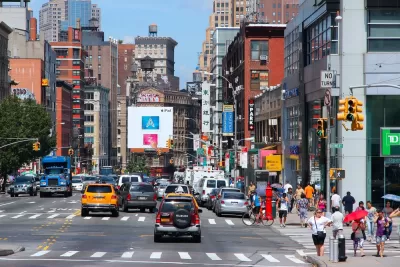
Stephen Goldsmith makes the case that cities need to understand transportation as an integrated mobility market rather than manage each individual mode. "For decades, unfortunately, cities also have embraced another goal: to protect incumbent transit providers even at the expense of underserved communities."
New York City’s recent decision to become the first American city to implement congestion pricing is an opportunity to buck the trend, says Goldsmith. "Unlike the caps and other restrictions that that have limited mobility solutions in the past (and, unfortunately, continue to evolve), Manhattan's congestion pricing would likely be enacted across all forms of private vehicles, nudging the market instead of protecting competitors, while devoting the new revenues to subways and other public transit needs." He also advocates for dynamic pricing and distance-based fees to maximize the benefits of the congestion pricing system.
Goldsmith adds he would also like to see less regulation of private bus companies because they help fill in the gaps where public transit services fall short. "The solution to congestion is more than just getting cars off the road; it is also about improving the performance of more efficient means of transportation," he notes.
FULL STORY: Bringing Market Forces to the Transportation Equation

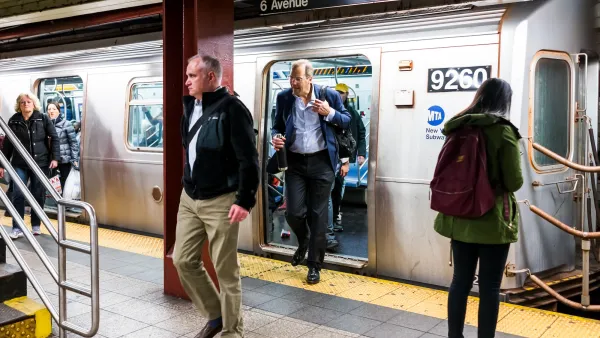
NYC to Upgrade 1/3 of its Subway Car Fleet
The MTA is seeking proposals for up to 2,390 new subway cars to upgrade its aging fleet.
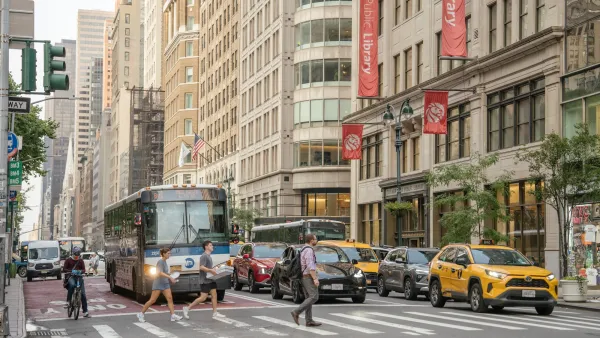
One-Year Numbers Show Clear Win for NYC Congestion Pricing
While the Trump administration continues trying to kill the program, data one year out shows that the new toll dramatically decreased traffic and improved transit travel times.
Judge Extends NYC Congestion Pricing Through at Least June 9
A federal judge halted the Trump administration’s effort to kill the program, which remains in limbo as a lawsuit filed by the MTA moves forward.

The state-sanctioned urbicide of Austin
People don’t kill cities. Freeways do.

US to reduce Colorado River water deliveries to Mexico
A new Colorado Treaty amendment reduces Mexico’s Colorado River water allocation by 250,000 acre feet.

New Jersey’s second-largest city bans standalone data centers
Jersey City will continue to allow co-location facilities, such as those meant for research institutions that store their own data.

Amtrak not solely to blame for New Jersey commuter rail's unreliability, report finds
A new study from the Garden State Initiative found that NJ Transit’s budget grew 20% across a 4 year period, but reliability declined significantly over the same period.

EPA erases limits on planet-warming pollution from power plants
Under Monday’s plan, power plants would still have some limits on how much mercury, arsenic and other contaminants they can emit.

Phoenix announces new on-demand transit service, more frequent RAPID buses
Both new services will launch in October, and are part of Phoenix's Project Effective Access Solutions for Easing Congestion.

FREE Course: Walkable City 1: Why Walkability?
After describing his path towards focusing on walkability as the essence of good planning, Jeff Speck marches through his five principal reasons for making more walkable places.
Reinventing Malls: Planning Alchemy—Turning Gray Fields Into Gold
The course focuses on the opportunities and imperatives that shape reinvention of mall sites.

Eagle County Government
Harvard University Graduate School of Design
Nashville Planning Department
The Architects Foundation
University of Cincinnati Online
The Pocatello Development Authority
The Urban Renewal Agency of the City of Pocatello
Journal of the American Planning Association