A bi-partisan bill till early in the federal legislative process would expand a very small tax incentive for people who ride a bike to work.



Eilie Anzilotti reports on a bill introduced in Congress in March would expand a tax benefit to people who commute by bike—a tax break that would amount to 20% of the deduction offered to people who commute by car or by public transit.
The bill, the Bicycle Commuter Act (HR 1507), is co-sponsored by Rep. Earl Blumenauer (D-Oregon), Rep. Ayanna Pressley (D-Massachusetts), and Rep. Vern Buchanan (R-Florida).
"Before this bill, bike commuters were eligible for $20 a month, but the benefit was structured as a reimbursement, not a pre-tax deduction, and Trump’s Tax Cuts and Jobs Act repealed that small benefit in 2017," according to Anzilotti. (Planetizen previewed that action in November 2017.)
Anzilotti adds a bit of commentary on the likely outcomes of the bill, arguing that tax incentives won't be enough to convince significant numbers of Americans to ride bikes to work instead of driving. Still, "recognizing people who do bike to work with a little extra cash can’t hurt," according to Anzilotti.
Read the full story: This new proposal would give bike commuters a tax break


Bike Commuting Down: American Community Survey Data
Bike commuters are increasing in some cities, but overall, fewer Americans are biking to work.
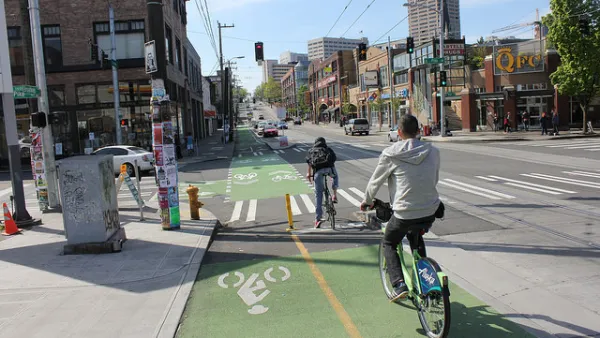
Bike Commutes at a Ten-Year Low in Seattle
Commute trips by bike are flat in Seattle, despite investments in high quality infrastructure. The city will have to do more for bikes to cut into the overall share of commute trips in the city of Seattle.
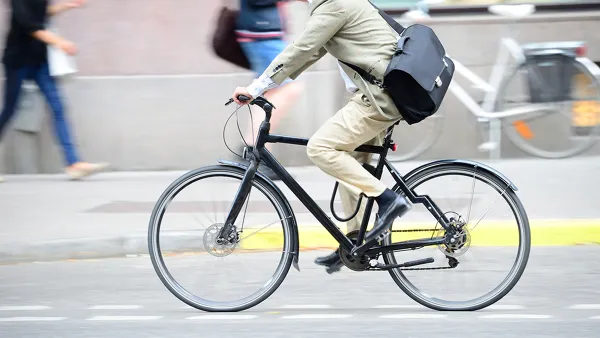
Senate GOP Tax Cutters Target Bike Commuter Tax Benefit
To help pay for their massive tax cut bill, Senate Republicans have proposed elimination of a small tax benefit that can save bike commuters $240 annually. Unlike the House tax bill, they don't touch parking and transit benefits.

Planetizen Federal Action Tracker
A weekly monitor of how Trump’s orders and actions are impacting planners and planning in America.

California plans to bury El Niño’s downpour
If the state plays its cards right, it may be able to store a billion acre-feet of El Niño’s water in aquifers.

Chicago breaks ground on $3 billion megadevelopment
The new neighborhood, titled Foundry Park, will one day host 3,700 residences.

Satanic place names
From streams and lakes to valleys and canyons, I mapped more than 1,000 places named after the Devil.

California High-Speed Rail Authority CEO resigns after $600,000 scandal
Under Ian Choudri, the authority used taxpayer dollars to fund first class flights and trips to nightclubs.

Want to study the Missouri River? Soon, you may need unanimous approval from 10 states
Legislation would require 10 governors’ permission to study or build projects moving water outside the basin.

FREE Course: Walkable City 1: Why Walkability?
After describing his path towards focusing on walkability as the essence of good planning, Jeff Speck marches through his five principal reasons for making more walkable places.
Reinventing Malls: Planning Alchemy—Turning Gray Fields Into Gold
The course focuses on the opportunities and imperatives that shape reinvention of mall sites.

City of Rosemead
Rutgers University, Edward J. Bloustein School of Planning and Public Policy
One Hundred Miles
Hunter College, City University of New York (CUNY)
The Architects Foundation
University of Cincinnati Online
City of Cambridge
Montrose County
The Pocatello Development Authority