The bus lanes can be installed quickly, requiring minimal time and resources and offering a good return on investment, says a new report.


Laura Bliss reports on a new UCLA report that looks at "tactical transit lanes" in cities across the country. TTLs are dedicated bus lanes that are cheap and easy to install, often only requiring some paint or cones to separate the lane from other traffic.
"Based on interviews and surveys of dozens of city planners, [UCLA researchers] found that TTLs are often much shorter than BRT—less than a mile long, in many cases—and targeted to dense commuter corridors rather than being spread across entire regions," writes Bliss.
Some cities have put the lanes in as temporary, pilot projects to gauge their effectiveness and to garner public support. Outcome measures have shown decreased bus travel times, increased reliability, and improved traffic safety.
Enforcement is essential to the success of TTLs and cities need to get federal approval when necessary, notes Bliss. "But according to the report, even if they’re short, cheap, and a little DIY, dedicated lanes can also do a lot to smooth commutes, and brighten opinions about buses as they do."
FULL STORY: To Build a Better Bus Lane, Just Paint It

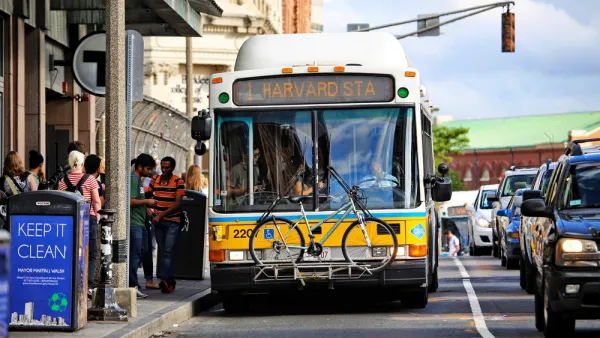
Boston Bus Lanes Improving Commute Times and Reliability
Data from the Boston area shows that dedicated bus lanes are helping to get buses moving.

Experts Reject Florida Study That Killed St. Pete Bus Lane as ‘Incomplete,’ ‘Unfair’
A transit activist has filed a suit against FDOT, which used a a one-page study to justify removing a dedicated bus lane.
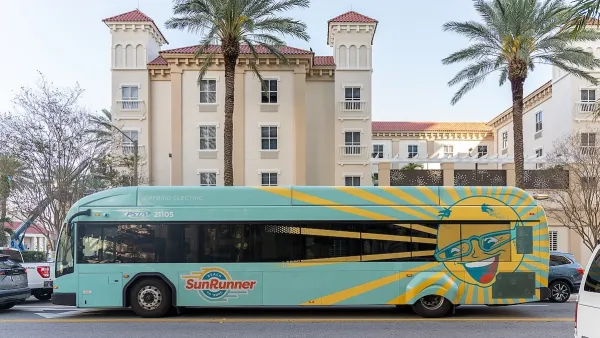
Florida DOT Orders Removal of St. Pete Bus Lane
The state says a popular BRT line has increased crashes and traffic on a state-owned portion of its corridor, prompting it to call for its reversal.

The state-sanctioned urbicide of Austin
People don’t kill cities. Freeways do.

US to reduce Colorado River water deliveries to Mexico
A new Colorado Treaty amendment reduces Mexico’s Colorado River water allocation by 250,000 acre feet.

New Jersey’s second-largest city bans standalone data centers
Jersey City will continue to allow co-location facilities, such as those meant for research institutions that store their own data.

Amtrak not solely to blame for New Jersey commuter rail's unreliability, report finds
A new study from the Garden State Initiative found that NJ Transit’s budget grew 20% across a 4 year period, but reliability declined significantly over the same period.

EPA erases limits on planet-warming pollution from power plants
Under Monday’s plan, power plants would still have some limits on how much mercury, arsenic and other contaminants they can emit.

Phoenix announces new on-demand transit service, more frequent RAPID buses
Both new services will launch in October, and are part of Phoenix's Project Effective Access Solutions for Easing Congestion.

FREE Course: Walkable City 1: Why Walkability?
After describing his path towards focusing on walkability as the essence of good planning, Jeff Speck marches through his five principal reasons for making more walkable places.
Reinventing Malls: Planning Alchemy—Turning Gray Fields Into Gold
The course focuses on the opportunities and imperatives that shape reinvention of mall sites.

_24_-_Fifth_Avenue_Bus_Lane.jpg)
Eagle County Government
Harvard University Graduate School of Design
Nashville Planning Department
The Architects Foundation
University of Cincinnati Online
The Pocatello Development Authority
The Urban Renewal Agency of the City of Pocatello
Journal of the American Planning Association