Data from the Boston area shows that dedicated bus lanes are helping to get buses moving.


Boston-area buses are moving faster and more regularly along several routes where the Massachusetts Bay Transportation Authority implemented bus rapid transit features, including bus-only lanes. An analysis of MBTA data shows travel times are down five to ten minutes and commute and arrival times are more consistent.
"The encouraging data comes as the MBTA tries to find ways to move its buses faster amid the nation's worst rush hour traffic. And it's gotten worse: The time it takes buses to complete their routes during rush hour has increased 17% between 2006 and 2018, according to the MBTA," reports Zeninjor Enwemeka.
While the bus lanes started as pilot projects, Boston and Everett have since made them permanent, and Arlington plans to do the same. The MBTA is putting $9 million toward bus improvements, and transit officials say more bus lanes will coming in the future.
FULL STORY: Dedicated Bus Lanes Are Making Commutes Faster In And Around Boston, Data Show

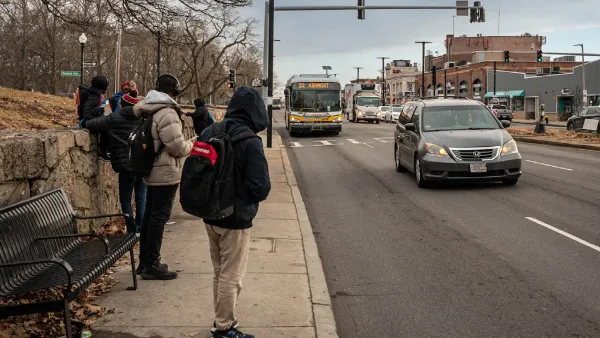
Boston’s Blue Hill Avenue to Get BRT, Safety Improvements
The key bus corridor serves over 37,000 bus riders daily.

Tactical Transit Lanes Offer Big Bang for the Buck
The bus lanes can be installed quickly, requiring minimal time and resources and offering a good return on investment, says a new report.

Experts Reject Florida Study That Killed St. Pete Bus Lane as ‘Incomplete,’ ‘Unfair’
A transit activist has filed a suit against FDOT, which used a a one-page study to justify removing a dedicated bus lane.

The state-sanctioned urbicide of Austin
People don’t kill cities. Freeways do.

US to reduce Colorado River water deliveries to Mexico
A new Colorado Treaty amendment reduces Mexico’s Colorado River water allocation by 250,000 acre feet.

New Jersey’s second-largest city bans standalone data centers
Jersey City will continue to allow co-location facilities, such as those meant for research institutions that store their own data.

Amtrak not solely to blame for New Jersey commuter rail's unreliability, report finds
A new study from the Garden State Initiative found that NJ Transit’s budget grew 20% across a 4 year period, but reliability declined significantly over the same period.

EPA erases limits on planet-warming pollution from power plants
Under Monday’s plan, power plants would still have some limits on how much mercury, arsenic and other contaminants they can emit.

Phoenix announces new on-demand transit service, more frequent RAPID buses
Both new services will launch in October, and are part of Phoenix's Project Effective Access Solutions for Easing Congestion.

FREE Course: Walkable City 1: Why Walkability?
After describing his path towards focusing on walkability as the essence of good planning, Jeff Speck marches through his five principal reasons for making more walkable places.
Reinventing Malls: Planning Alchemy—Turning Gray Fields Into Gold
The course focuses on the opportunities and imperatives that shape reinvention of mall sites.

Eagle County Government
Harvard University Graduate School of Design
Nashville Planning Department
The Architects Foundation
University of Cincinnati Online
The Pocatello Development Authority
The Urban Renewal Agency of the City of Pocatello
Journal of the American Planning Association