Plans to extend the Sound Transit light rail system are moving forward. Elected officials have a big choice to make that will determine the cost and scope of the projects.


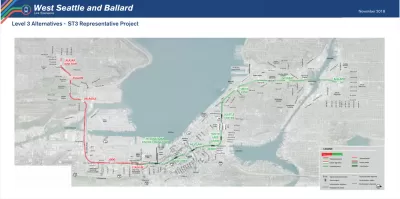
"Sound Transit has developed two complete alternative concepts for the West Seattle and Ballard light rail extensions," reports Stephen Fesler. "The alternatives marry together remaining segment alternatives that the Elected Leadership Group had winnowed down in October."
Fesler digs into the details of the alternatives proposed by Sound Transit, and offers this assessment: "On the basis of ridership and cost, it is not clear that the alternatives are more productive than the baseline alternative, but there may still be merit to the options that they present."
Elected officials met to discuss the alternatives a few days later, as detailed in a follow up article by Fesler, mostly agreeing with Fesler's estimates about the performance of each alternative. According to Fesler's assessment after the meeting, the choice essentially comes down to two options: one plan that includes funding from a third party, and one without.
The differences between the two versions of the project are substantial too: "The ST3 Representative Project alternative may hamstring the light rail system in the future as it expands, suppressing future ridership. Building the wrong type of crossing in Ballard may slow down trains in perpetuity. Building a cut-and-cover tunnel on 4th Ave S could heavily disrupt the community in Chinatown-International District and greatly impact businesses. And building a substandard light rail segment in SoDo could risk collisions and delays forever."
FULL STORY: Sound Transit Shares Complete Level 3 Alternative Concepts for West Seattle and Ballard Extensions

Checking in on the Progress of the Sound Transit 3 Plan
The Seattle area's $53.8 billion transit expansion plan is moving along in fits and starts.
The Northgate Link Extension Is Great, But Voters Want More
A recent survey of Seattle voters finds widespread support for the continued expansion of the Link light rail system in Seattle.
Price Tag Jumps for Seattle Light Rail Projects
Land values and construction costs have increased since voters approved the Sound Transit 3 ballot initiative.

Planetizen Federal Action Tracker
A weekly monitor of how Trump’s orders and actions are impacting planners and planning in America.

The state-sanctioned urbicide of Austin
People don’t kill cities. Freeways do.

US to reduce Colorado River water deliveries to Mexico
A new Colorado Treaty amendment reduces Mexico’s Colorado River water allocation by 250,000 acre feet.

Mamdani overhauls NYC's Vision Zero plan with 100 new policy goals
The overhaul aims to reduce traffic deaths and make streets safer for pedestrians, cyclists and drivers through lower speed limits, new safety infrastructure and more.

Amtrak not solely to blame for New Jersey commuter rail's unreliability, report finds
A new study from the Garden State Initiative found that NJ Transit’s budget grew 20% across a 4 year period, but reliability declined significantly over the same period.

EPA erases limits on planet-warming pollution from power plants
Under Monday’s plan, power plants would still have some limits on how much mercury, arsenic and other contaminants they can emit.

FREE Course: Walkable City 1: Why Walkability?
After describing his path towards focusing on walkability as the essence of good planning, Jeff Speck marches through his five principal reasons for making more walkable places.
Reinventing Malls: Planning Alchemy—Turning Gray Fields Into Gold
The course focuses on the opportunities and imperatives that shape reinvention of mall sites.

Eagle County Government
Harvard University Graduate School of Design
Nashville Planning Department
The Architects Foundation
University of Cincinnati Online
The Pocatello Development Authority
The Urban Renewal Agency of the City of Pocatello
Journal of the American Planning Association