The Seattle area's $53.8 billion transit expansion plan is moving along in fits and starts.


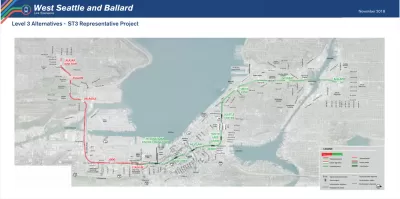
It’s been six years since Seattle-area voters approved a suite of taxes and fees to raise $27.7 billion for transit funding. While the Sound Transit 3 (ST3) plan has made some progress in that time, locals also point to examples of slow, even potentially abandoned plans for transit improvements originally envisioned as part of the region’s transit expansion.
Mike Lindblom updates the plan’s progress for the Seattle Times, examining some of the good (e.g., announcing preferred locations for three stations and a short tunnel in West Seattle for the Ballard Link extension) and the bad (e.g., a hub station planned for the Chinatown International District) when it comes to implementing the vision laid out by ST3.
The source article, below, includes status updates on ST3 plans for West Seattle, Sodo Station, the Chinatown International District, Seattle Center, and Ballard Crossing.
Read the full story: Sound Transit 3: Progress in West Seattle, paralysis in Chinatown International District

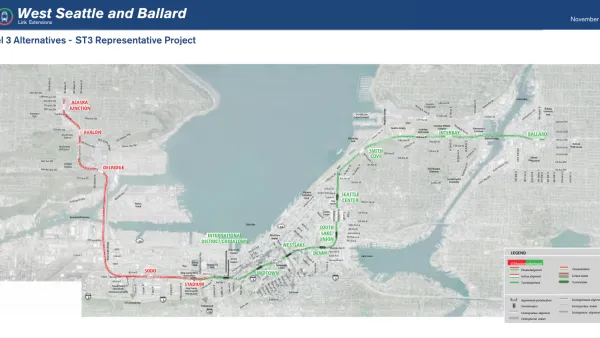
Alternatives Explored for West Seattle and Ballard Light Rail Extensions
Plans to extend the Sound Transit light rail system are moving forward. Elected officials have a big choice to make that will determine the cost and scope of the projects.
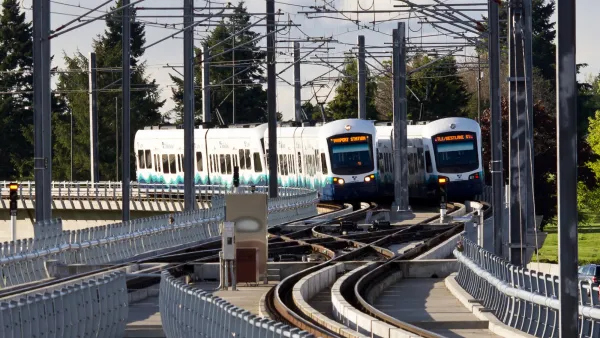
The Northgate Link Extension Is Great, But Voters Want More
A recent survey of Seattle voters finds widespread support for the continued expansion of the Link light rail system in Seattle.
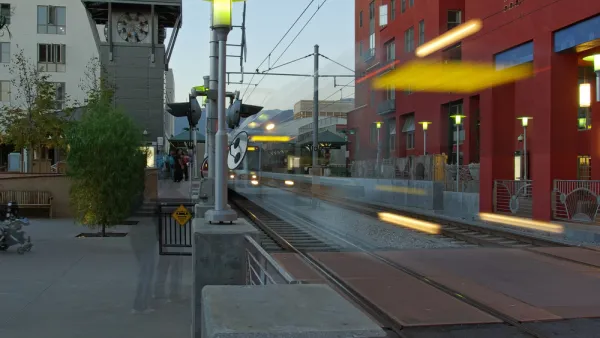
Two Transit Agencies Using Their Clout to Spur Affordable Housing
More transit agencies are recognizing that it's not enough to build transit infrastructure if the people who really need it don't live close enough to use it.

Planetizen Federal Action Tracker
A weekly monitor of how Trump’s orders and actions are impacting planners and planning in America.

Northwest rail fans eager for Sept. 30 debut of Amtrak’s Airo fleet
Get ready for that new train smell and more seats. But they won’t go faster or run more frequently on the Cascades route in Washington and Oregon.

Trump is considering data centers on 6 states' public land — some state officials say they had no idea
If the administration approves the proposed projects, data center and data center-related developments will cover 17,600 acres of public land.

After decades of planning, Sacramento gains new light rail station
Trains will arrive every 15 minutes during peak hours and every 30 minutes during non-peak hours.

Massive tunnel-boring machine breaks ground on Gateway Project
The Trump administration revoked funding for the project in October 2025, and then restored it earlier this year.

Airo trainsets begin service on Amtrak Cascades route
The trains feature panoramic windows, complementary wifi and over 300 seats per train set.

FREE Course: Walkable City 1: Why Walkability?
After describing his path towards focusing on walkability as the essence of good planning, Jeff Speck marches through his five principal reasons for making more walkable places.
Reinventing Malls: Planning Alchemy—Turning Gray Fields Into Gold
The course focuses on the opportunities and imperatives that shape reinvention of mall sites.

City of Thousand Oaks
City of Wisconsin Rapids
Harvard University Graduate School of Design
The Architects Foundation
University of Cincinnati Online
The Pocatello Development Authority
The Urban Renewal Agency of the City of Pocatello