Moving to a school with higher levels of traffic pollution could impact students' academic performance, according to new research.


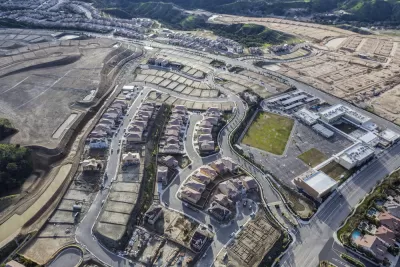
A study from the National Bureau of Economic Research finds that when students switch to schools with higher levels of traffic pollution, they begin to experience lower test scores, more behavioral problems, and increased absences.
Reporting on the findings, CityLab's Nicole Javorsky notes that "more than 6 million children attend public school within 250 meters (820 feet) of a major roadway, and almost 20 percent of schools that opened in the United States during the 2014–2015 school year were located near a busy road."
Many of the public health impacts of air pollution, from diabetes to death, are well documented. In this study, researchers focused on kids in Florida public schools located within 0.4 miles of major highways. They looked at how students’ performance in school changed after moving from a less polluted school—that is, a school upwind of a highway—to a more polluted school (downwind of a highway) and vice versa. The findings: Students who transitioned to a more polluted school—even in the same zip code—began experiencing lower test scores, more behavioral problems, and more absences than students who transitioned to a less polluted school.
The researchers hope that policymakers and school districts will consider the findings when siting new schools.
FULL STORY: How Car Pollution Hurts Kids’ Performance in School


How Urban Design Affects Children's Cognitive Development
A European study suggests that good urban design can affect cognitive and motor function development in young children.
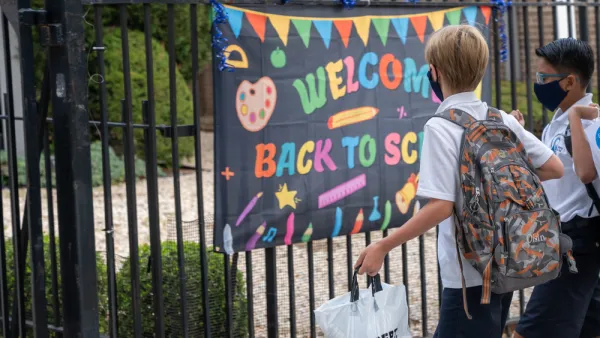
Reopening Schools: CDC Reduces Social Distancing Requirement
The Centers for Disease Control and Prevention now supports three-foot distancing in elementary school classrooms provided there is universal masking. For middle and high schools, it depends on the level of coronavirus transmission in the community.
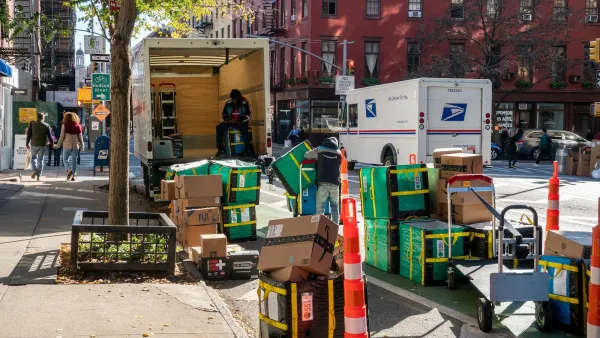
Report: 75% of NYC warehouses are in 'disadvantaged communities'
Low-income New Yorkers are 1.2 times more likely to live within half a mile of a warehouse.

The state-sanctioned urbicide of Austin
People don’t kill cities. Freeways do.

US to reduce Colorado River water deliveries to Mexico
A new Colorado Treaty amendment reduces Mexico’s Colorado River water allocation by 250,000 acre feet.

New Jersey’s second-largest city bans standalone data centers
Jersey City will continue to allow co-location facilities, such as those meant for research institutions that store their own data.

Amtrak not solely to blame for New Jersey commuter rail's unreliability, report finds
A new study from the Garden State Initiative found that NJ Transit’s budget grew 20% across a 4 year period, but reliability declined significantly over the same period.

EPA erases limits on planet-warming pollution from power plants
Under Monday’s plan, power plants would still have some limits on how much mercury, arsenic and other contaminants they can emit.

Phoenix announces new on-demand transit service, more frequent RAPID buses
Both new services will launch in October, and are part of Phoenix's Project Effective Access Solutions for Easing Congestion.

FREE Course: Walkable City 1: Why Walkability?
After describing his path towards focusing on walkability as the essence of good planning, Jeff Speck marches through his five principal reasons for making more walkable places.
Reinventing Malls: Planning Alchemy—Turning Gray Fields Into Gold
The course focuses on the opportunities and imperatives that shape reinvention of mall sites.

Eagle County Government
Harvard University Graduate School of Design
Nashville Planning Department
The Architects Foundation
University of Cincinnati Online
The Pocatello Development Authority
The Urban Renewal Agency of the City of Pocatello
Journal of the American Planning Association