Move Seattle included a promise of 250 blocks of new sidewalks and pathways. But costs are much higher than predicted and the low-cost pathways are minimal improvements for pedestrians.


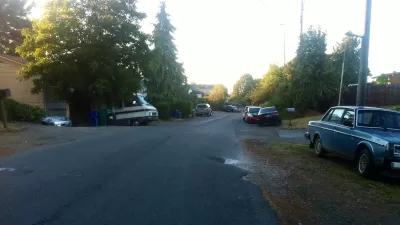
Ryan Packer reports on that status of sidewalks as part of the Levy to Move Seattle, a $930 million levy approved by voters in 2015 to fund transportation investments throughout the city. The sidewalk program included a target goal of 250 blocks of permanent sidewalks and low-cost pathways.
Due to rising cost estimates, Packer says the number of sidewalks and pathways has changed and now only 120 blocks will be permanent sidewalks, down from 150 blocks:
Increased costs are the reason that SDOT [Seattle Department of Transportation] needed to reconfigure the ratio of low-cost sidewalks to traditional ones, but the program cost numbers overall are pretty concerning for pedestrian advocates. Despite the original estimate of $350,000 per block used in the Pedestrian Master Plan, the current plan for the 250 blocks is to spend $380,000, on average, per block, despite a majority of the blocks constructed in the plan being low-cost sidewalks, which had an original estimate of $100,000 per block.
Packer says the shift to low-cost pathways is problematic since the vast majority of pedestrian injuries and deaths occur on main arterials, which need permanent sidewalks.
In his article, Packer also takes a closer look at the quality of sidewalks and pathways constructed during 2016 and 2017, many of which are on blocks that had existing sidewalks. He finds that generally the low-cost pathways are not separated from the street and do not offer protection for pedestrians.
FULL STORY: Is the New Sidewalk Program Living Up to Its Promise?

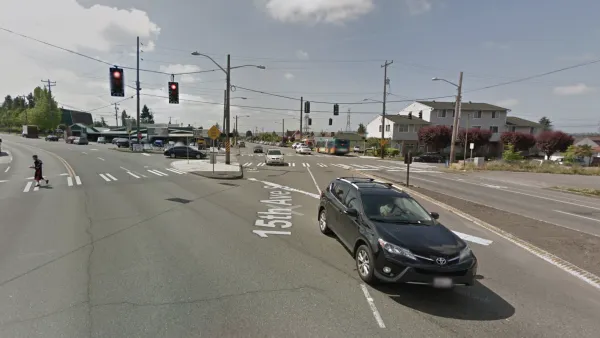
School Proximity and Speeding Tickets: Still Can't Win Safety Improvements
A loss for traffic safety advocates in Seattle.
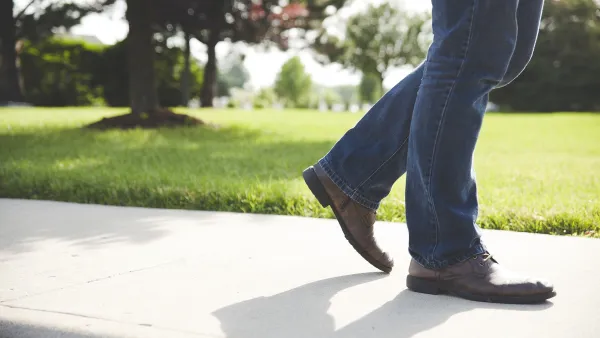
Without Sidewalks, Making Seattle Streets More Pedestrian Friendly
Over a quarter of city blocks lack sidewalk infrastructure. An advocacy project to reduce traffic speeds and increase pedestrian safety on these streets has evolved into a city-funded program.

Seattle's New Updated Pedestrian Master Plan Includes $22 Million for Sidewalks
The promised update for the city of Seattle's Pedestrian Master Plan was released to the public last week.

The state-sanctioned urbicide of Austin
People don’t kill cities. Freeways do.

US to reduce Colorado River water deliveries to Mexico
A new Colorado Treaty amendment reduces Mexico’s Colorado River water allocation by 250,000 acre feet.

New Jersey’s second-largest city bans standalone data centers
Jersey City will continue to allow co-location facilities, such as those meant for research institutions that store their own data.

Amtrak not solely to blame for New Jersey commuter rail's unreliability, report finds
A new study from the Garden State Initiative found that NJ Transit’s budget grew 20% across a 4 year period, but reliability declined significantly over the same period.

EPA erases limits on planet-warming pollution from power plants
Under Monday’s plan, power plants would still have some limits on how much mercury, arsenic and other contaminants they can emit.

Phoenix announces new on-demand transit service, more frequent RAPID buses
Both new services will launch in October, and are part of Phoenix's Project Effective Access Solutions for Easing Congestion.

FREE Course: Walkable City 1: Why Walkability?
After describing his path towards focusing on walkability as the essence of good planning, Jeff Speck marches through his five principal reasons for making more walkable places.
Reinventing Malls: Planning Alchemy—Turning Gray Fields Into Gold
The course focuses on the opportunities and imperatives that shape reinvention of mall sites.

Eagle County Government
Harvard University Graduate School of Design
Nashville Planning Department
The Architects Foundation
University of Cincinnati Online
The Pocatello Development Authority
The Urban Renewal Agency of the City of Pocatello
Journal of the American Planning Association