Three votes and several long-range transit plans should have sufficiently insulated transit plans in Phoenix from obstructionist tactics, according to the opinion piece.


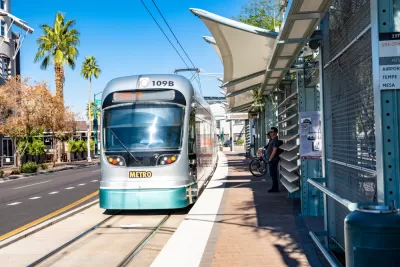
J. Doug Pruitt, former chairman and CEO of Sundt Construction, former national president of AGC of America (2009), and served as chairman of the Yes on 400 Committee in 2004, bolsters the case for funding and building the vision established by transit planners in the Phoenix area over the years:
More than 20 years of transportation planning and investment have made the valley one of the most attractive places to start a family and build a business. Our quality of life, cost of living, improved air quality and reduced congestion are why we are one of the fastest growing and most attractive markets in the entire country.
Pruitt details the voter approved funding initiatives and transit plans going even further back, to the 1985 Regional Transportation Plan. The case: that Phoenix residents want balanced public transit investments, and planners have done a good job delivering on the envisioned projects.
But recent months have seen a groundswell of resistance to transit investment in the Phoenix area. Plans to extend light rail have encountered stiff resistance and the City Council upended funding plans for $30 billion approved by voters in 2015 to shift funding away from light rail.
Pruitt cites that latter action as an example of the transit opposition emerging in recent months. But there are also transit proponents pushing back. The Arizona Chapter of the Associated General Contractors of America has filed a lawsuit to overturn that decision to defund light rail.
Read the full story: Light rail foes want to undo 3 public votes and 20 years of transit planning. Don't let them
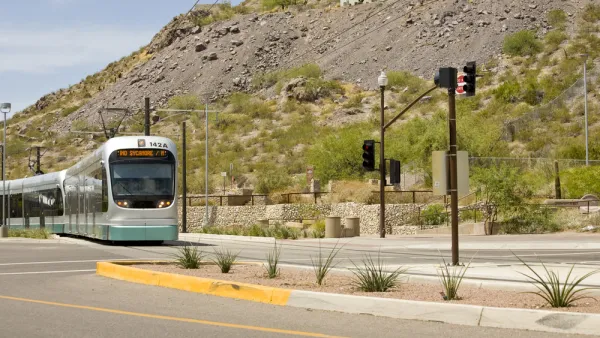
Scoop: Koch Brothers Connections to Phoenix Anti-Transit Initiative Revealed
New evidence reveals the deep involvement of Koch Industries funding in the Phoenix anti-light rail campaign.
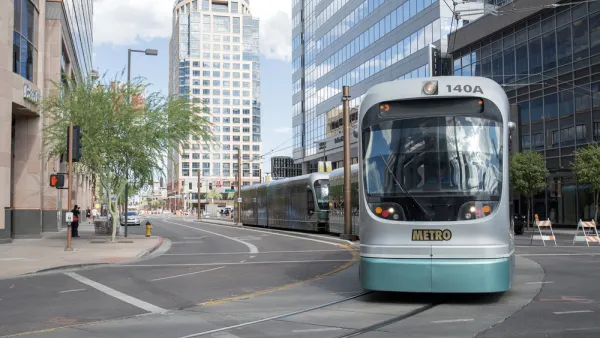
Phoenix's Future on the Ballot
Voters in Phoenix are already casting ballots in an election to be decided next week. Proposition 105 would end planned light extensions, and Proposition 106 would cap city spending.
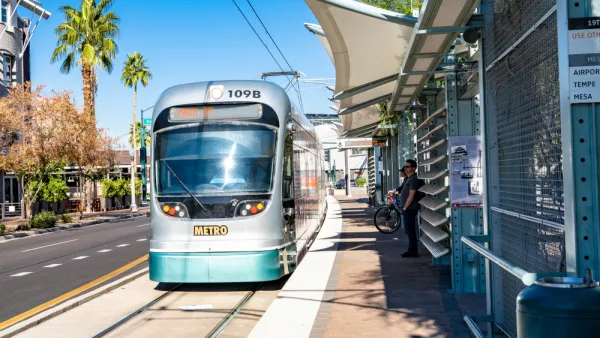
Voters Could End Approved Light Rail Projects in Phoenix
The future of light rail in Phoenix is in voters' hands.

Planetizen Federal Action Tracker
A weekly monitor of how Trump’s orders and actions are impacting planners and planning in America.

Washington state to charge fee to drivers with fuel-efficient cars
Revenue from the fee will go towards supporting the state’s highways.

Study reveals best places in the U.S. for cycling, walking
New research from Streetlight Data examines bicycle and pedestrian miles per capita in the 100 largest U.S. cities by population.

Mamdani unveils his ‘most ambitious bus lane project’ so far
The city has added two new bus lanes, which it expects to speed up tens of thousands of bus riders’ commutes.

New Jersey and New York suggest $10.3 billion budget for transit
Some of the budget is dedicated to replacing Manhattan's Midtown Bus Terminal.

States split over EPA’s proposal to drop greenhouse gas rules for power plants
The proposed rule drew over 165K comments, including from officials, health and environmental groups, and private citizens.

FREE Course: Walkable City 1: Why Walkability?
After describing his path towards focusing on walkability as the essence of good planning, Jeff Speck marches through his five principal reasons for making more walkable places.
Reinventing Malls: Planning Alchemy—Turning Gray Fields Into Gold
The course focuses on the opportunities and imperatives that shape reinvention of mall sites.

City of Charlotte
City of Rosemead
Rutgers University, Edward J. Bloustein School of Planning and Public Policy
University of Michigan School for Environment and Sustainability (SEAS)
Hunter College, City University of New York (CUNY)
The Architects Foundation
University District Partnership
City of Cambridge
The Pocatello Development Authority