The program aims to address infant mortality by improving transportation access so women can more easily get prenatal care and other services.


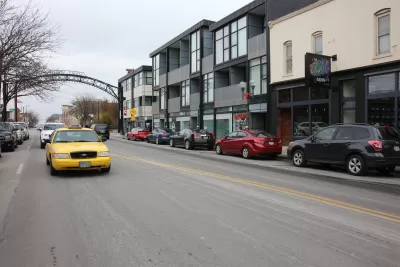
A pilot program in Columbus, Ohio, will provide on-demand rides to pregnant women to help them get to doctor’s appointments and run errands. From July to November this year, the program will offer transportation to 500 women who are receiving Medicaid and live in neighborhoods in Columbus with the highest infant mortality rates.
"In an email to CityLab, Courtney Lynch, a professor of obstetrics at the Ohio State University who is co-leading the evaluation of the pilot, called the program 'a completely novel intervention,' designed to research whether lowering barriers to prenatal care and reducing gaps in transportation for low-income women can eventually treat the city’s darkest public health issue," reports Laura Bliss.
Bliss notes that the United States, Ohio, and Franklin County all have high infant mortality rates. In addition, the mortality rate nationally for black babies is 2.4 times that of white babies. Studies have shown that lack of access to prenatal care and stress are two factors strongly tied to infant mortality, particularly among poor and African-American women.
The $1 million of funding for the Columbus program is coming from a $50 million Smart City Challenge grant the city won from the U.S. Department of Transportation for a series of technology projects.
Read the full story: In Columbus, Expectant Moms Will Get On-Demand Rides to the Doctor

Columbus Just Changed its 'Smart City' Plan
The original plan earned the city a highly competitive $40 million grant from the U.S. Department of Transportation.

Columbus Zoning Changes Aimed at Increasing Housing Supply, Affordability
The Columbus city council approved 17 zoning changes that could result in over 800 new housing units.
Lessons from the Smart Columbus Pilot Program
The former program manager for Smart Columbus discusses the successes, challenges, and unexpected opportunities encountered by the city as it worked to integrate technology into city services and programs.

Planetizen Federal Action Tracker
A weekly monitor of how Trump’s orders and actions are impacting planners and planning in America.

California plans to bury El Niño’s downpour
If the state plays its cards right, it may be able to store a billion acre-feet of El Niño’s water in aquifers.

Desperate measures: Advocates weigh draining Lake Powell to fill Colorado River
Draining the reservoir could reduce evaporation losses by a couple hundred thousand acre-feet.

California city breaks ground on transit connector
The project includes three mobility hubs and a pedestrian bridge.

After public outcry, Massachusetts city releases housing development tracker
Cambridge’s tracker currently shows 250 housing projects in various stages of development.

40 years after approval, Chicago breaks ground on new park
The park honors Jean Baptiste Point du Sable, the city’s first permanent non-native settler.

FREE Course: Walkable City 1: Why Walkability?
After describing his path towards focusing on walkability as the essence of good planning, Jeff Speck marches through his five principal reasons for making more walkable places.
Reinventing Malls: Planning Alchemy—Turning Gray Fields Into Gold
The course focuses on the opportunities and imperatives that shape reinvention of mall sites.

City of Rosemead
Rutgers University, Edward J. Bloustein School of Planning and Public Policy
One Hundred Miles
Hunter College, City University of New York (CUNY)
The Architects Foundation
University of Cincinnati Online
City of Cambridge
Montrose County
The Pocatello Development Authority