Austin scooter traffic is rising, so why not make room for them?


Construction of a new Hilton hotel in Austin has shrunk West 6th Street. The resulting street configuration means slower traffic, faster pedestrian crossings, and space formerly reserved for parking no used by people on scooters.
Dan Keshet argues that the city could inexpensively make the change permanent. If the lane were converted to a bike lane, it could accommodate rising scooter traffic and make the street narrower and safer for pedestrians to cross. "Are we a city that values safe, convenient streets for walking, biking, and scooting, as well as driving, or are we a city that can’t wait the additional two minutes to get on Mopac?" Keshet writes in Austin on Your Feet.
FULL STORY: How West 6th Was Accidentally Fixed for the Age of Scooters (and How to Keep it Fixed)

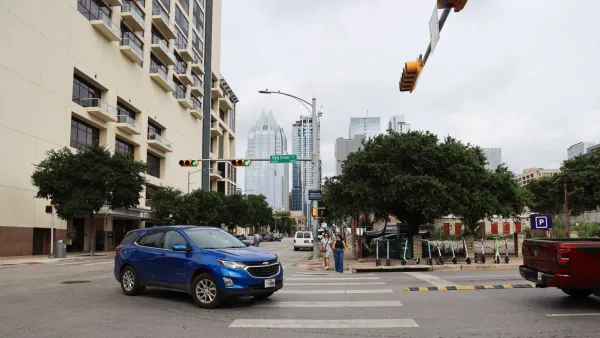
Austin ‘Turn Calming’ Cut Pedestrian-Involved Left Turn Crashes by Nearly Half
A pilot program at 16 intersections led to a dramatic reduction in injury crashes and is saving residents roughly $3 million in emergency response and medical expenses.
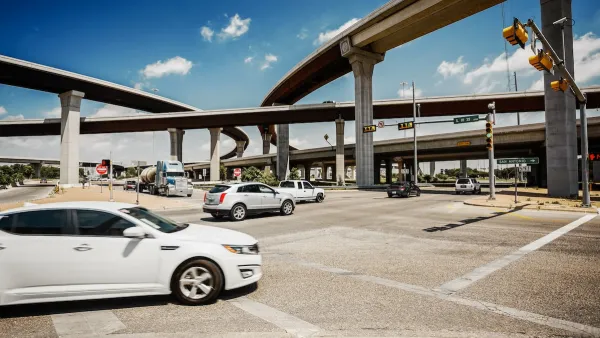
Report: Vision Zero Saving Lives in Austin
Safety improvements at major intersections led to a 22 percent reduction in deaths and severe injuries and saved the city over $28 million.
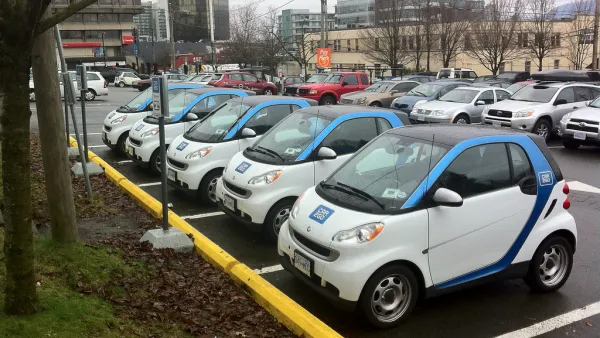
Car2Go Pulls Out of Five North American Cities
As the company plans to cease operations in a number of markets, carsharing’s future in the rapidly shifting world of mobility is unclear.

Planetizen Federal Action Tracker
A weekly monitor of how Trump’s orders and actions are impacting planners and planning in America.

The state-sanctioned urbicide of Austin
People don’t kill cities. Freeways do.

US to reduce Colorado River water deliveries to Mexico
A new Colorado Treaty amendment reduces Mexico’s Colorado River water allocation by 250,000 acre feet.

5 New England states march closer to 800 megawatt wind energy project
Securing federal approval for the project may be complicated under the Trump administration, which has historically been hostile towards domestic wind power.

Baltimore to break ground on $50 million Transit Priority Project
The project will bring faster bus trips, safer streets and better bike connections to Baltimore.

Airbnb launches $250 million 'last-dollar financing' housing accelerator, makes first investment in Austin
The company will put $6.4 million towards affordable housing development in Texas’ capital.

FREE Course: Walkable City 1: Why Walkability?
After describing his path towards focusing on walkability as the essence of good planning, Jeff Speck marches through his five principal reasons for making more walkable places.
Reinventing Malls: Planning Alchemy—Turning Gray Fields Into Gold
The course focuses on the opportunities and imperatives that shape reinvention of mall sites.

Eagle County Government
Harvard University Graduate School of Design
Nashville Planning Department
The Architects Foundation
University of Cincinnati Online
The Pocatello Development Authority
The Urban Renewal Agency of the City of Pocatello
Journal of the American Planning Association