First proposed in 1999, the Centennial project has been litigated and revised for years. The county's Regional Planning Commission has recommended approval, potentially opening another layer of sprawl at the far reaches of Los Angeles County.


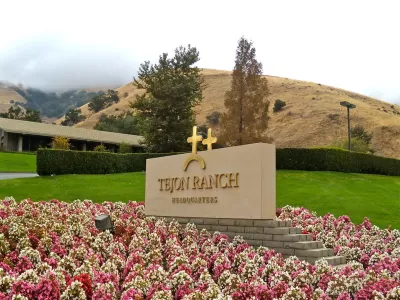
The Los Angeles County Regional Planning Commission recommended approval of the proposed Centennial development, which would build 19,000 homes on Tejon Ranch at the northern edge of the county.
"The Regional Planning Commission voted 4 to 1 to recommend that the county Board of Supervisors certify the project’s environmental impact report and approve associated land-use plans and permits, subject to some additional conditions," reports Nina Agrawal.
The project still has to go before the county Board of Supervisors for approval.
Agrawal wrote in feature-length detail about the project earlier this month, prior to the planning commission's hearing. That article places Centennial in context of the region's long history of master planned communities—from Leimert Park to Irvine to Valencia. "But discussion around such developments has shifted over the years, as Los Angeles and much of the country reconsider urban life and as the imperatives to address climate change, an affordable housing crisis and ever-worsening traffic grow more urgent," writes Agrawal.
While the project's developers say the project is needed to provide new, more affordable housing options to the region, others question about the lengths residents will forced to drive to find work. "Environmental advocates also point out that the project’s location — far from the urban centers of Los Angeles, Santa Clarita and the Antelope Valley — and the infeasibility of extending rail service to Centennial will increase the miles people drive, producing more greenhouse gas emissions, air pollution and traffic," according to Agrawal.
FULL STORY: L.A. County planners recommend approval of Tejon Ranch development


Massive Tejon Ranch Development Paused; Judge Cites Wildfire, Greenhouse Gas Emissions
In the works since 1999, the Centennial Project by Tejon Ranch Co. seemed to have cleared its final hurdle in 2018, but a Los Angeles County court ruling has created another hurdle for the sprawling development.
California Refineries Prepare to Receive Cheaper Crude-by-Rail
The surge in oil production has not benefited California, but that's about to change. Shale oil from North Dakota and other states costs $15 less than imported oil. After transportation costs, California refineries would save $3 per barrel.

Urban Planning for Public Health in California’s San Joaquin Valley
The American Lung Association is making an “urban planning push” in three San Joaquin Valley counties, according to a recent article in Associations Now. The idea behind the efforts to reduce public health risks: promote walkable communities.

Planetizen Federal Action Tracker
A weekly monitor of how Trump’s orders and actions are impacting planners and planning in America.

The state-sanctioned urbicide of Austin
People don’t kill cities. Freeways do.

US to reduce Colorado River water deliveries to Mexico
A new Colorado Treaty amendment reduces Mexico’s Colorado River water allocation by 250,000 acre feet.

Mamdani overhauls NYC's Vision Zero plan with 100 new policy goals
The overhaul aims to reduce traffic deaths and make streets safer for pedestrians, cyclists and drivers through lower speed limits, new safety infrastructure and more.

Amtrak not solely to blame for New Jersey commuter rail's unreliability, report finds
A new study from the Garden State Initiative found that NJ Transit’s budget grew 20% across a 4 year period, but reliability declined significantly over the same period.

EPA erases limits on planet-warming pollution from power plants
Under Monday’s plan, power plants would still have some limits on how much mercury, arsenic and other contaminants they can emit.

FREE Course: Walkable City 1: Why Walkability?
After describing his path towards focusing on walkability as the essence of good planning, Jeff Speck marches through his five principal reasons for making more walkable places.
Reinventing Malls: Planning Alchemy—Turning Gray Fields Into Gold
The course focuses on the opportunities and imperatives that shape reinvention of mall sites.


Eagle County Government
Harvard University Graduate School of Design
Nashville Planning Department
The Architects Foundation
University of Cincinnati Online
The Pocatello Development Authority
The Urban Renewal Agency of the City of Pocatello
Journal of the American Planning Association